Sales & auctions
Shipping a Horse After a Sale or Auction: Buyer Checklist
A buyer-focused checklist for shipping a horse after a sale or auction, including release authority, paperwork, insurance, and destination planning.
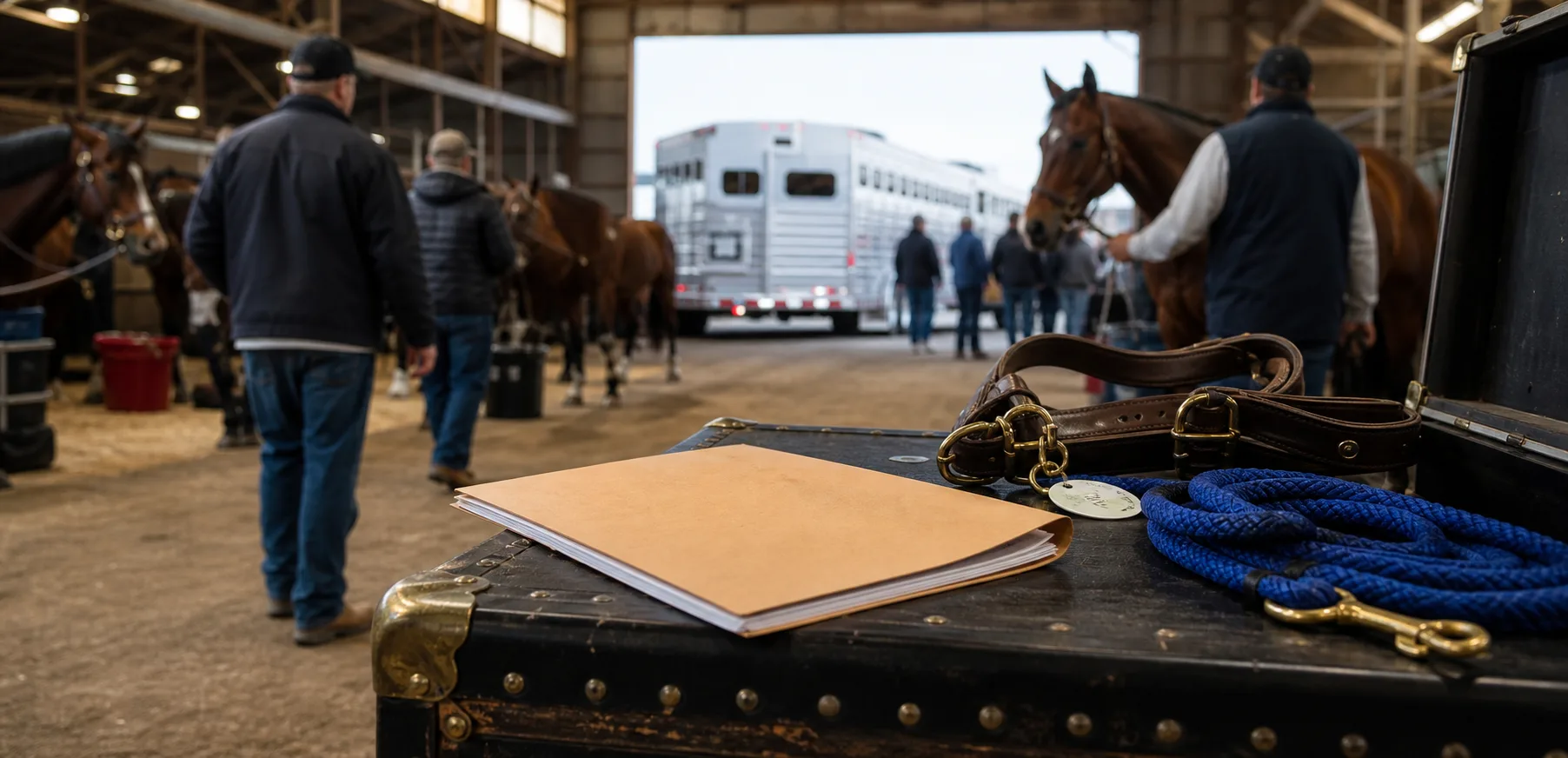
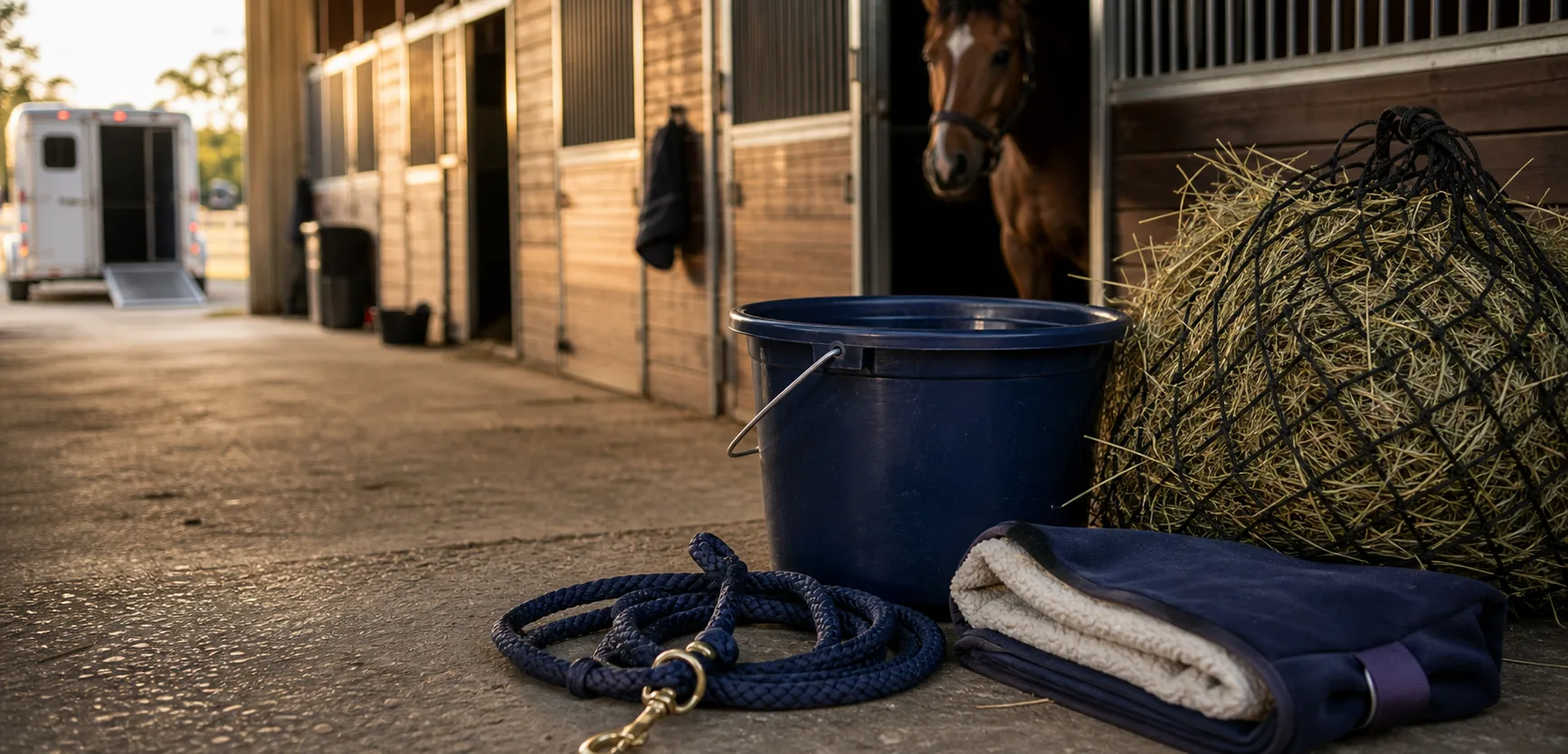
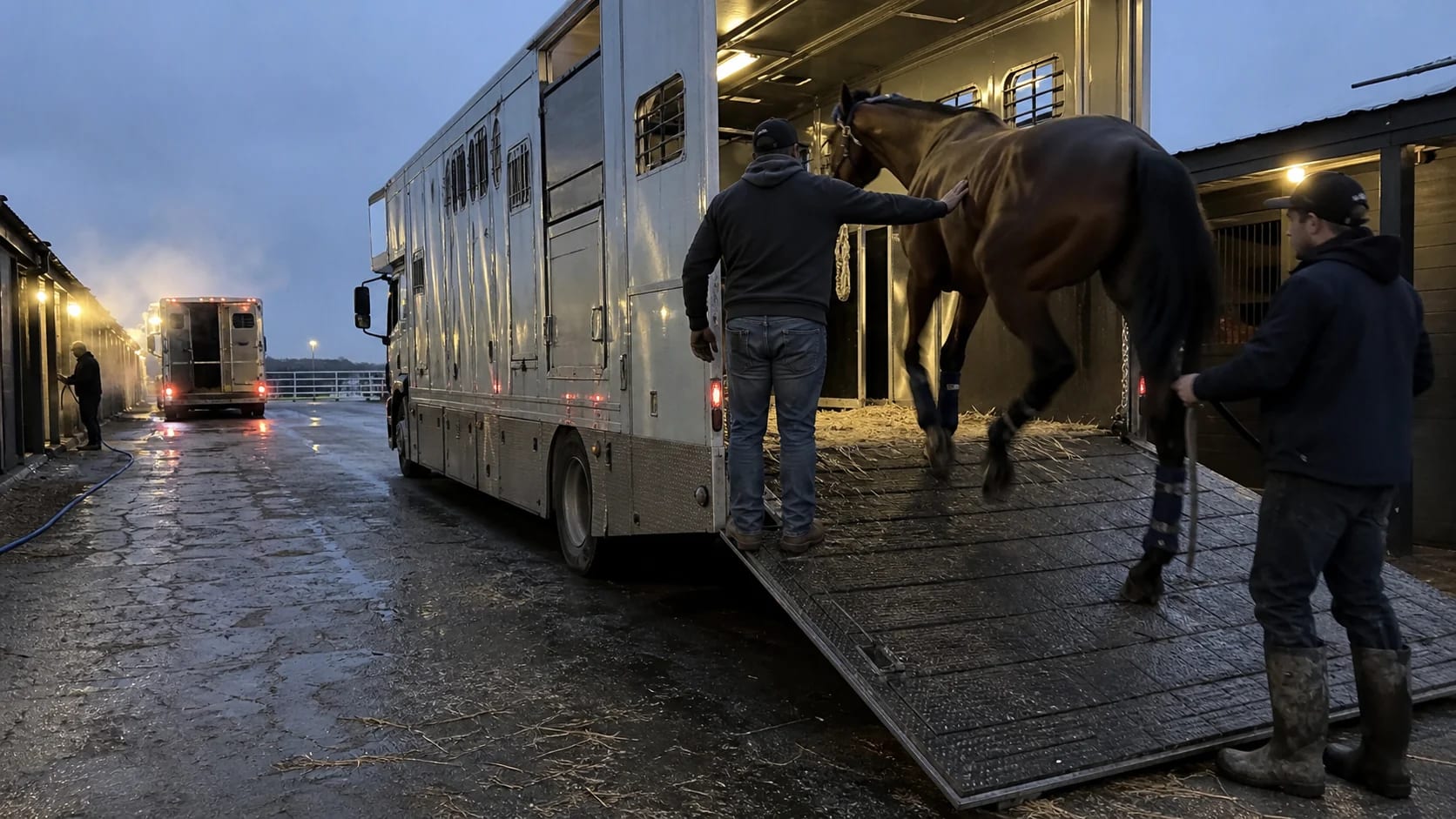
Shipping a horse after a sale or auction is a handoff problem as much as a transport problem. The buyer, seller, agent, sale office, veterinarian, and transporter all need the same pickup authority, paperwork, timing, and destination instructions before the horse leaves the grounds.
The cleaner the sale-day handoff, the less likely the horse sits in a stall while someone searches for a release, health paper, payment confirmation, or receiving barn phone number.
Table of contents
- Shipping a horse after a sale or auction: the short version
- Confirm release authority before pickup
- Check health documents and destination requirements
- Decide private or shared transport
- Give the transporter the sale-ground details
- Plan the first 24 hours after arrival
- Common sale shipping mistakes
- How Palomo helps
Shipping a horse after a sale or auction: the short version
Before the horse ships, confirm the buyer's authority, release paperwork, payment status, Coggins or EIA documentation, CVI or health certificate requirements, destination contact, insurance instructions, and whether the horse needs private, shared, direct, or layover transport.
- Name the person authorized to release the horse.
- Confirm sale office, agent, buyer, and transporter contact information.
- Check Coggins, CVI or health certificate, registration, passport, microchip, and vaccination records when relevant.
- Decide whether the horse needs private transport, box stall, or a shared route.
- Confirm pickup time, barn, stall, hip number or sale identifier, and destination access.
Confirm release authority before pickup
A sale horse usually cannot leave just because a transporter arrives. The sale office, consignor, buyer, or agent may need to confirm payment, release authority, documents, and who is allowed to take possession of the horse.
For major sale hubs such as Keeneland, Fasig-Tipton Saratoga, Ocala, Fort Worth, or Scottsdale, build the handoff around the sale office process rather than assuming a normal farm pickup.
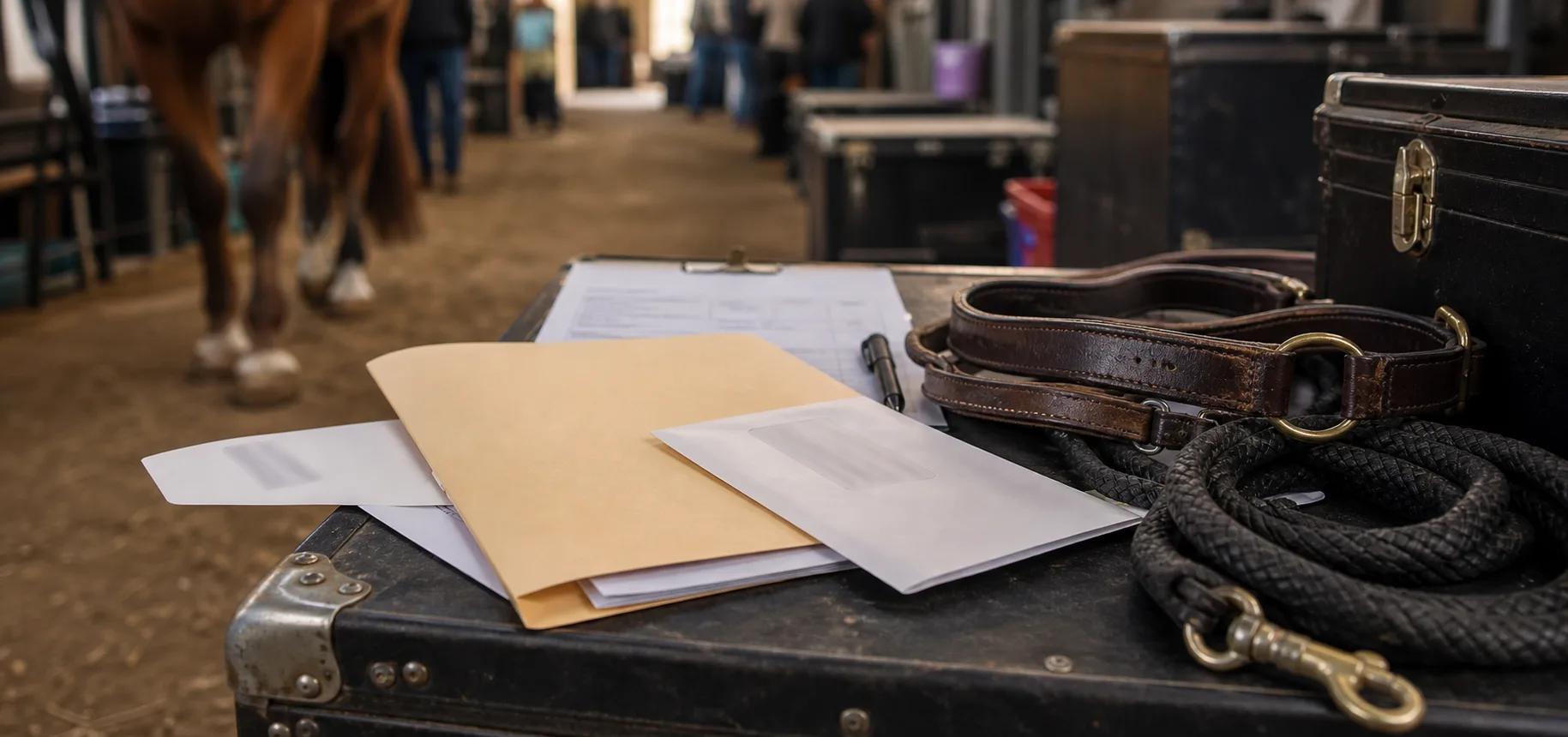
Check health documents and destination requirements
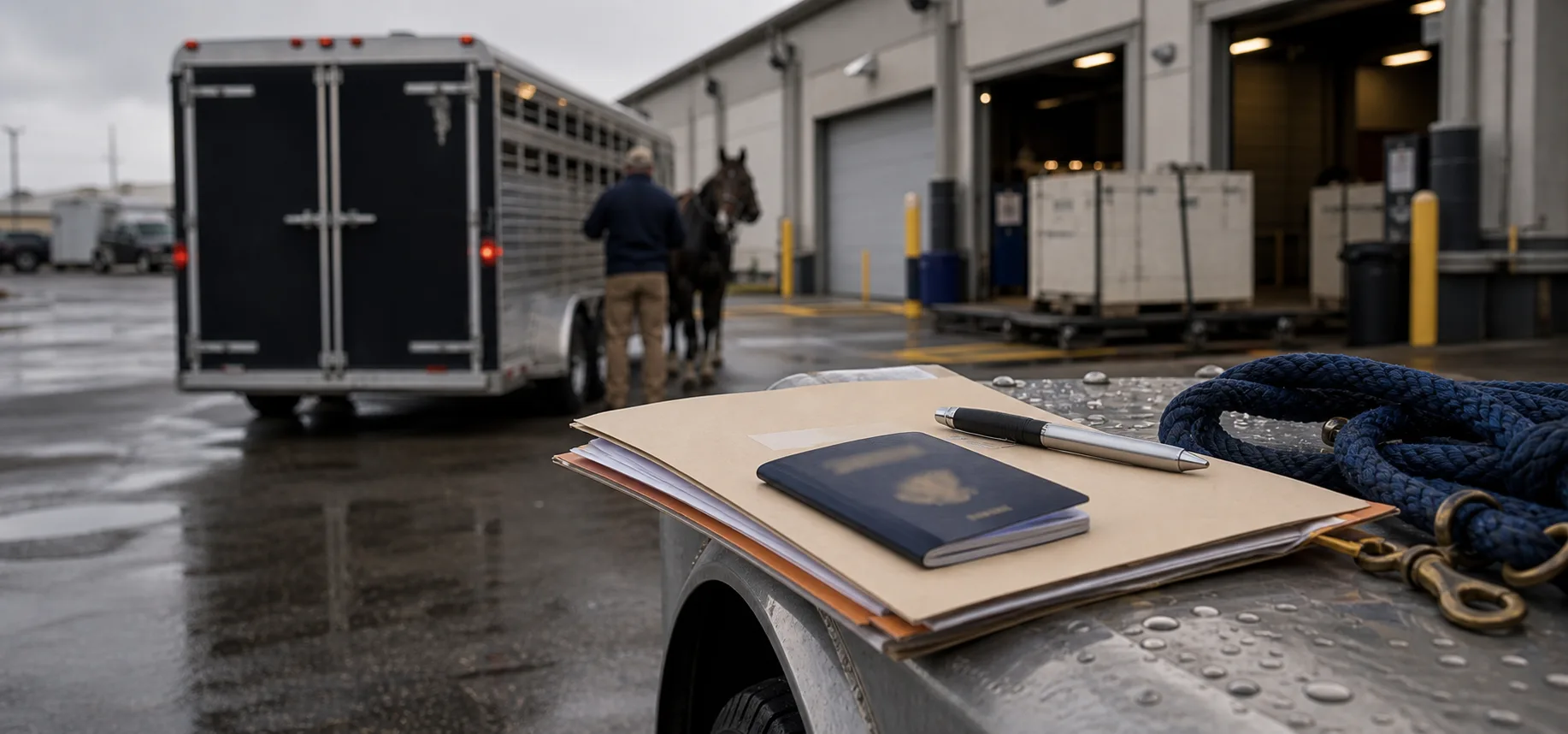
Sale paperwork can include Coggins or EIA documentation, CVI or health certificate, registration papers, passport, microchip records, vaccination history, or buyer-specific insurance instructions. Requirements depend on the route, destination, facility, and discipline.
If the horse is crossing state lines, entering a track, going to a breeding farm, or leaving the country, confirm requirements with the veterinarian and receiving facility before the transport quote is finalized. Our horse transport documents guide covers the baseline paperwork conversation.
Decide private or shared transport
A sale horse may need private transport if the horse is young, high value, unsettled, recently vetted, newly purchased by an owner who has not handled it yet, or headed to a strict receiving schedule. Shared transport can work when the route is common and the horse is a good traveler.
If you are comparing options, use the private vs. shared horse transport guide before choosing the cheapest available route.
Give the transporter the sale-ground details
- Sale name, barn, stall, hip number or sale identifier.
- Consignor, agent, buyer, and sale office contacts.
- Release process and any paperwork needed before loading.
- Horse handling notes from the consignor or current groom.
- Insurance instructions and any restrictions on timing.
- Destination barn, receiving contact, gate code, and arrival window.
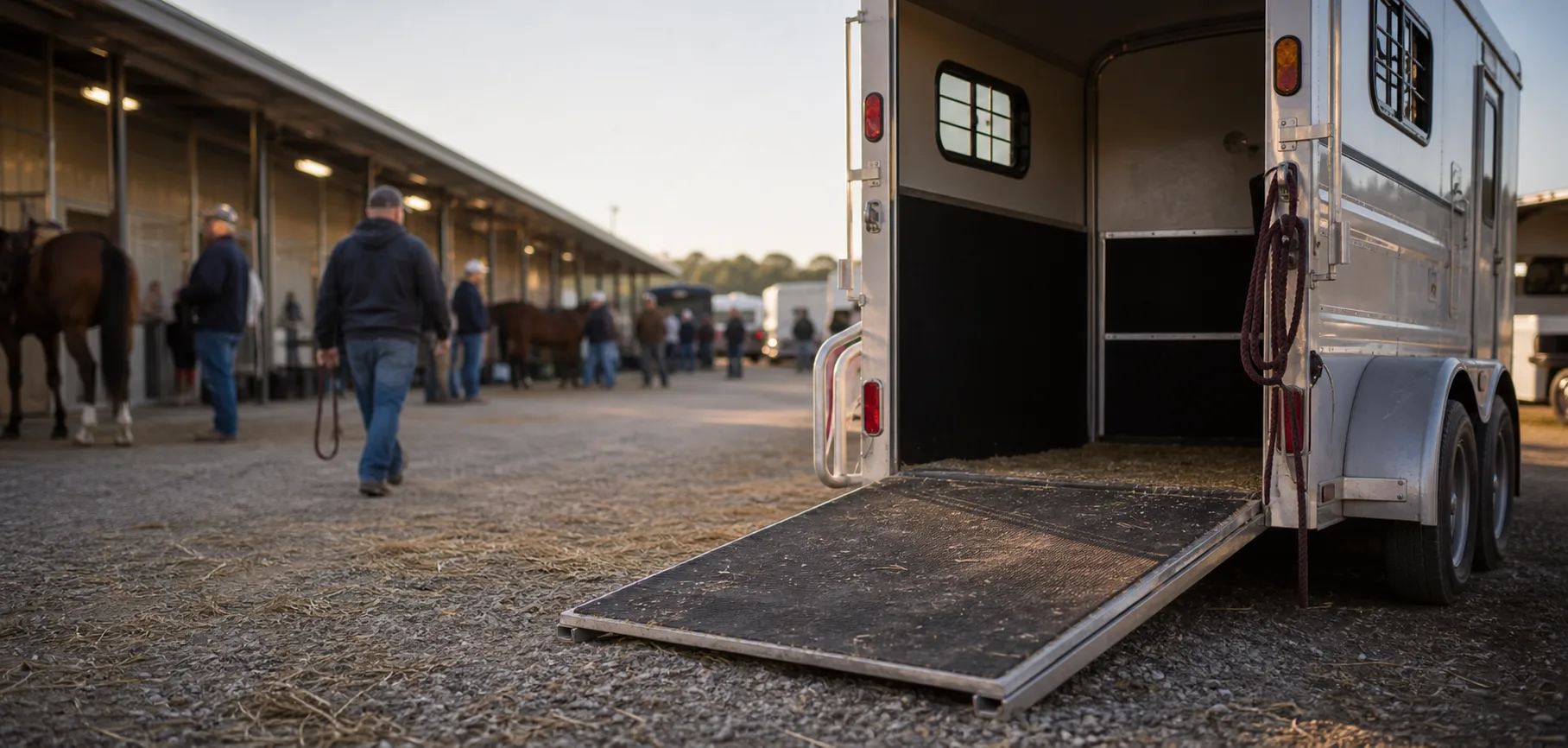
Plan the first 24 hours after arrival
The receiving barn should know when the horse arrives, what documents travel with the horse, who handles insurance questions, what feed comes with the horse, and whether the horse needs turnout, stall rest, or veterinary review after a long trip.
Common sale shipping mistakes
- Booking transport before the release process is clear.
- Assuming the consignor, buyer, and sale office have shared the same destination details.
- Not confirming health documents until the horse is ready to load.
- Choosing a shared route for a horse that needs a quieter direct trip.
- Forgetting to transfer insurance or ask about coverage during transit.
- Sending the horse without feed notes or a receiving barn plan.
How Palomo helps
Palomo gives buyers, agents, and trainers a structured way to request sale and auction horse transport, compare verified transporters, and keep release notes, documents, contacts, and arrival details attached to the trip.
Sale transport should close the loop between purchase, release, paperwork, insurance, and the receiving barn.
Sale and auction transport FAQ
Can I book transport before the sale ends?
You can plan options early, but pickup authority, payment status, documents, and destination details usually need to be confirmed before the horse loads.
Should a newly purchased horse ship private?
Sometimes. Consider the horse's age, value, handling, stress level, route, and destination timing. A transparent shared route may also work when the horse is suitable.