Aftercare
What to Do When Your Horse Arrives After Transport
A receiving-barn checklist for unloading, health checks, water, hay, documents, and the first day after horse transport.
What you do after a horse arrives from transport matters. Give the horse a calm handoff, offer water and familiar hay, check documents, inspect the horse, note behavior, and let the trainer or veterinarian know if anything seems abnormal.
This checklist is for owners, trainers, and barn managers receiving a horse after local, long-distance, show, sale, or seasonal transport. It is not veterinary advice. If the horse seems unwell, call your veterinarian.
Table of contents
- Horse arrival after transport: the short version
- Make the unloading area quiet and ready
- Check the horse before focusing on gear
- Offer water, hay, and a calm stall
- Review documents and handoff notes
- Watch the horse over the next day
- Common arrival mistakes
- How Palomo helps
Horse arrival after transport: the short version
Have the stall ready, clear the unloading area, confirm who signs off on the horse, inspect the horse calmly, offer water and familiar hay, check documents, and monitor appetite, manure, water intake, attitude, legs, and temperature when appropriate.
- Clear the driveway, aisle, and stall before the trailer arrives.
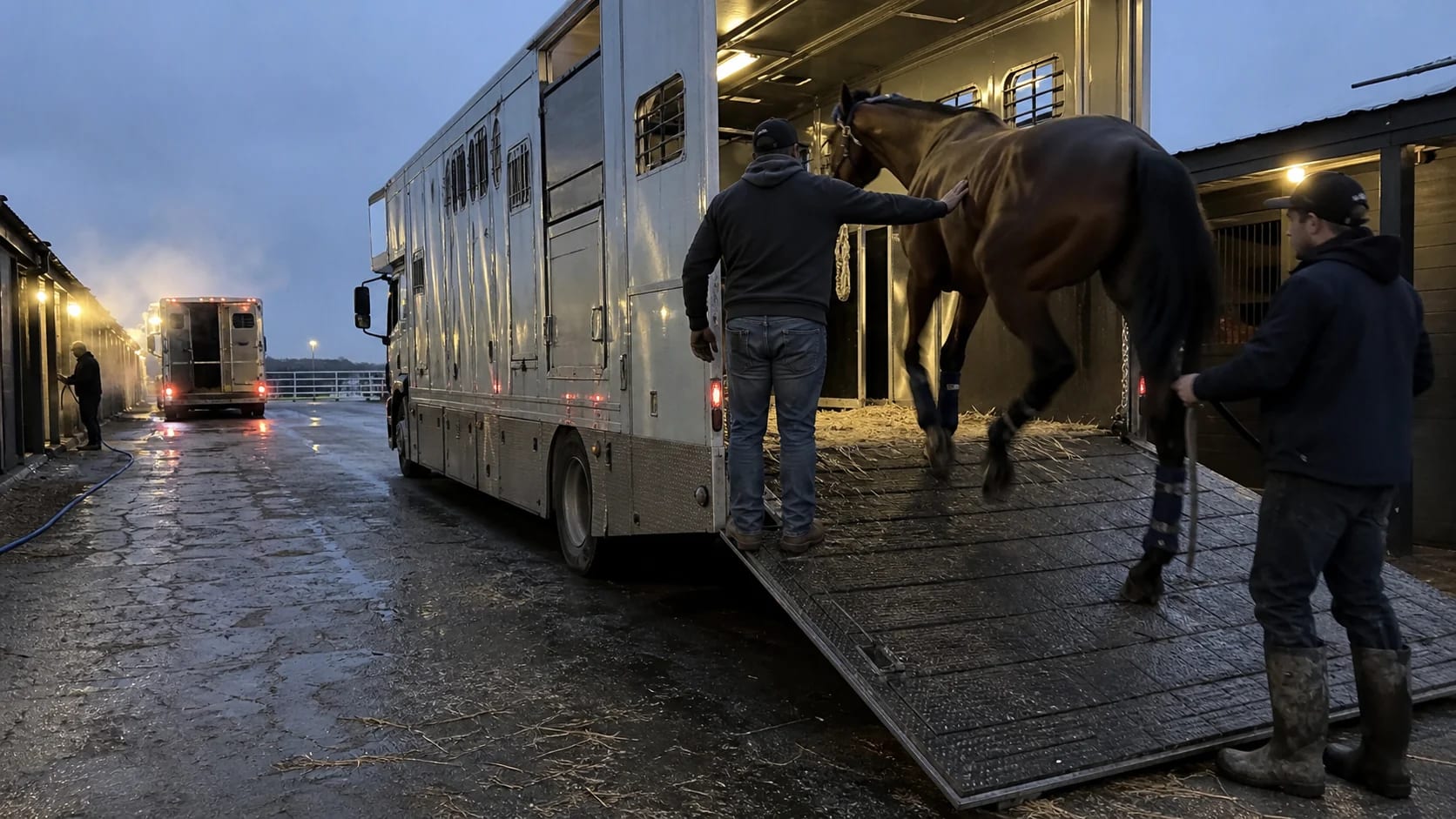
- Unload calmly with the right handler ready.
- Check the horse's legs, shoes, attitude, sweat, hydration, and obvious injuries.
- Offer water and familiar hay.
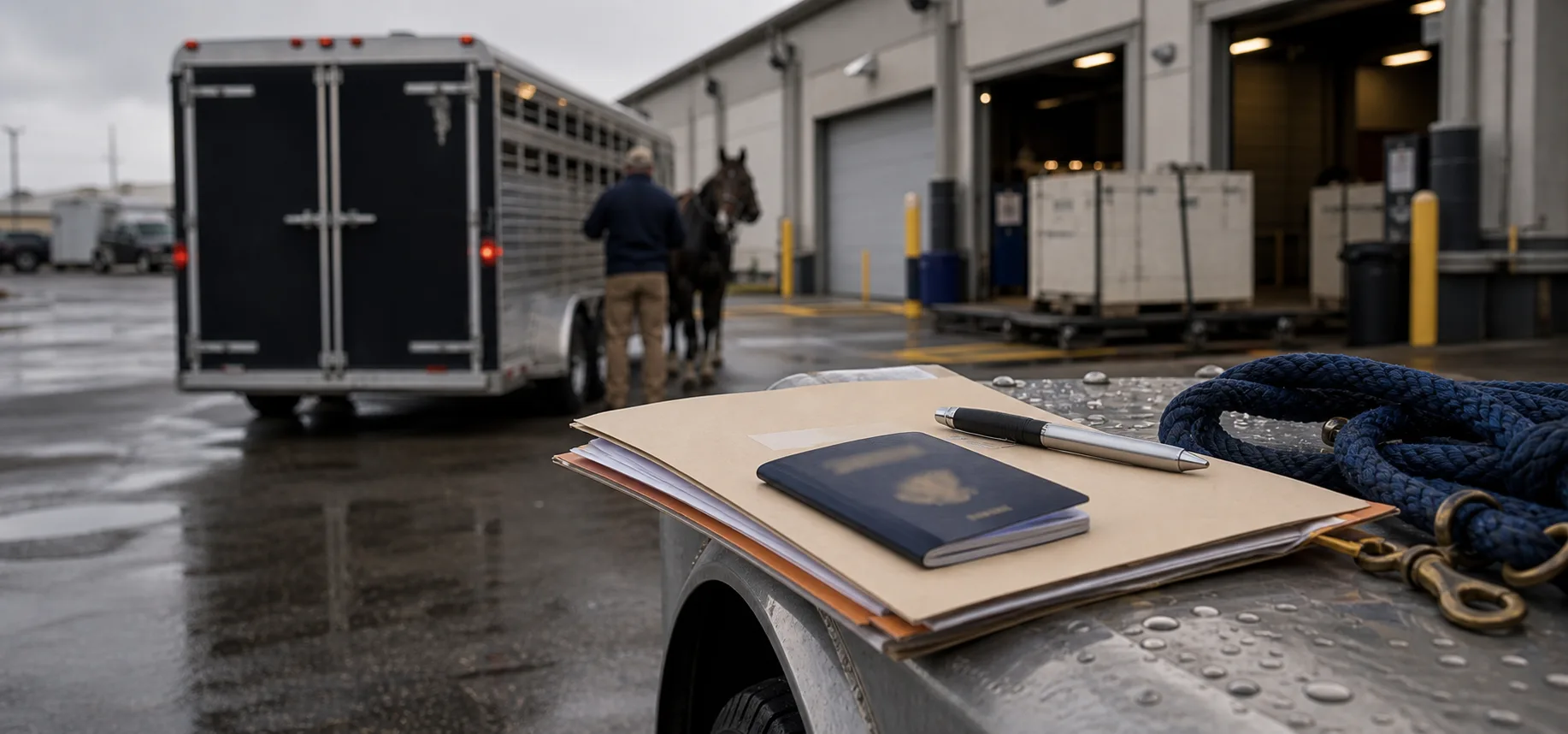
- Confirm documents, feed, medication, gear, and arrival notes.
- Call the veterinarian if the horse seems off, feverish, distressed, colicky, or injured.
Make the unloading area quiet and ready
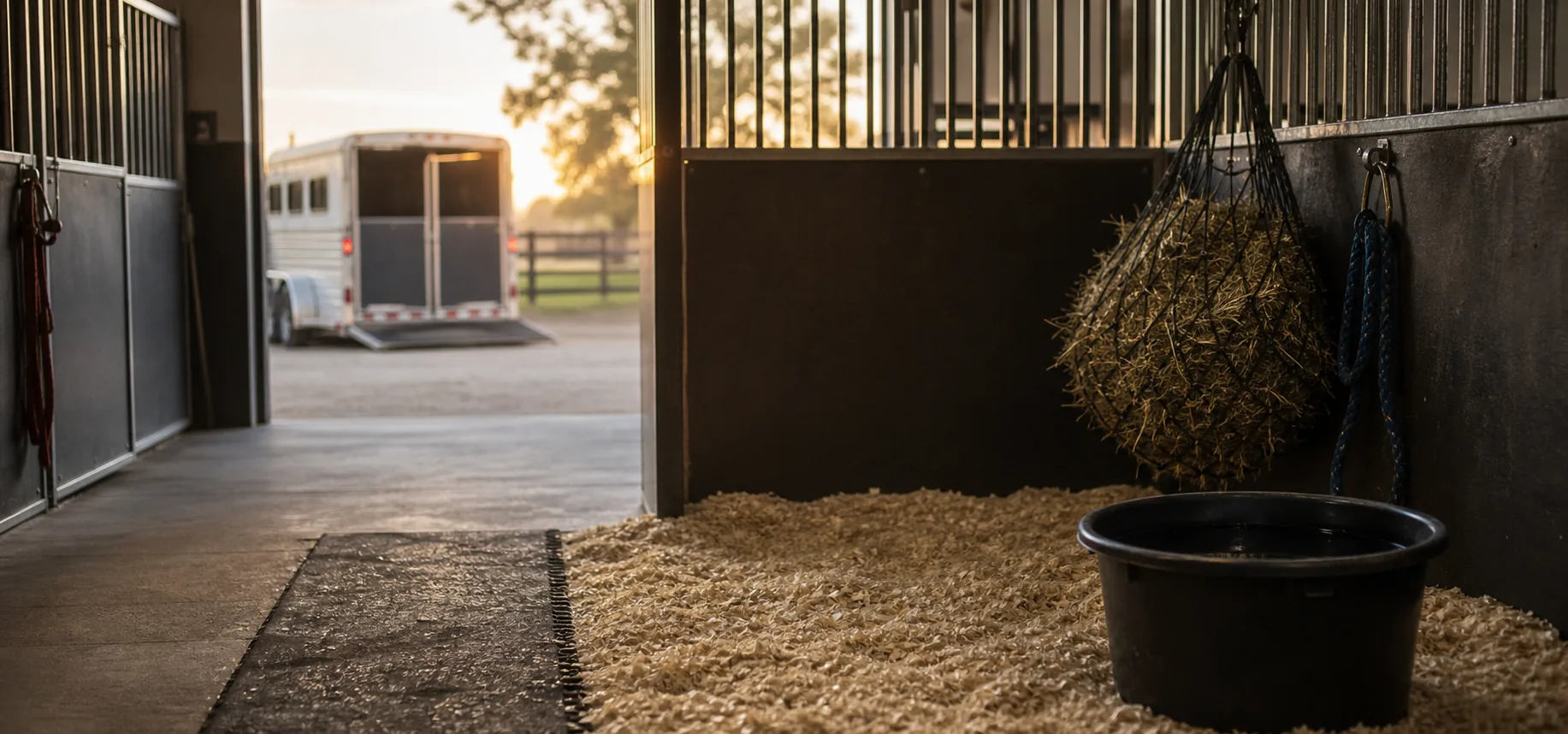
Do not make the horse wait on the trailer while people move wheelbarrows, open gates, find a stall, or decide who is handling the lead rope. A calm arrival starts with a clear driveway, safe footing, open stall, water bucket, and the right person ready to receive the horse.
Check the horse before focusing on gear
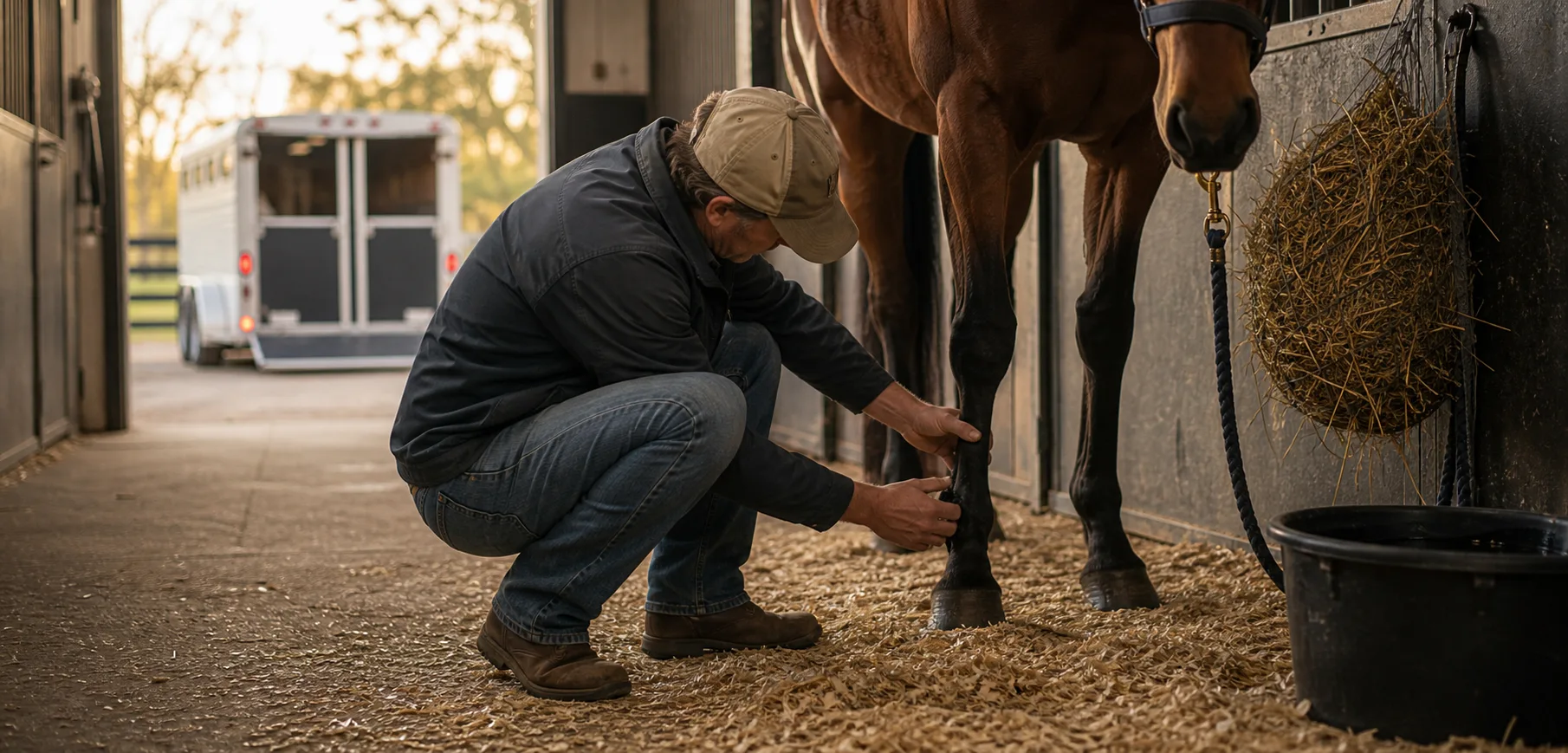
Inspect the horse before unloading trunks and feed. Look for obvious cuts, swelling, lost shoes, excessive sweat, dullness, trouble breathing, diarrhea, or signs of colic. Ask the driver about the route, stops, eating, drinking, manure, and behavior on the trailer.
For sale horses, racehorses, long-distance moves, and international handoffs, document the arrival condition with notes and photos when appropriate. Keep the tone professional and factual.
Offer water, hay, and a calm stall
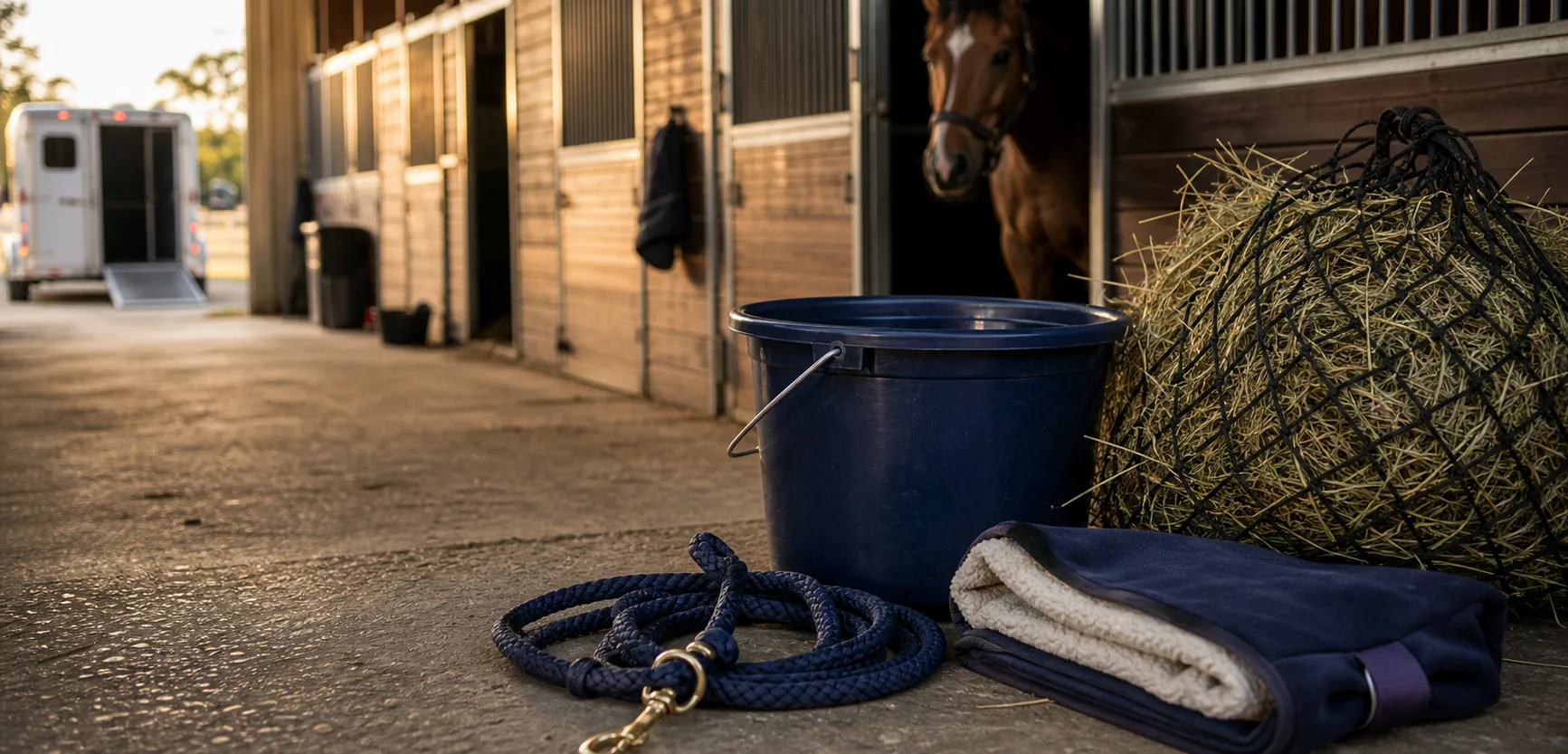
Most horses need a simple reset after transport: water, familiar hay, quiet, and observation. Do not make major feed changes immediately after a long trip unless your veterinarian or trainer has planned it.
Review documents and handoff notes
Make sure documents, medication instructions, feed notes, gear, and special handling notes arrived with the horse. For show and sale moves, confirm that the receiving barn has the correct Coggins, CVI or health certificate, release paperwork, and emergency contacts.
Watch the horse over the next day
- Appetite and hay intake.
- Water intake and manure.
- Temperature if the barn tracks it or the horse seems off.
- Leg swelling, soreness, lost shoes, or stiffness.
- Cough, nasal discharge, dullness, or signs of respiratory trouble.
- Stress behavior, not settling, or unusual attitude.
Common arrival mistakes
- Letting the trailer arrive before the stall or handler is ready.
- Focusing on trunks before checking the horse.
- Turning out immediately without considering travel stress, footing, or barn routine.
- Missing documents or medication notes during the handoff.
- Not asking the driver how the horse traveled.
- Ignoring small health changes after a long trip.
How Palomo helps
Palomo keeps trip updates, contacts, documents, route notes, and handoff expectations attached to the booking. That makes the receiving barn's job easier because the arrival is part of the plan, not an afterthought.
A good transport plan is not finished when the trailer turns into the driveway. It is finished when the horse, documents, and handoff notes are settled.
Horse arrival FAQ
Should I ride a horse the same day it arrives?
Ask the trainer and consider the horse, route length, travel stress, weather, and competition schedule. Many horses need quiet time first.
When should I call the veterinarian after transport?
Call if the horse seems feverish, distressed, dull, colicky, injured, dehydrated, coughing, off feed, or not acting normally.