Discipline guides
How to Ship a Racehorse Safely Between Tracks, Sales, and Training Barns
A racehorse transport guide for track moves, sales, documents, trainer handoffs, timing, and trailer setup.
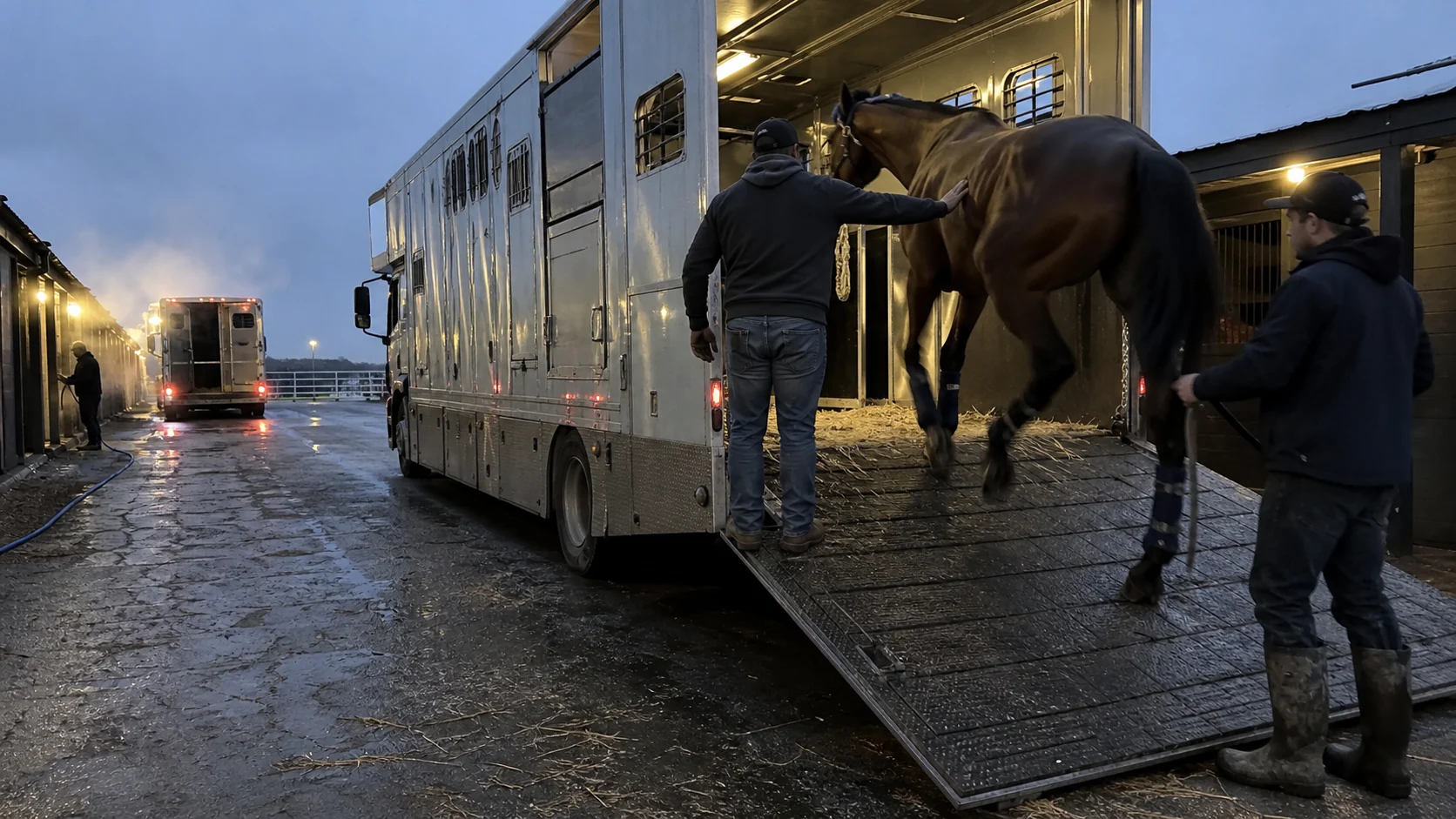
Racehorse transport is built around timing, paperwork, receiving rules, and calm handling. A racehorse may be moving between tracks, training barns, layup farms, sales, breeding farms, or quarantine, and each destination can have its own gate, health, and paperwork process.
A good racehorse transport plan names the horse, trainer, authorized release contact, destination, health documents, equipment, and timing before the horse leaves the shedrow.
Table of contents
- Racehorse transport: the short version
- Track, sale, and training barn handoffs
- Documents, identification, and health requirements
- Trailer setup and handling
- Timing around works, entries, and sales
- Common racehorse shipping mistakes
- How Palomo helps
Racehorse transport: the short version
Before shipping a racehorse, confirm the release authority, trainer or agent contact, Coggins or EIA documentation, CVI or health certificate when required, registration or microchip details when relevant, destination access, and whether the horse needs private, shared, or layover transport.
- Name the trainer, assistant, groom, owner, or agent responsible for release.
- Confirm stable gate, receiving barn, stall, and arrival rules.
- Check health documents and identification before pickup.
- Share behavior notes, leg care, shoeing concerns, and medication instructions.
- Coordinate timing around workouts, entries, vet work, sale prep, and rest.
Track, sale, and training barn handoffs
Racehorse moves can involve more people than a routine farm pickup. A horse might be released by an assistant trainer, loaded by a groom, received by a farm manager, and documented by an agent. Put the contact order in writing.
For routes involving Saratoga Springs, Lexington, Ocala, Del Mar, or sales grounds, include the exact barn, gate, and timing instructions in the transport request.
Documents, identification, and health requirements
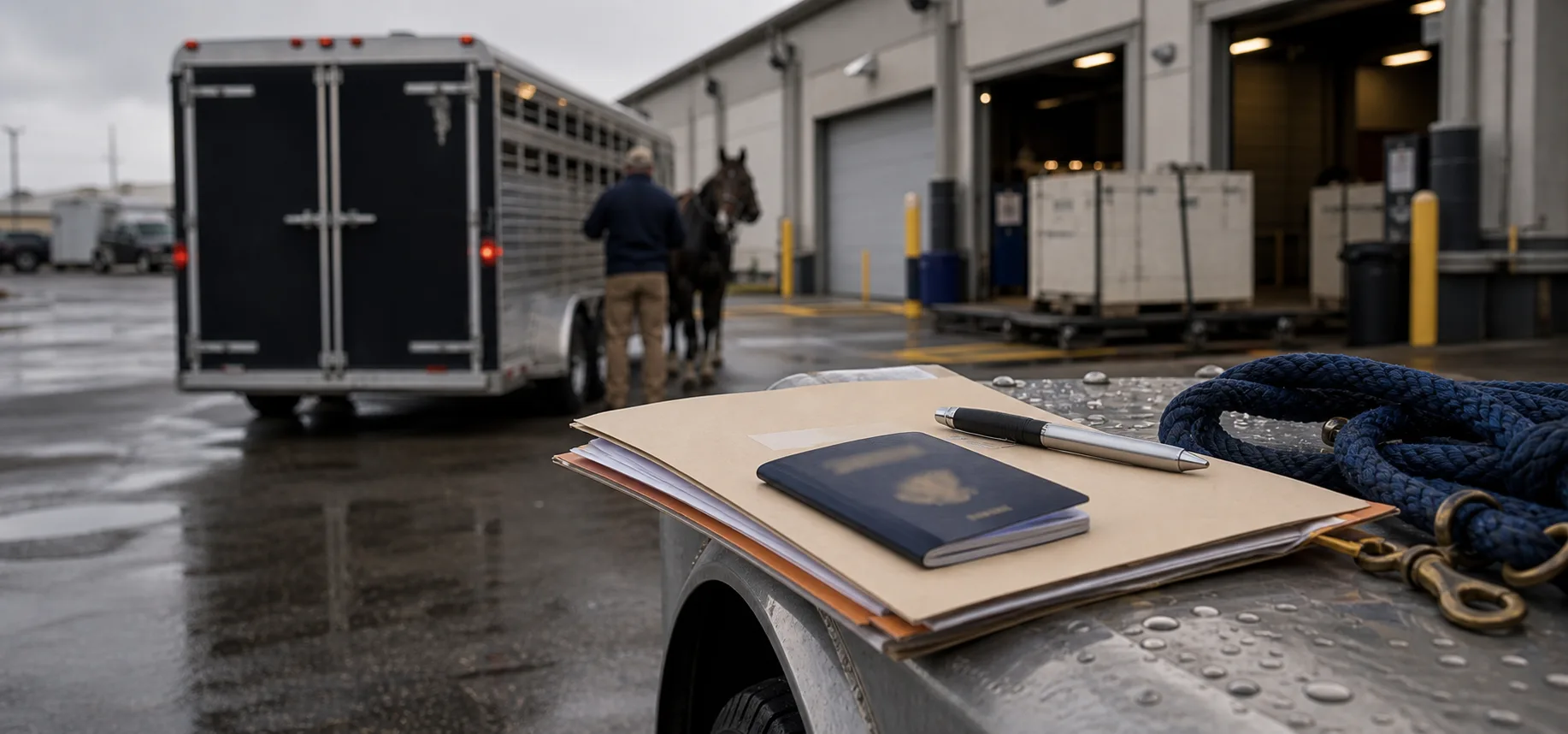
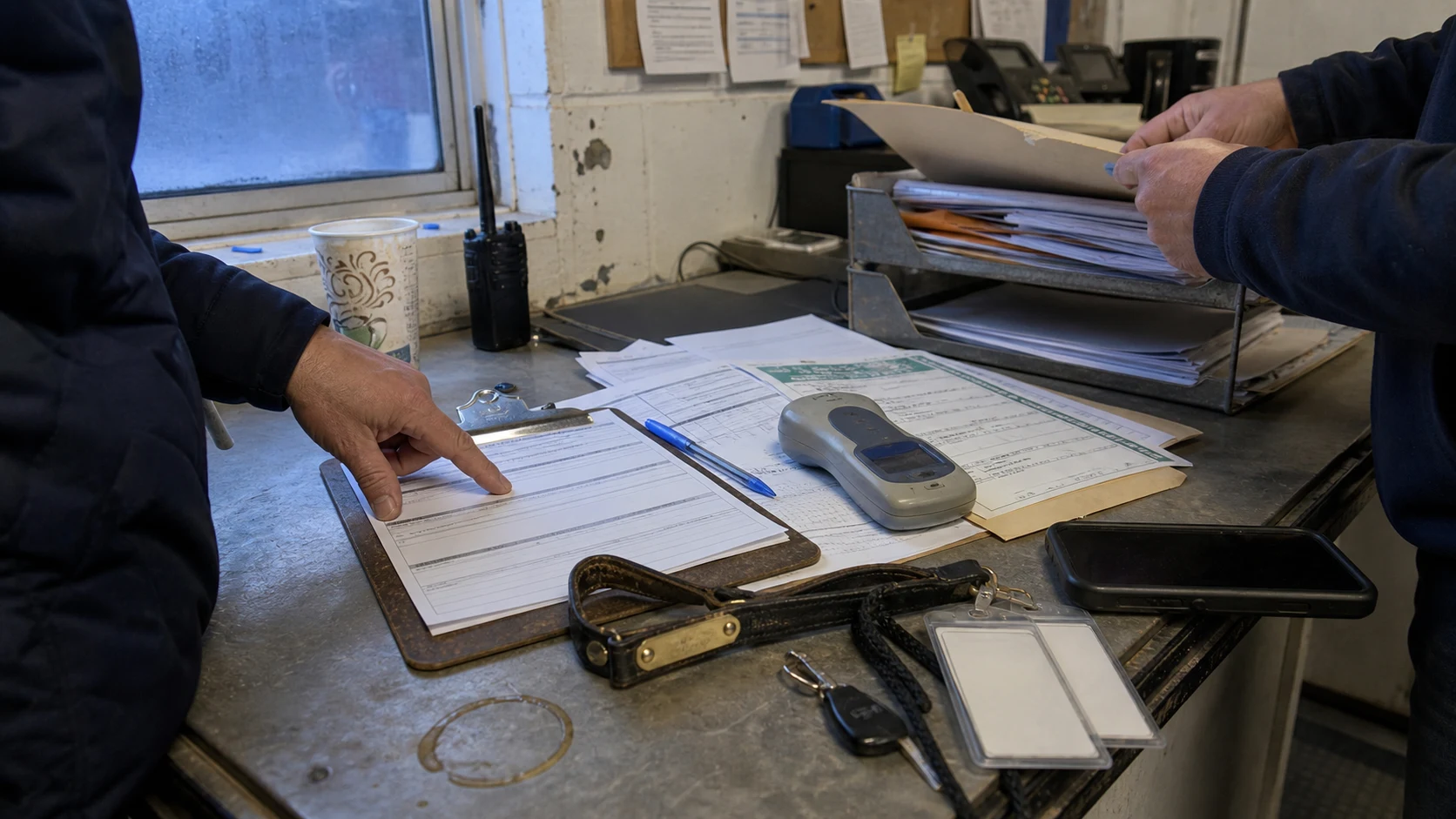
Racehorses may need Coggins or EIA documentation, a CVI or health certificate, registration details, microchip information, vaccination records, sale releases, or track-specific paperwork. Requirements depend on the state, facility, sale, and destination.
Do not rely on the driver to fix missing documents at the gate. Confirm what the receiving track, farm, sale company, or quarantine facility requires before the trailer arrives.
Trailer setup and handling
Some racehorses ship routinely and quietly. Others are young, fit, high-energy, recently raced, recently purchased, or unfamiliar with the new handler. Tell the transporter whether the horse needs extra space, a quiet route, a specific loading approach, or careful leg protection.
Timing around works, entries, and sales
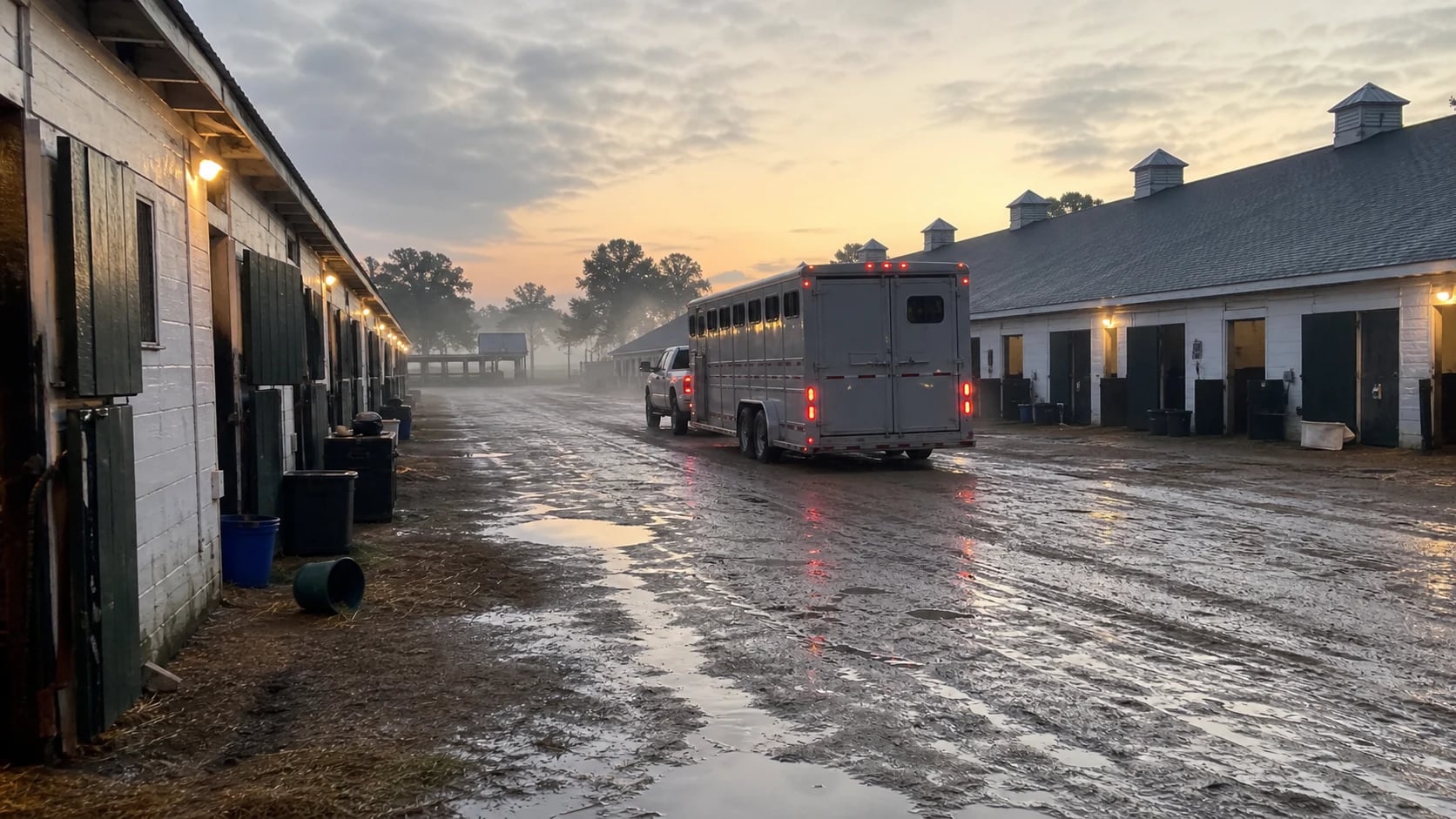
Racehorse transport timing may be tied to morning works, race entries, vet exams, sale inspections, breeding shed appointments, or layup schedules. Build the route around the horse's workload and recovery, not only the driver's open slot.
Common racehorse shipping mistakes
- Not naming the person authorized to release the horse.
- Sending the transporter to the wrong gate or barn.
- Missing health documents required by the receiving facility.
- Not sharing recent work, race, injury, or medication context.
- Choosing a route that ignores the horse's schedule and recovery needs.
- Assuming a sale pickup works like a normal training barn pickup.
How Palomo helps
Palomo supports racehorse transport by keeping route details, contacts, documents, handling notes, and quote comparison together. That gives owners, trainers, agents, and transporters a cleaner handoff.
A racehorse move is successful when the track, trainer, driver, documents, and receiving barn are aligned before loading.
Racehorse transport FAQ
Can a racehorse ship right after a race?
It depends on the horse, distance, timing, veterinary guidance, and destination. Coordinate with the trainer and veterinarian rather than treating it like a routine pickup.
Should racehorses ship private?
Private transport can be the right fit for strict timing, high-value horses, sales, or special handling. A well-run shared route may work when the horse and schedule allow it.