Transport options
Private vs. Shared Horse Transport: Which Is Better for Your Horse?
A clear comparison of private horse transport and shared-load horse transport, including timing, cost, handling, and route tradeoffs.

Private horse transport gives your horse a dedicated plan. Shared horse transport puts your horse on a route with other horses moving in a compatible direction. Neither option is automatically best. The right choice depends on timing, horse temperament, route, budget, trailer setup, and how much flexibility you have.
Use this guide when comparing quotes so you understand what you are buying, what tradeoffs matter, and which questions to ask before accepting a transport plan.
Table of contents
- Private vs. shared horse transport: the short answer
- What private horse transport means
- What shared horse transport means
- When private transport is worth it
- When shared transport can make sense
- Questions to ask before choosing
- Common mistakes
- How Palomo helps
Private vs. shared horse transport: the short answer
Choose private transport when the horse has strict timing, special handling, a health concern, a high-value sale or show deadline, or a route that should not include extra stops. Choose shared transport when the horse travels well, the corridor is common, and the pickup or delivery window has some flexibility.
The real comparison is not only price. It is trailer time, handling, route predictability, insurance, updates, and whether the transporter can explain the plan clearly.
What private horse transport means
Private transport usually means the trailer, or a defined portion of the trip, is built around your horse or barn group. The route is more direct, the schedule is easier to control, and the transporter can plan around specific handling notes.
Private does not always mean a single-horse trailer. It can mean a dedicated run for several horses from the same owner, trainer, sale agent, or barn. What matters is that the route is not being shaped by unrelated pickups and drop-offs.
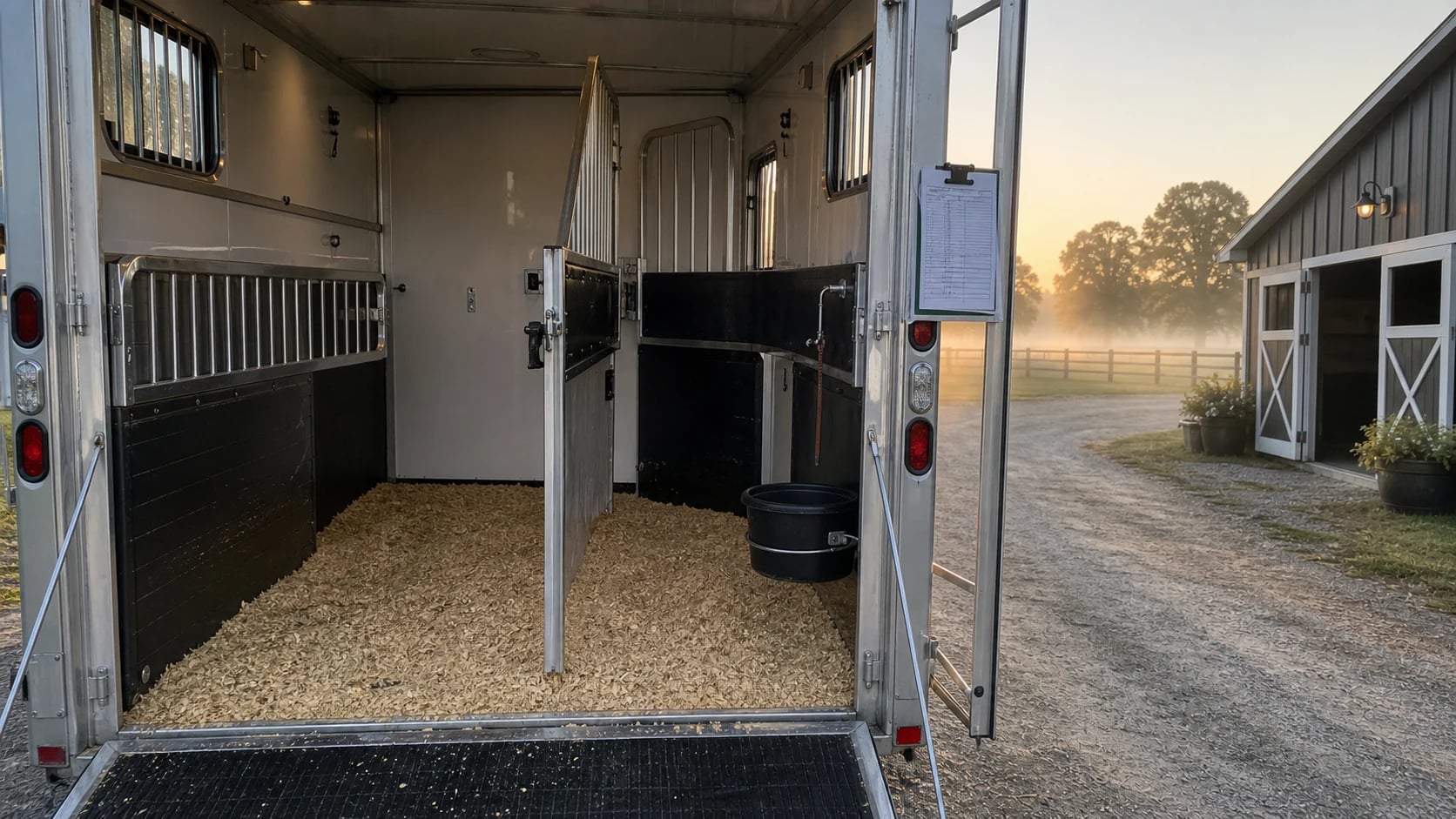
What shared horse transport means
Shared transport combines compatible horses on one route. It can be efficient and cost-effective on busy corridors such as Florida to Kentucky, Kentucky to the Northeast, or seasonal movement around Wellington, Ocala, Aiken, Tryon, Saratoga, Bridgehampton, and Traverse City.
The tradeoff is that the route may include additional stops. That can be fine for a relaxed, experienced traveler, but it may be wrong for a horse that gets anxious, scrambles, needs a box stall, or has a strict arrival requirement.

When private transport is worth it
- The horse has a medical concern, recent injury, or special veterinary instructions.
- The horse is a stallion, mare and foal, young horse, nervous traveler, or difficult loader.
- The trip has a fixed sale, quarantine, show, or race deadline.
- The route is unusual and would require awkward shared-load detours.
- The owner or trainer wants a more direct update and handoff plan.
- The horse needs a box stall, extra room, or fewer handling transitions.
Private transport is common for higher-pressure trips such as sale and auction horse transport, sensitive dressage moves, young horses, or important event arrivals.
When shared transport can make sense
- The horse is experienced, healthy, and easy to handle.
- The route is common and transporters already run it regularly.
- Pickup and delivery windows are flexible.
- The horse does not need a special stall setup.
- The transporter can explain the stop sequence and expected trailer time.
- The quote clearly states what is included and how updates will work.
Shared transport can be a sensible fit for routine barn moves, show transfers, and seasonal routes when the transporter is experienced and the plan is transparent.
Questions to ask before choosing
- How many stops are expected before delivery?
- How long is my horse expected to be on the trailer?
- Will the horse have a standard stall, box stall, or other setup?
- What happens if another pickup is delayed?
- How often will updates be sent?
- Are layovers, hay, bedding, tolls, or waiting time included?
- What insurance and transporter verification can I review before booking?
Common mistakes
- Choosing shared transport for a horse that needs a very direct route.
- Choosing private transport when a safe, well-run shared route would work.
- Comparing only the final price without comparing trailer time.
- Not telling the transporter that the horse is hard to load or ships poorly.
- Assuming shared transport means low quality.
- Assuming private transport automatically solves paperwork, access, or timing problems.
How Palomo helps
Palomo helps owners and trainers compare horse transport quotes with the context that matters: transporter verification, route plan, timing, trailer setup, and notes about the horse. That makes private versus shared easier to evaluate without guessing what the quote really includes.
The best transport option is the one that fits the horse, route, and deadline, not just the one with the lowest price.
Private vs. shared transport FAQ
Is shared transport safe?
It can be safe when the transporter is qualified, the horses are compatible, the route is sensible, and the plan is clear. It is not the right fit for every horse or deadline.
Does private transport mean no stops?
Not always. Private transport can still include fuel stops, rest stops, or layovers. The difference is that the trip is planned around your horse or group rather than unrelated pickups.
Which option should I request first?
Share the route, timing, horse details, and handling notes, then compare both options if they are available. The right answer often becomes clear once you see the route plan.