Paperwork & compliance
Horse Transport Documents: Coggins, Health Certificates, and Paperwork
A practical guide to Coggins, CVI health certificates, event paperwork, sale documents, and organizing horse transport records before pickup.
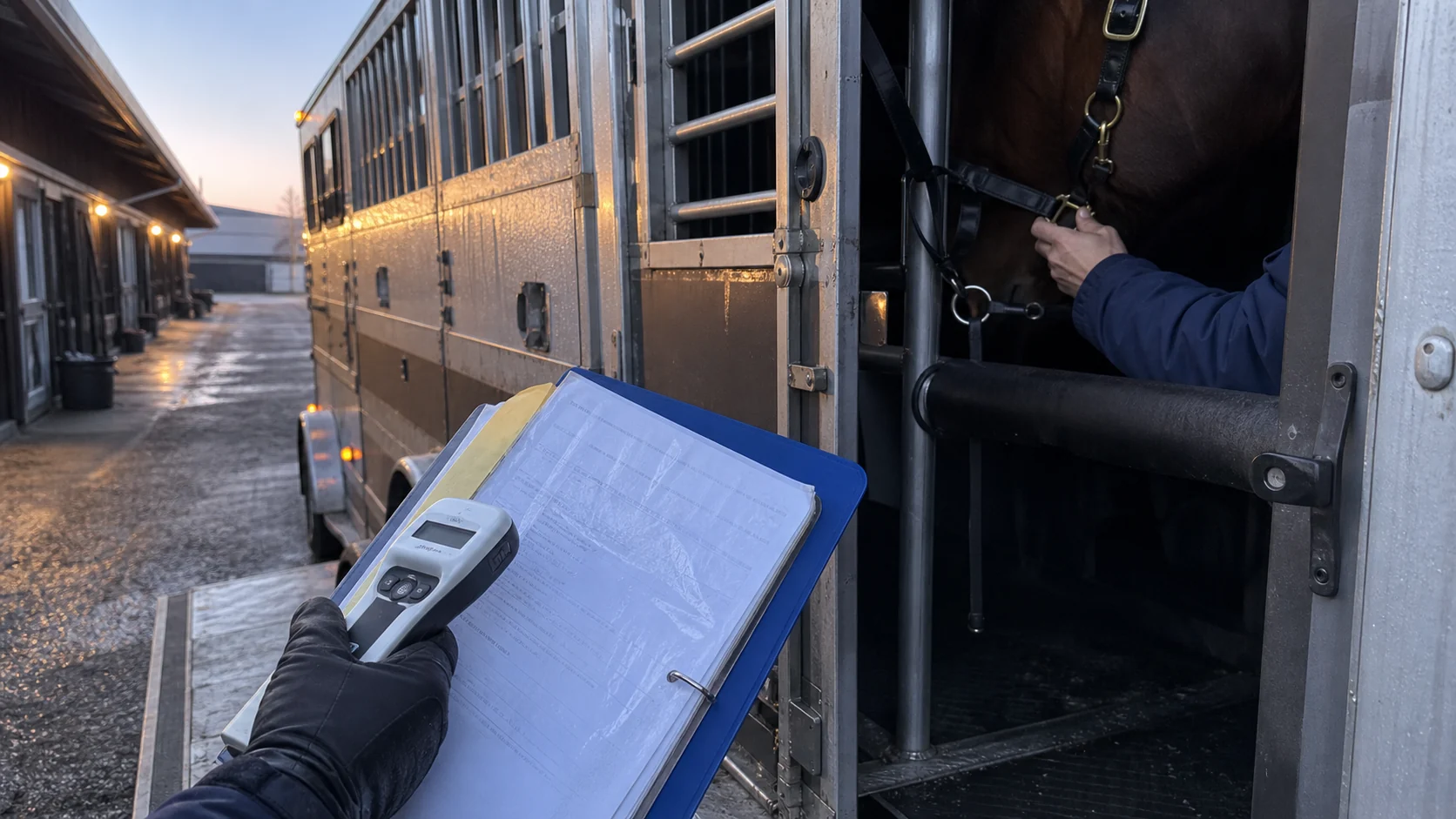
Horse transport documents should be handled before pickup, not while the trailer is waiting. For many U.S. interstate trips, owners should expect to confirm a current Coggins or EIA test and a Certificate of Veterinary Inspection, often called a CVI or health certificate, but requirements vary by state, facility, sale, and event.
Use this guide as a practical planning checklist, then confirm the exact requirements with your veterinarian, receiving state or facility, show office, sale company, or international shipping specialist before the horse loads.
Table of contents
- Horse transport documents: the short version
- Coggins and EIA testing
- CVI or health certificate
- Event, sale, and facility paperwork
- International documents
- How to organize documents before pickup
- Common paperwork mistakes
- How Palomo helps
Horse transport documents: the short version
At minimum, gather the documents that prove who the horse is, where the horse is going, and whether the horse meets the health and entry requirements for the route. For domestic trips, that often means Coggins or EIA paperwork, a CVI when required, registration or passport documents when relevant, and destination instructions.
- Current Coggins or EIA test documentation
- Certificate of Veterinary Inspection when required
- Owner, trainer, veterinarian, and receiving barn contacts
- Registration, passport, microchip, or sale paperwork when relevant
- Event stabling, stall assignment, arrival time, and gate instructions
- Medication instructions signed off by the veterinarian when needed
Coggins and EIA testing
A Coggins test screens for equine infectious anemia, commonly shortened to EIA. Transporters, shows, sales, boarding barns, and states may ask for proof before a horse enters the property or crosses a state line.
Do not wait until pickup week to check the date. Some facilities care about the test being current within a specific window, and some events or sales may require copies uploaded before arrival. If the horse is moving between busy seasonal bases such as Wellington, Ocala, or Lexington, paperwork delays can affect an entire trailer schedule.
CVI or health certificate
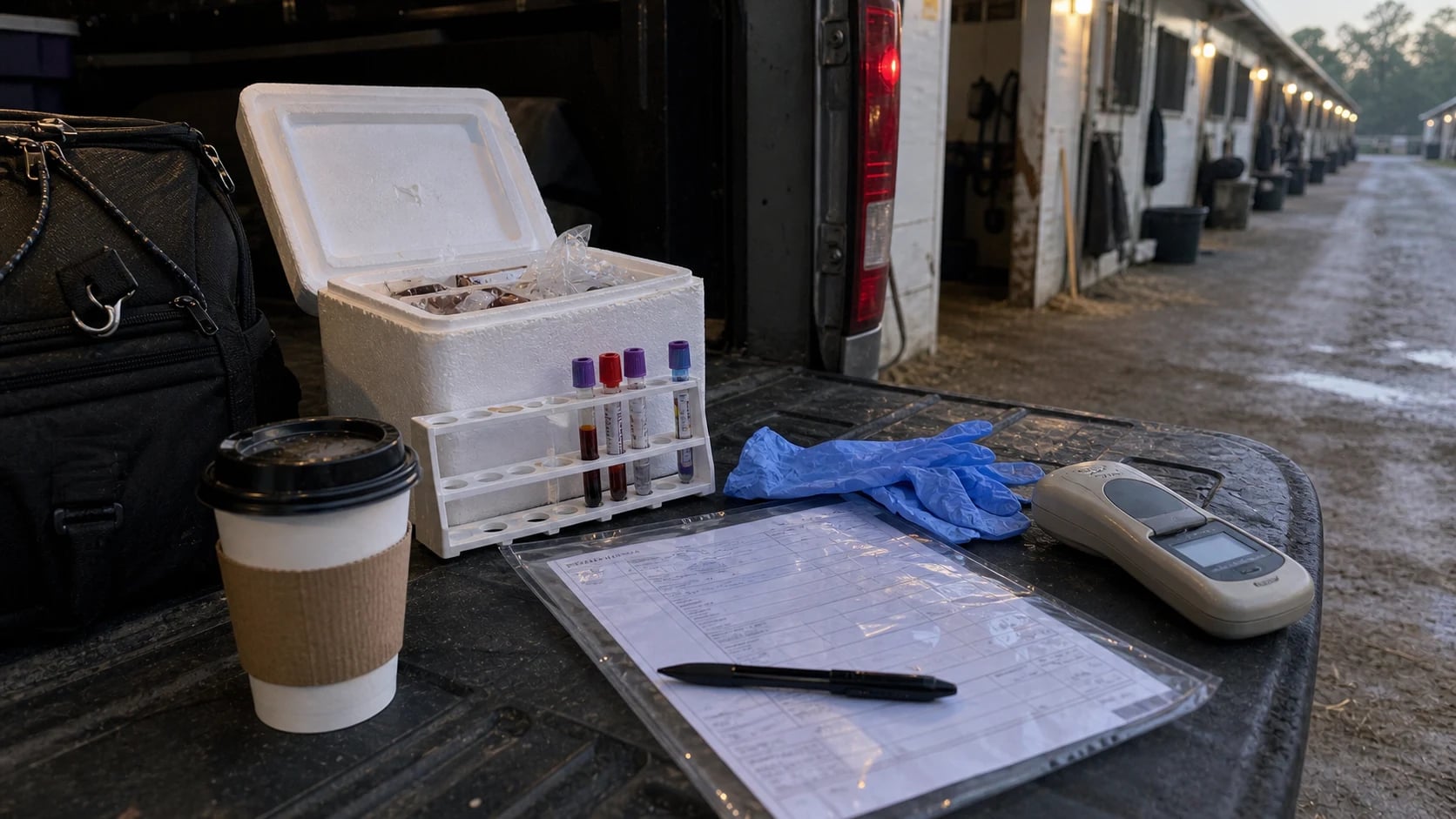
A Certificate of Veterinary Inspection is a veterinarian-issued document that records animal identification, health status, origin, destination, and other required details. Owners often call it a health certificate. For interstate travel, it is commonly part of the paperwork discussion.
Because timing windows and state rules can change, ask your veterinarian what is needed for the exact pickup state, delivery state, and final facility. A transporter can carry and share documents, but the owner and veterinarian are responsible for making sure they are correct before loading.
Event, sale, and facility paperwork
Shows, auctions, breeding farms, racetracks, and quarantine facilities may have rules that go beyond a normal farm-to-farm move. A horse shipping to the Kentucky Three-Day Event, a winter circuit, or a sale ground may need stabling documents, arrival credentials, release forms, passports, vaccination records, or specific receiving instructions.
- Show name, trainer, barn aisle, stall number, and arrival gate
- Sale company release, hip number, buyer or agent contact, and receiving instructions
- Racehorse or backstretch credentials when relevant
- Breed papers, passport, microchip number, or registration documents
- Emergency contact order if the trainer is in the ring or unavailable
International documents
International horse transport is a separate planning category. It can involve export paperwork, import permits, quarantine timing, customs coordination, air transport, and receiving-country veterinary requirements. Do not treat it as a normal domestic haul with extra miles.
If the horse is crossing a national border or flying, start with a specialist workflow such as international horse transport and build the timeline around veterinary and regulatory steps, not only the desired pickup date.
How to organize documents before pickup
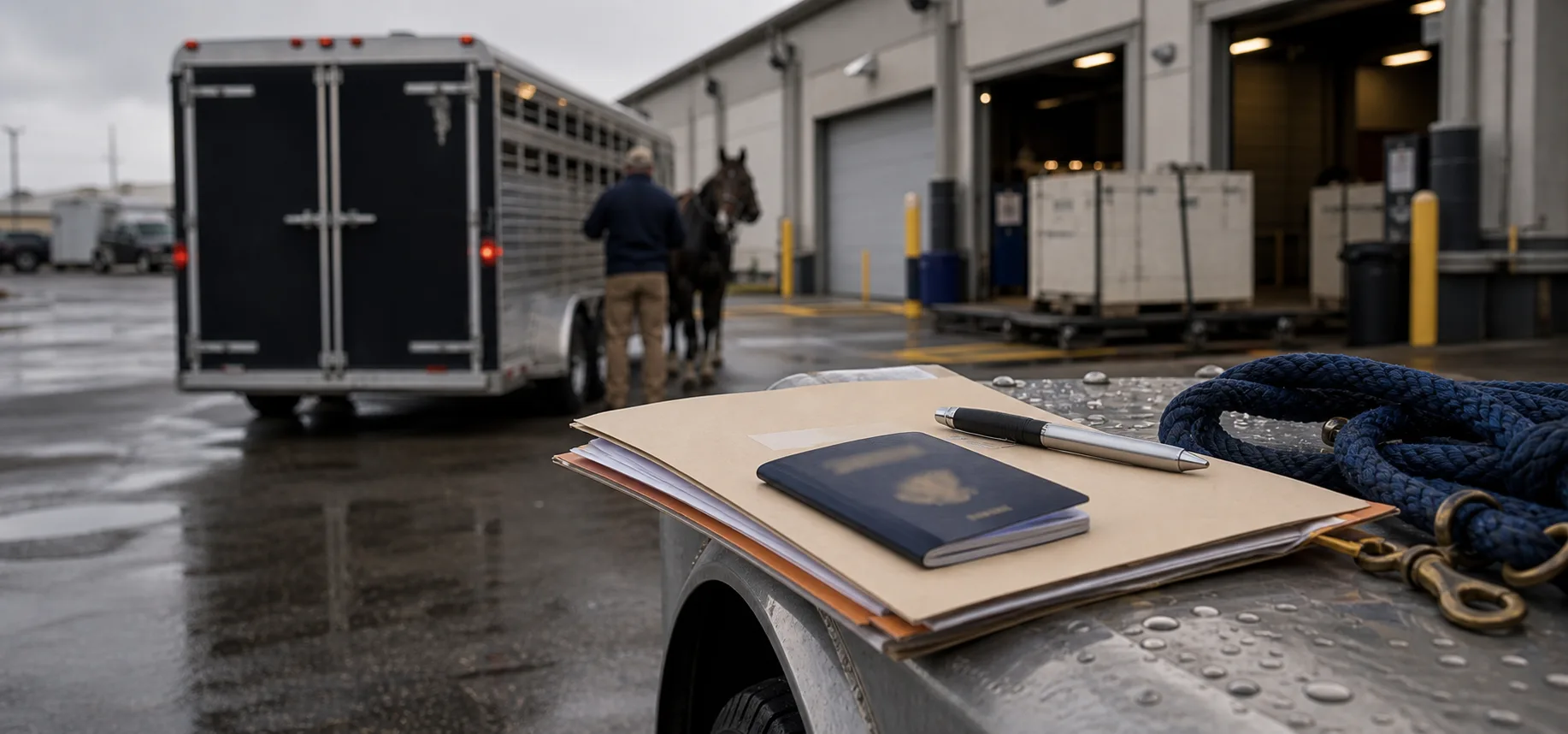
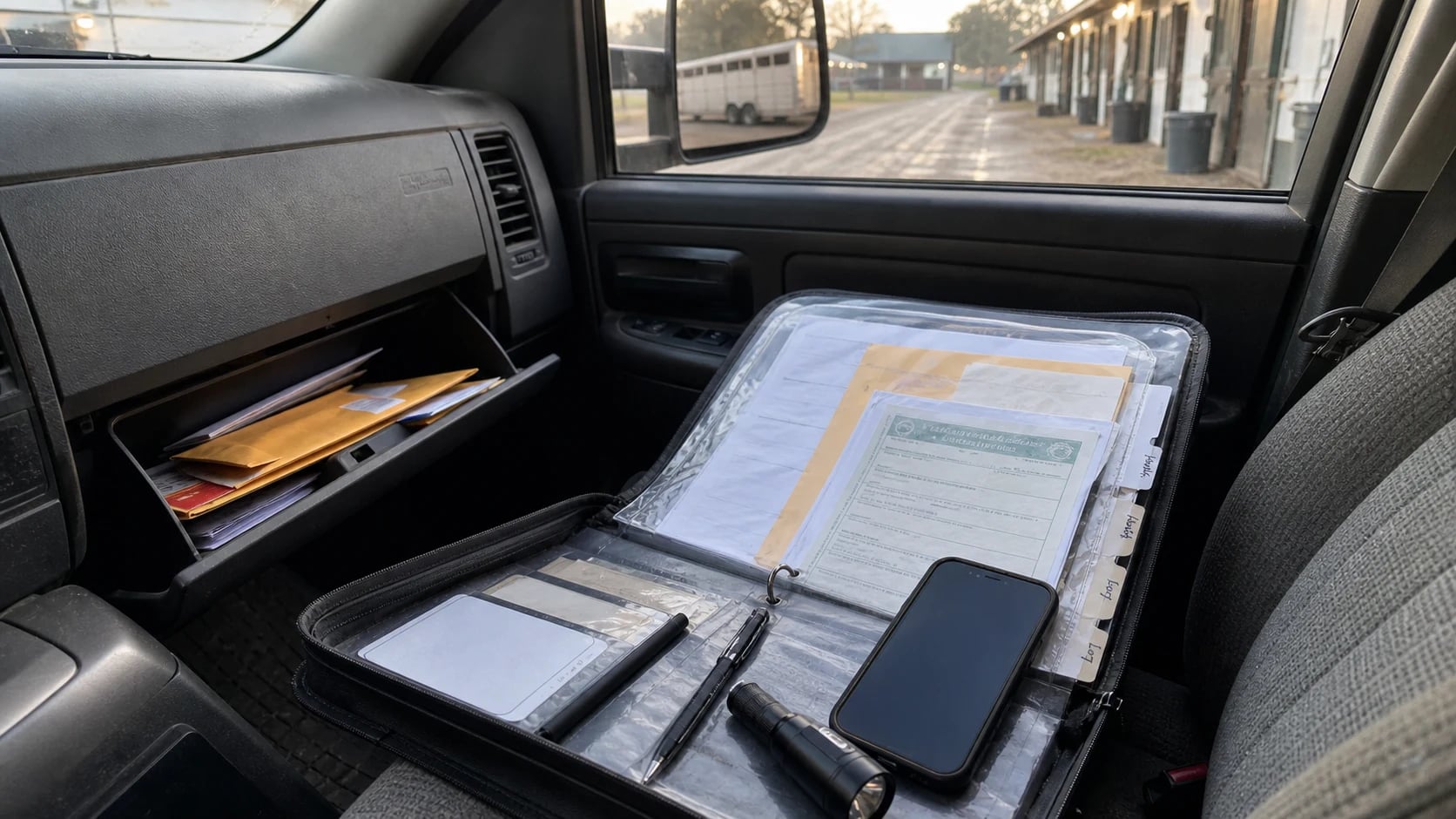
- Keep originals or clean copies in a waterproof folder.
- Send digital copies to the transporter before pickup when possible.
- Put horse name, owner name, destination barn, and phone number on the folder.
- Keep medication instructions separate from general paperwork so they are easy to find.
- Confirm which documents travel with the driver and which stay with the owner or trainer.
- Take photos or scans of every document before the horse leaves.
Common paperwork mistakes
- Assuming a Coggins is enough for every state, facility, sale, or event.
- Realizing the CVI timing window is wrong after the trailer is scheduled.
- Sending blurry phone photos that cannot be read by the receiving facility.
- Forgetting release forms, sale paperwork, or stabling instructions.
- Not giving the transporter the veterinarian or receiving barn contact.
- Packing documents in a trunk instead of keeping them accessible during the trip.
How Palomo helps
Palomo keeps route notes, owner contacts, transporter details, and document handoff expectations tied to the trip. That reduces the chance that a critical paper is buried in a text thread or passed to the wrong person at pickup.
When you request a trip, include the destination, event or facility notes, and any paperwork deadlines you already know. Better context helps transporters quote the job accurately and flag missing details before pickup day.
Horse transport documents FAQ
Do I always need a health certificate?
Not for every local move, but many interstate moves, facilities, sales, and events require one. Confirm with your veterinarian and the receiving facility before pickup.
Can the transporter get the paperwork for me?
Transporters can help carry, share, and check paperwork, but the owner, trainer, and veterinarian should confirm what is legally and operationally required.
Should documents be printed or digital?
Both can help. Keep accessible printed copies for pickup and delivery, and send clear digital copies ahead of time so the transporter and receiving barn are not waiting on a folder.