Trust & safety
Horse Transport Insurance: What Owners Should Ask Before Booking
What owners should ask about horse transport insurance, carrier verification, coverage limits, and quote red flags before booking.

Horse transport insurance is one of the first trust checks owners should make before booking. Ask what coverage the transporter carries, whether the motor carrier authority and USDOT details match the company, what is covered during loading and transit, and how claims or incidents are handled.
Insurance does not replace good route planning, safe equipment, or experienced handling. It does tell you whether the transporter is operating like a real business and whether the risk has been discussed before the horse loads.
Table of contents
- Horse transport insurance: the short answer
- What to ask before booking
- Carrier verification and USDOT checks
- What insurance may not cover
- How insurance fits with private and shared transport
- Red flags in a quote
- How Palomo helps
Horse transport insurance: the short answer
Before booking, ask for proof of insurance, legal business details, USDOT or motor carrier information when applicable, and a clear explanation of what happens if there is a delay, injury, equipment issue, or accident. If the transporter cannot answer clearly, keep looking.
- Ask for current proof of insurance, not just a verbal claim.
- Confirm the business name and USDOT details match the quote.
- Ask whether coverage applies during loading, unloading, layovers, and transit.
- Understand whether your horse's value requires separate mortality or major medical coverage.
- Ask how incidents are documented and who communicates with the owner, trainer, and veterinarian.
What to ask before booking
The goal is not to interrogate a good transporter. It is to make sure the practical questions are answered before money changes hands. A professional transporter should be comfortable explaining insurance, authority, equipment, driver experience, and the route plan.

- What insurance coverage do you carry for commercial horse transport?
- Can I review current proof of insurance before booking?
- What is covered during loading, transit, layover, and unloading?
- Are there exclusions I should understand?
- Are the drivers employees, owner-operators, or subcontractors?
- What documentation is created if there is an incident on route?
Carrier verification and USDOT checks
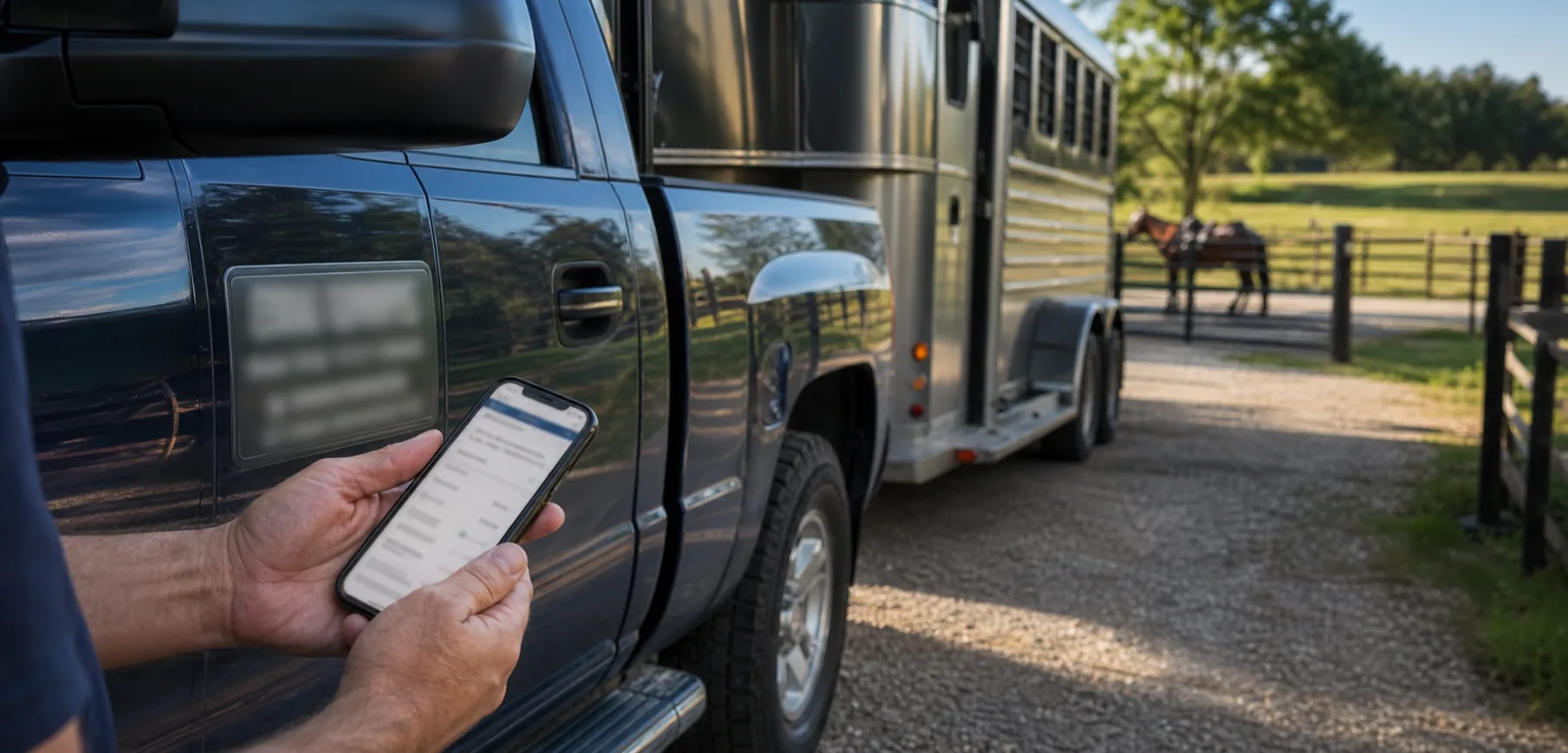
For commercial transport, owners can ask for identifying information such as a USDOT number or motor carrier details when applicable. Public FMCSA tools can help confirm operating status and company identity, but they do not replace asking the transporter direct questions about horse-specific experience and insurance.
The name, phone number, vehicle details, and business identity should make sense across the quote, insurance document, and carrier listing. If the quote is vague or the company identity changes from message to message, treat that as a trust issue.
What insurance may not cover
Transporter insurance is not the same as your own mortality, major medical, or loss-of-use policy. If the horse has a high value, recent sale, international move, or specific medical concern, talk with your insurance agent before transport.
- The horse's full market value may not be covered by the transporter policy.
- Normal stress, illness, or pre-existing conditions may be handled differently from accidents.
- Tack, trunks, equipment, and personal property may need separate discussion.
- Coverage may depend on who is handling the horse and where the incident happens.
How insurance fits with private and shared transport
Private and shared transport can both be professional when the transporter is verified, insured, and clear about the route. The insurance question does not replace the private vs. shared transport decision, but it should be part of every comparison.
Red flags in a quote
- The transporter will not share insurance information.
- The company name does not match the quote, truck, or paperwork.
- The price is unusually low but the details are vague.
- The transporter cannot explain loading, layover, or emergency procedures.
- The driver asks for cash-only payment with no clear booking record.
- The route, timing, or trailer setup changes repeatedly without explanation.
How Palomo helps
Palomo is built around transporter verification, quote comparison, documents, and trip visibility. Owners can compare more than price, and transporters can present the business details that serious owners need to see before booking.
A trustworthy quote should make the transporter, equipment, coverage, route, and next step easy to understand.
Horse transport insurance FAQ
Should I still insure my horse separately?
For valuable horses, recent purchases, international moves, or medical concerns, talk with your equine insurance agent. Transporter coverage and owner coverage are not the same thing.
Is the cheapest insured transporter the best choice?
Not necessarily. Insurance is one trust signal. You still need the right trailer setup, route plan, communication, driver experience, and paperwork process.