Cost guides
How Much Does Horse Transport Cost?
A practical guide to what affects horse transport cost, how quotes are built, and how to compare private and shared transport options.
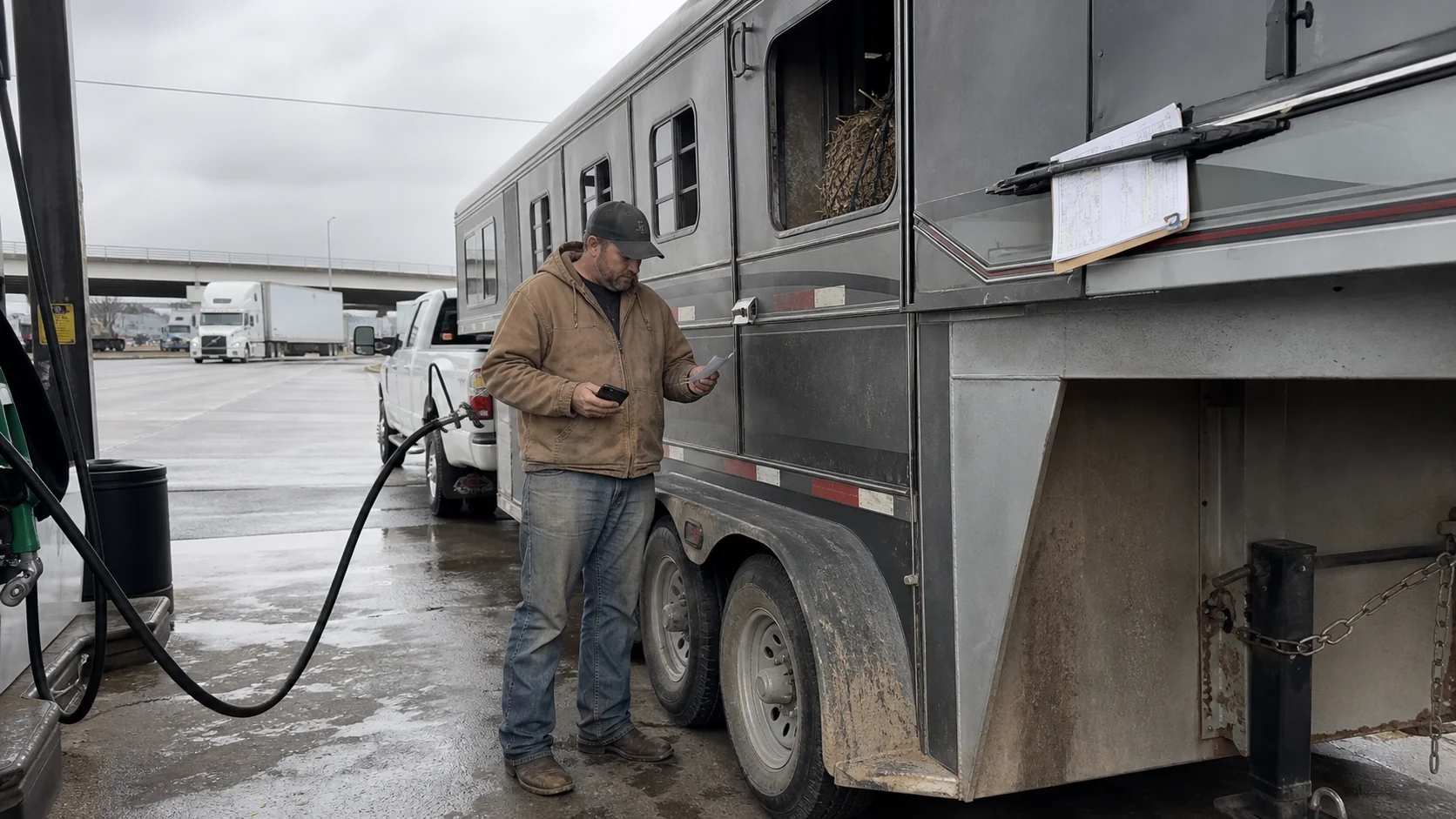
Horse transport cost depends less on a simple mileage number and more on the real trip plan. Distance matters, but so do stall setup, private versus shared transport, layovers, pickup access, paperwork, route demand, and how much schedule flexibility you have.
The best way to understand cost is to compare quotes that are built from the same details. When you request a trip, give transporters the horse, route, timing, documents, and handling notes up front so the price reflects the actual job rather than a rough guess.
Table of contents
- Horse transport cost: the short answer
- What affects a horse transport quote
- Private transport vs. shared load pricing
- Route examples that change the quote
- How to compare quotes without picking the wrong trip
- Common cost surprises
- How Palomo helps
Horse transport cost: the short answer
A horse transport quote is usually shaped by the route, the trailer space required, how direct the trip needs to be, whether layovers are needed, and how easy the pickup and delivery locations are for a loaded rig. A flexible shared trip on a busy corridor can quote very differently from a private direct haul with a fixed arrival window.
For SEO pages and quick planning, it is tempting to look for one flat horse transport cost per mile. In practice, that shortcut misses the things owners care about most: the horse's comfort, the driver's route, overnight care, equipment, insurance, communication, and whether the transporter is actually right for the job.
What affects a horse transport quote
- Distance and corridor: common routes such as Ocala to Lexington are easier to fill than unusual one-off routes.
- Trip type: private direct transport usually costs more than a shared load because the trailer is dedicated to your horse or group.
- Stall setup: box stalls, extra space, stallion handling, mare and foal needs, or oversized horses can change trailer capacity.
- Timing: short-notice pickup, exact arrival windows, show move-in days, and sale deadlines can raise the cost.
- Layovers: longer routes may need a vetted barn stop, stall fee, feeding plan, and extra driver time.
- Access: narrow farm lanes, soft ground, low trees, locked gates, or no safe turnaround can change the equipment or schedule.
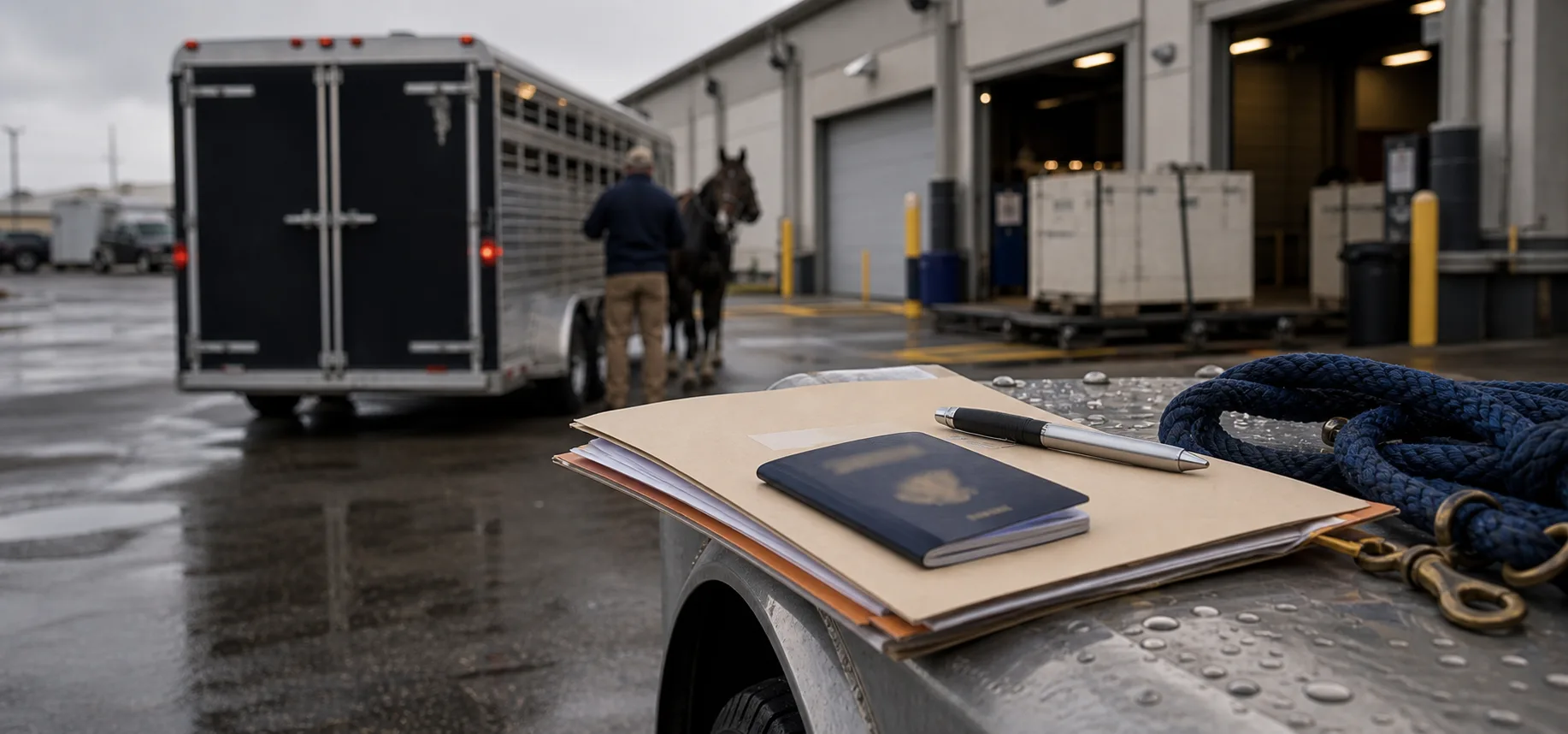
- Paperwork: interstate, sale, event, and international requirements add coordination time when documents are not ready.
Private transport vs. shared load pricing
Private transport is usually the cleaner fit when the horse has a strict schedule, special handling needs, a high-value sale deadline, a medical concern, or a show arrival window that cannot move. The quote is higher because the route is built around one owner, barn, or group.
Shared-load transport can be efficient when the horse is a good traveler, the route is common, and the pickup or delivery window has some flexibility. The tradeoff is that the trip may include other stops, and your horse's time on the trailer depends on the route plan.
For owners deciding between the two, our private vs. shared horse transport guide goes deeper into the handling and timing tradeoffs.
Route examples that change the quote
A winter seasonal move into Wellington or Ocala can price differently from a quiet farm-to-farm move because demand clusters around the same dates. A show route into Tryon, Bridgehampton, Lake Placid, or Traverse City may also depend on stabling windows, venue traffic, and whether the transporter has room for multiple horses moving in the same direction.
Longer trips add another layer. A cross-country haul may need layover barns, feed planning, extra driver scheduling, and weather routing. That is why a clean long-distance quote should explain stops, update cadence, trailer setup, and how delays are handled, not just the final number.
How to compare quotes without picking the wrong trip
- Confirm whether the quote is private, shared, direct, or multi-stop.
- Ask what trailer space your horse will have and whether a box stall is included or extra.
- Check insurance, USDOT authority, equipment details, and recent route experience.
- Ask how often the horse will be checked, watered, fed, and updated on longer routes.
- Confirm whether layover stalls, hay, bedding, tolls, fuel surcharge, or waiting time are included.
- Look for clear pickup and delivery windows instead of vague promises.
Common cost surprises
- The horse needs a box stall, but the original quote assumed a standard stall.
- Pickup access is tight, so a smaller rig or extra shuttle plan is required.
- Paperwork is missing and the trip has to be delayed.
- The receiving barn can only accept arrivals during a short window.
- The owner adds tack trunks, hay, buckets, or extra gear after the quote is accepted.
- Weather pushes the route into an overnight layover that was not discussed.
How Palomo helps
Palomo is built so owners and trainers can compare horse transport quotes with the operational details in view. Instead of choosing only by price, you can compare transporter verification, trailer fit, timing, notes, and the plan for documents and updates.
That matters because the cheapest quote is not always the best value. The right quote is the one that gets the horse moved safely, legally, and on schedule with the least uncertainty for the owner, trainer, transporter, and receiving barn.
A good quote explains what is included, what can change, and how the transporter will handle the horse between pickup and delivery.
Horse transport cost FAQ
Is private horse transport always better?
No. Private transport is often best for strict timing, sensitive horses, or special handling. Shared transport can be a good fit when the horse travels well and the route is common.
Why do two quotes for the same route look different?
They may include different trailer space, stops, layovers, insurance, timing, or route assumptions. Always compare what is included before comparing the final number.
How can I get a more accurate quote?
Share the exact addresses, horse size, loading history, stall preference, date flexibility, paperwork status, access notes, and any gear that must travel. Clear details help transporters price the real trip.