Event logistics
Horse Show Transport Checklist for Trainers and Owners
A horse show transport checklist for timing, stabling, paperwork, gear, trainer handoffs, and venue arrival details.
Shipping a horse to a show is not just a trailer booking. A clean show transport plan covers entries, stabling, arrival windows, route timing, paperwork, trainer contacts, gear, feed, and what happens if the class schedule or weather changes.
Use this horse show transport checklist when moving into a major event, a rated week, a local circuit, or a seasonal base where multiple horses, staff, trunks, and documents have to arrive in the right order.
Table of contents
- Horse show transport: the short version
- Confirm show timing before you book
- Get stabling and venue access details
- Prepare paperwork and health records
- Pack gear without overloading the trip
- Plan the handoff with the trainer or barn manager
- Common show transport mistakes
- How Palomo helps
Horse show transport: the short version
Before accepting a show transport quote, confirm the horse's arrival day, stall assignment, venue entrance, trainer contact, paperwork requirements, gear list, feed plan, and who is authorized to release or receive the horse. Showgrounds are busy, and small details can create real delays.
- Arrival date and preferred arrival window
- Show name, trainer name, barn, aisle, and stall number when available
- Trailer entrance, staging lot, gate code, and show office instructions
- Coggins, CVI or health certificate, vaccination records, and event paperwork
- Feed, hay, supplements, medications, and water notes
- Trunks, buckets, blankets, tack, and what the transporter has agreed to haul
Confirm show timing before you book
Show transport is driven by schedule. Horses may need to arrive before schooling, jogs, veterinary inspection, schooling ring access, or a trainer's setup day. If the horse arrives too late, the trainer may lose a valuable preparation window. If the horse arrives too early, the stall or staff may not be ready.
Major events such as the Kentucky Three-Day Event, WEF Saturday Night Lights, or the Hampton Classic have different rhythms. Move-in timing, traffic, stabling offices, and barn access can matter as much as distance.
Get stabling and venue access details
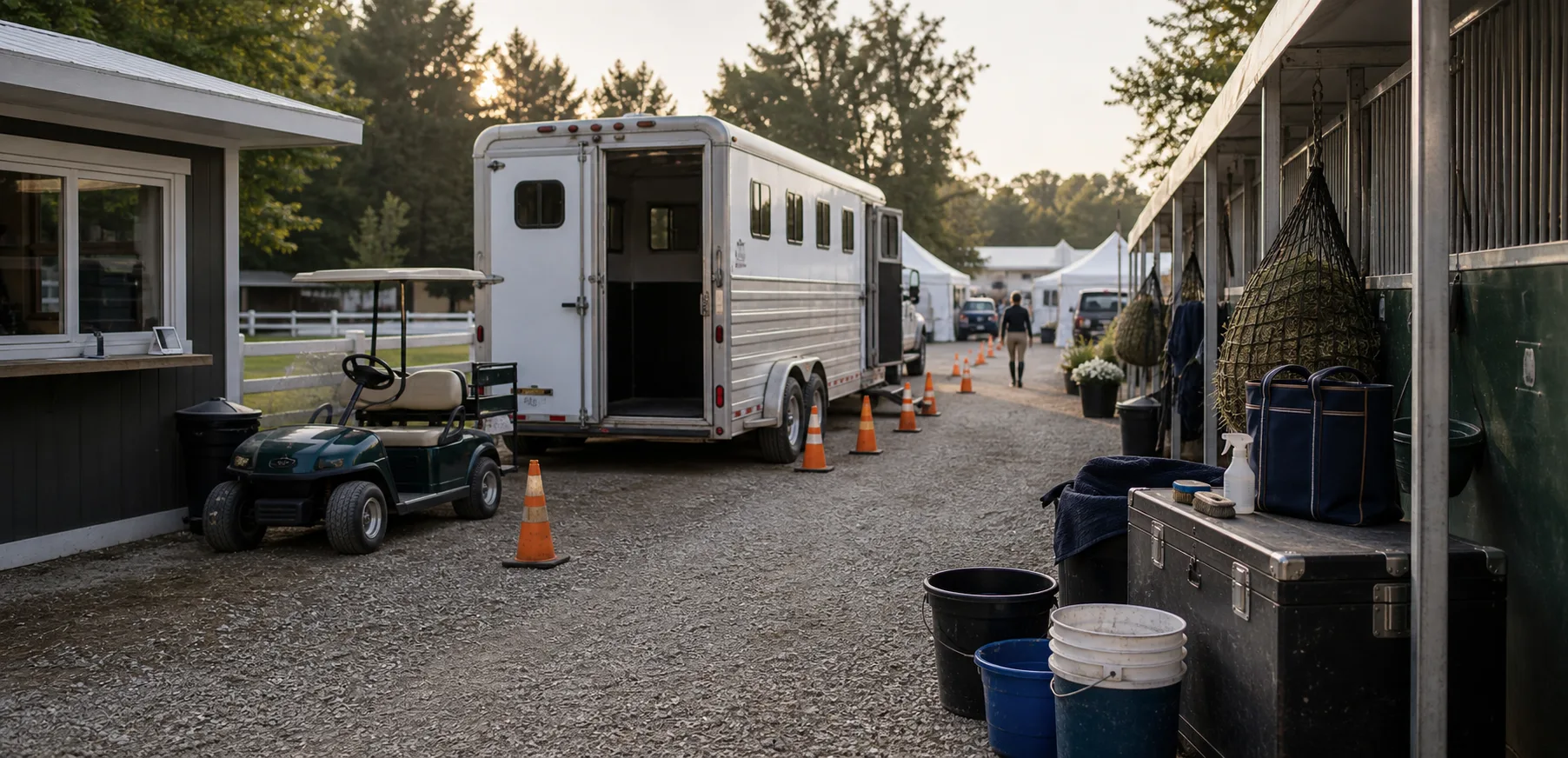
The transporter needs more than the show name. Provide the exact entrance, trailer route, show office instructions, receiving contact, and where the horse should go after unloading. If the stall assignment is not available yet, give the person who will have it on arrival day.
- Venue address plus trailer-specific entrance
- Back gate, staging lot, or trailer parking instructions
- Trainer, groom, or barn manager phone number
- Stall assignment, barn aisle, tent number, or receiving office
- Arrival time restrictions or quiet hours
- Any paperwork that must be shown before unloading
Prepare paperwork and health records
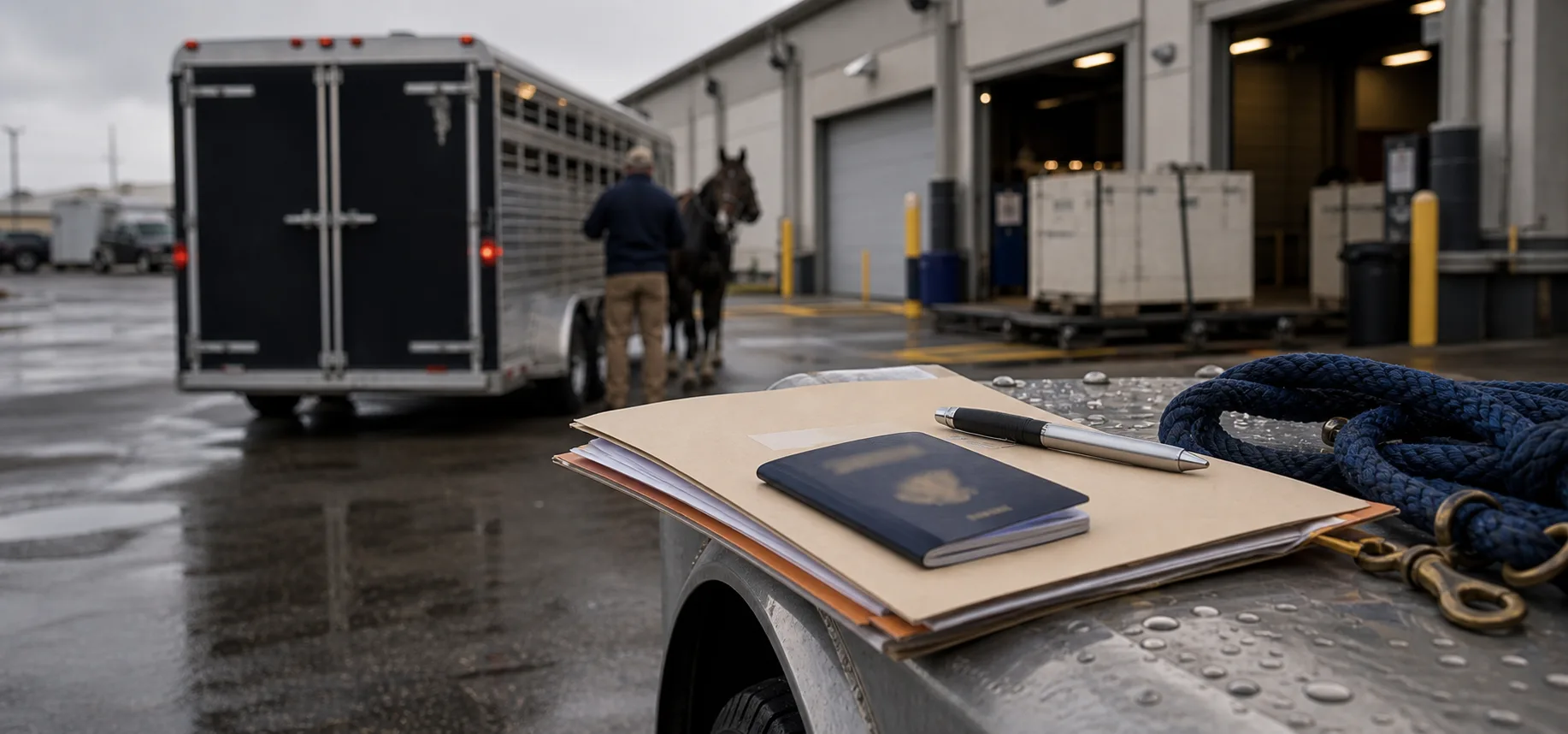
Showgrounds may ask for documents before the horse can stable. Requirements vary by state, facility, and event. Confirm Coggins, CVI or health certificate, vaccination requirements, entry confirmations, release forms, and any discipline-specific paperwork before pickup day.
For a deeper paperwork checklist, use our guide to horse transport documents before the trailer is scheduled.
Pack gear without overloading the trip
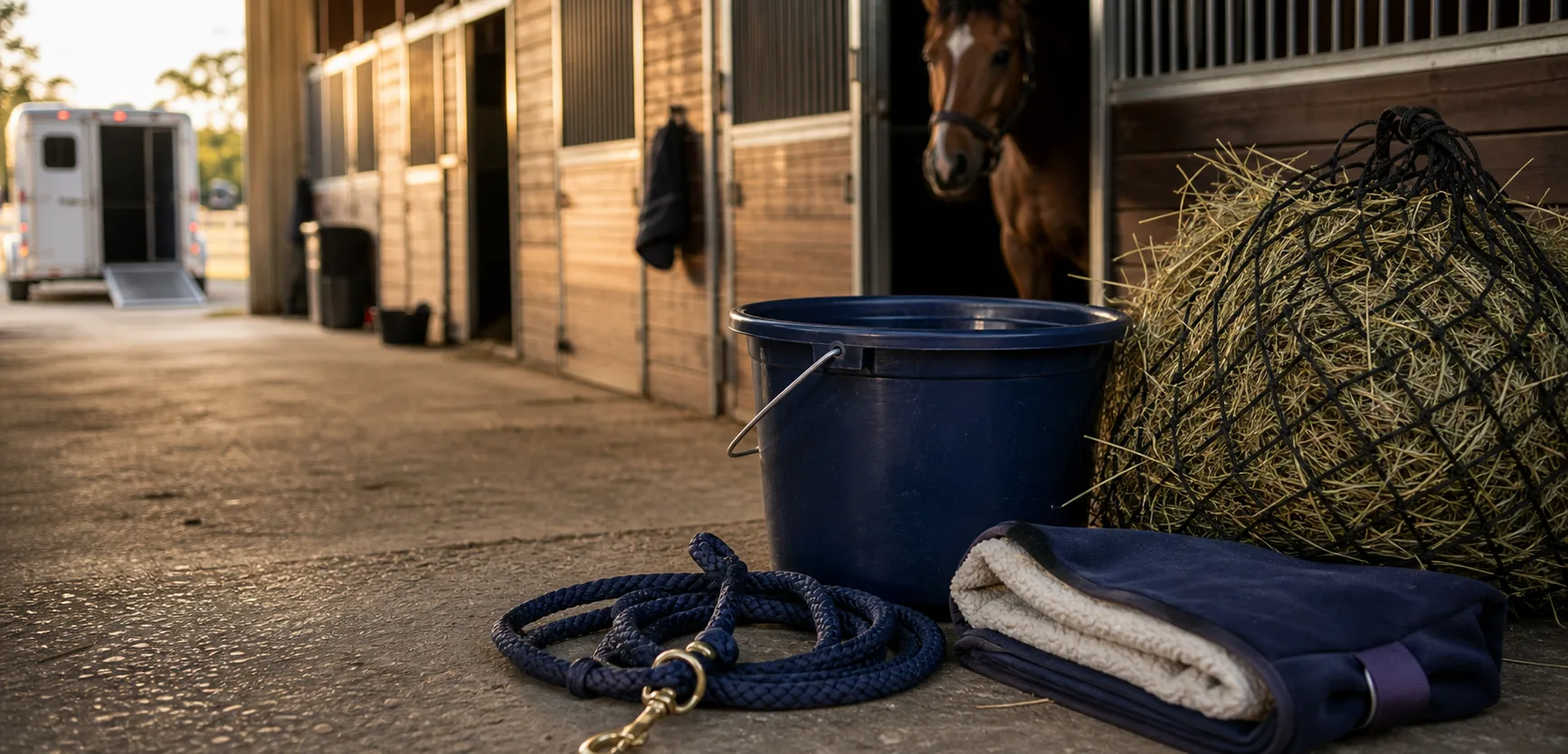
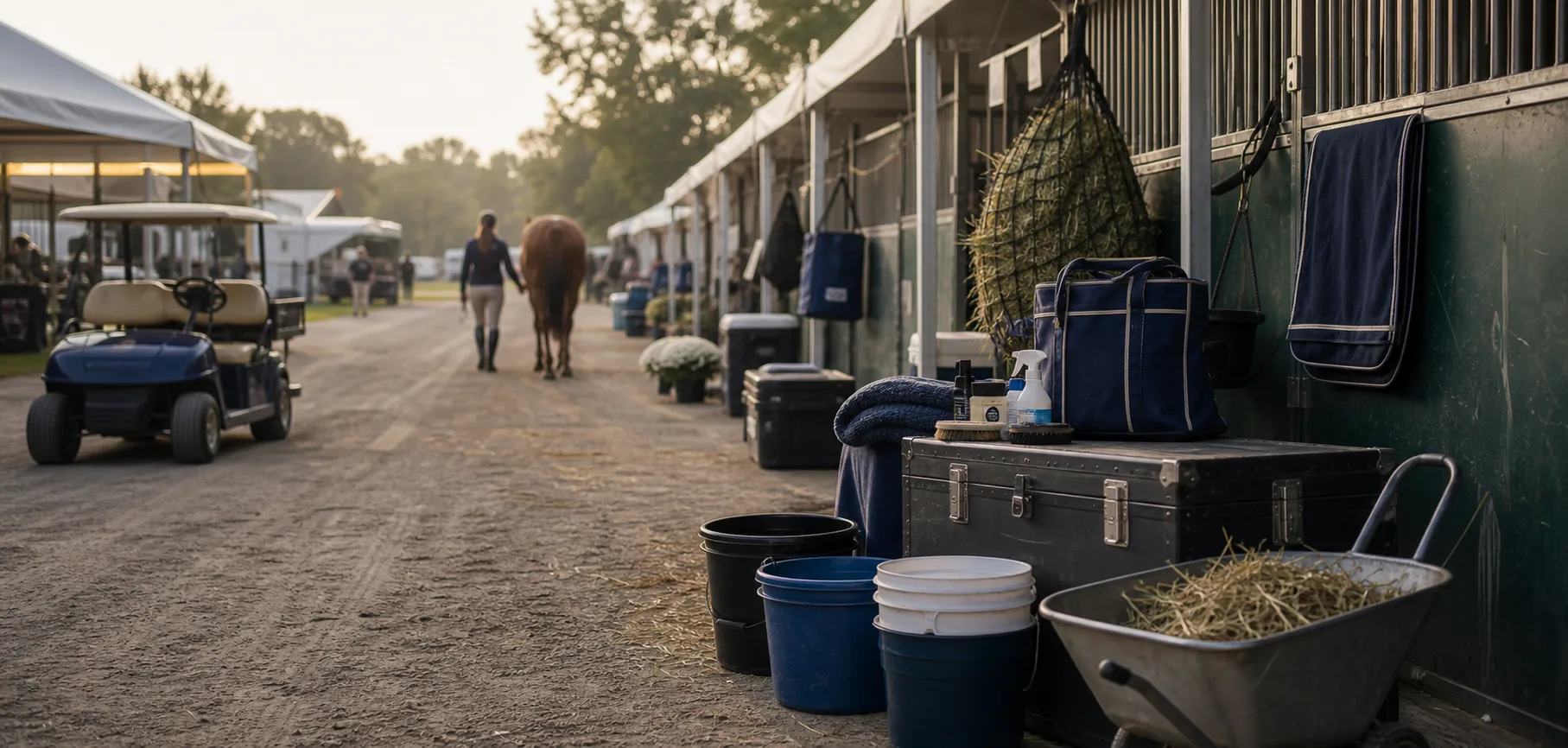
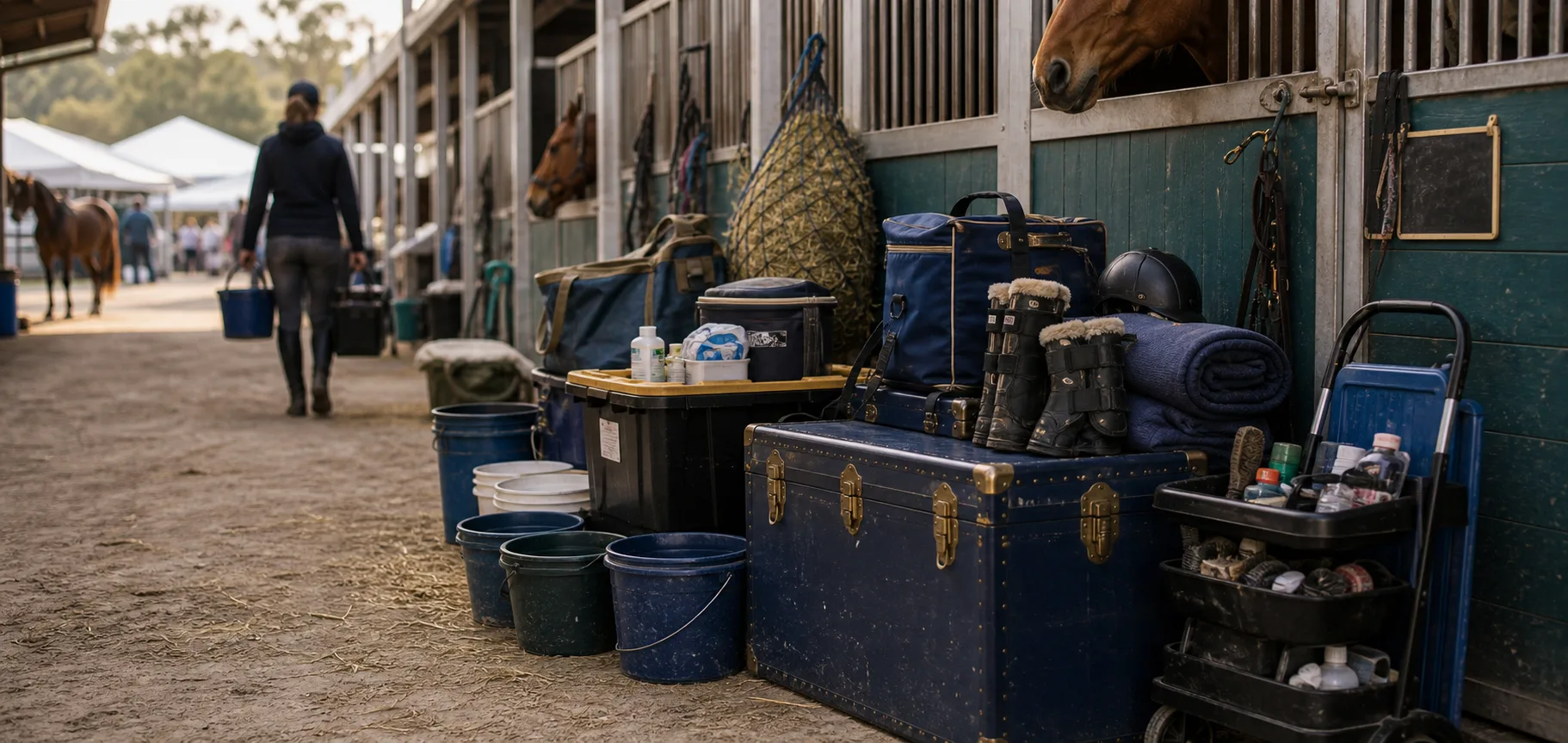
A horse show move can quickly turn into a gear move. Tack trunks, feed bins, hay, buckets, blankets, coolers, fans, carts, and grooming equipment all take space and weight. Confirm what the transporter has agreed to haul before pickup.
- Label every trunk, bucket, hay bag, blanket, and medication container.
- Separate critical medication and paperwork from general gear.
- Keep irreplaceable tack with the trainer unless the transporter has agreed to carry it.
- Pack feed and hay the horse already knows.
- Do not add extra trunks after the quote without checking capacity.
Plan the handoff with the trainer or barn manager
At shows, the owner is not always the person receiving the horse. The trainer may be in a class, the groom may be setting stalls, and the barn manager may be coordinating several arrivals. Put the contact order in writing so the transporter is not guessing.
For busy circuits around Tryon, Lexington, Ocala, Saratoga Springs, Bridgehampton, or Traverse City, a precise handoff can be the difference between a calm arrival and an unnecessary hold in the trailer lot.
Common show transport mistakes
- Booking pickup before the stall assignment or arrival window is clear.
- Not giving the transporter the trailer entrance or staging lot instructions.
- Assuming the trainer will answer the phone during classes.
- Sending incomplete health documents to the show office.
- Packing more gear than the trailer can safely carry.
- Forgetting return transport until the closing weekend is already full.
How Palomo helps
Palomo lets owners and trainers request a trip, compare verified transporters, and keep show-specific route notes, paperwork expectations, and contact details attached to the booking. That makes it easier for the owner, trainer, barn manager, and driver to work from the same plan.
A successful show haul is not only arriving on time. It is arriving with the right documents, gear, contacts, and stall plan already organized.
Horse show transport FAQ
How early should I book show transport?
Book as soon as the show plan is likely, especially for major circuits and seasonal routes. Closing weekends and move-in days fill faster than routine farm moves.
Should my horse arrive the day before showing?
That depends on the horse, class schedule, trainer preference, distance, and venue rules. Confirm the arrival target with the trainer before requesting quotes.
Can the transporter bring tack trunks and feed?
Often yes, but only if space and weight are agreed up front. List gear clearly in the request so transporters can quote the real load.