Route planning
Long-Distance Horse Transport: How to Plan a Safe Trip
How to plan long-distance horse transport around layovers, trailer setup, feed, water, paperwork, weather, and owner updates.
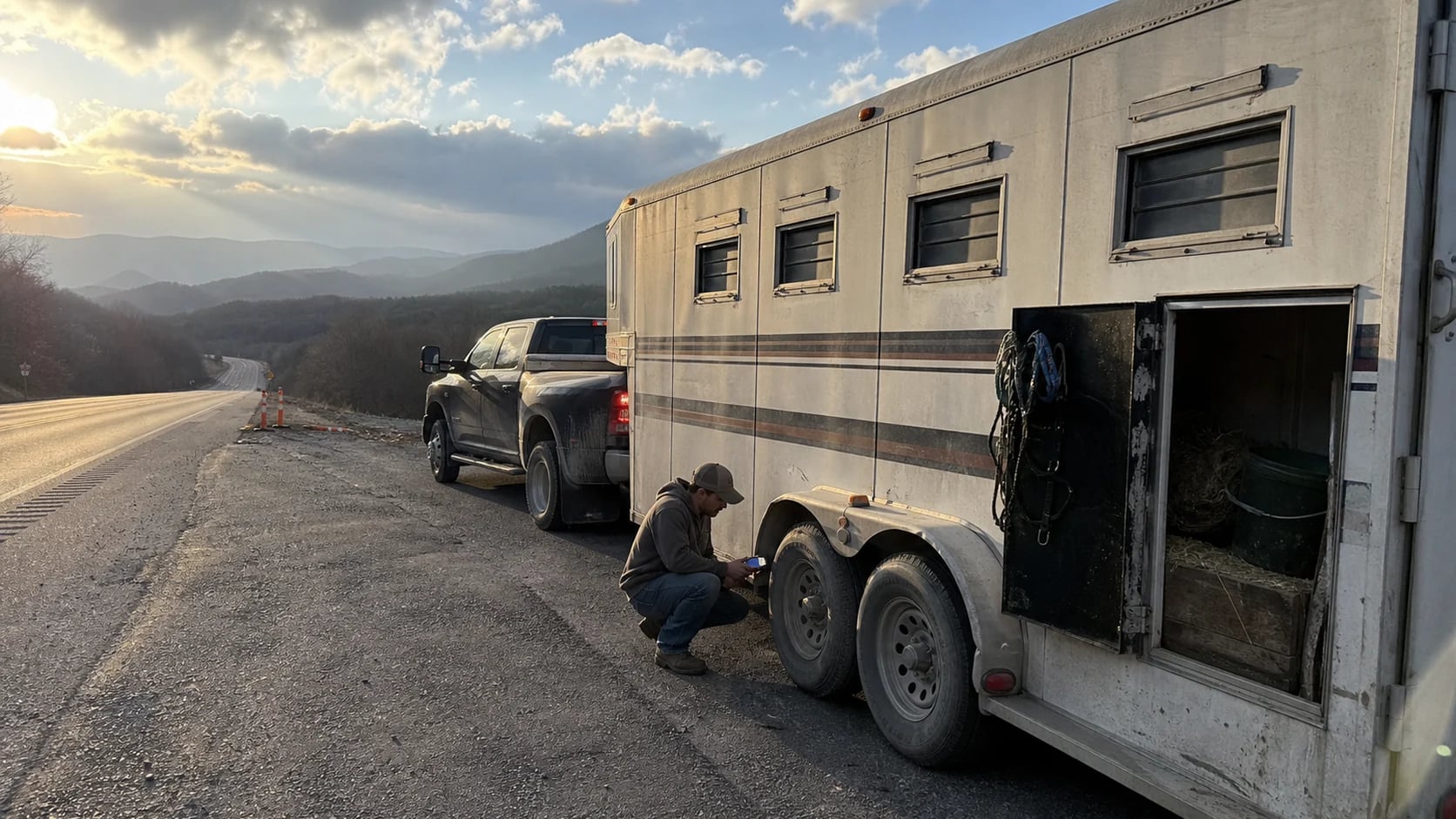
Long-distance horse transport works best when the route is planned around the horse, not only the mileage. A clean plan covers trailer setup, feed, water, layovers, weather, paperwork, emergency contacts, and how the owner or trainer will receive updates.
Use this guide before booking a cross-state or cross-country trip, especially when the horse is moving between seasonal bases, major events, sales, or training barns.
Table of contents
- Long-distance horse transport: the short version
- Build the route around rest and layovers
- Pack feed, hay, water notes, and medications
- Choose the right trailer setup
- Plan for weather and seasonal corridors
- Set update expectations before pickup
- Common long-distance mistakes
- How Palomo helps
Long-distance horse transport: the short version
A good long-distance horse transport plan explains where the horse is picked up, where the horse is delivered, how long the route is expected to take, where stops or layovers happen, what the horse eats, what paperwork is required, and who handles decisions if weather or traffic changes the plan.
- Confirm pickup and delivery addresses, contact people, and access notes.
- Ask whether the trip is private, shared, direct, or multi-stop.
- Confirm stall setup, ventilation, bedding, cameras, and trailer condition.
- Pack familiar feed, hay, medication instructions, and water notes.
- Discuss layover barns, hand-walking, rest stops, and weather holds.
- Agree on update timing before the trailer leaves.
Build the route around rest and layovers
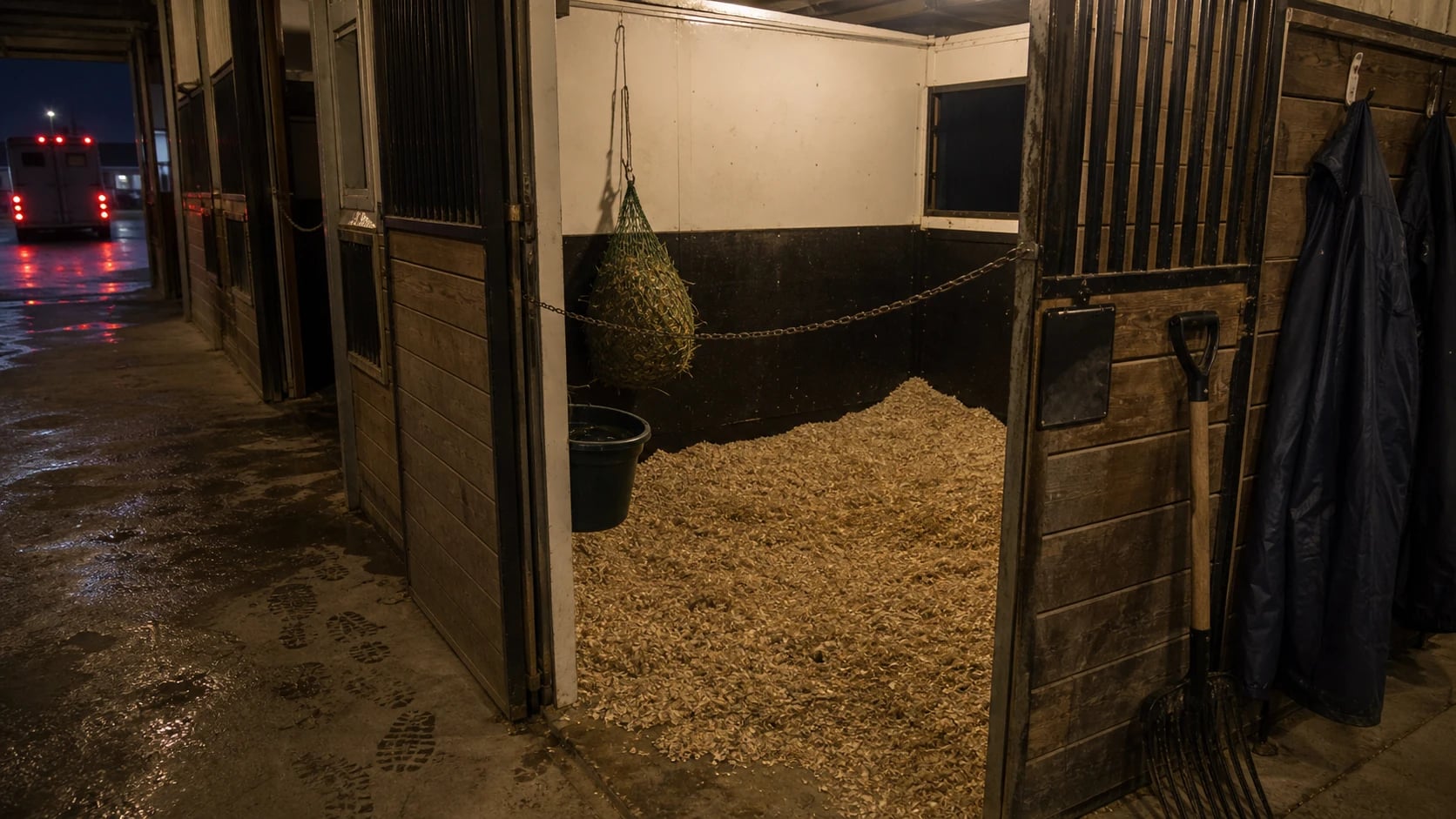
Some long routes can be handled with planned stops and experienced drivers. Others should include a layover barn where the horse can come off the trailer, rest, eat, drink, and be checked properly. The right answer depends on distance, horse condition, weather, road conditions, trailer setup, and whether the route is private or shared.
Ask where the layover is, who manages the horse there, whether the stall is reserved, and whether the layover is included in the quote. On common corridors such as Florida to Kentucky, Florida to the Northeast, or Texas to the East Coast, experienced transporters often know which stops work and which ones create delays.
Pack feed, hay, water notes, and medications
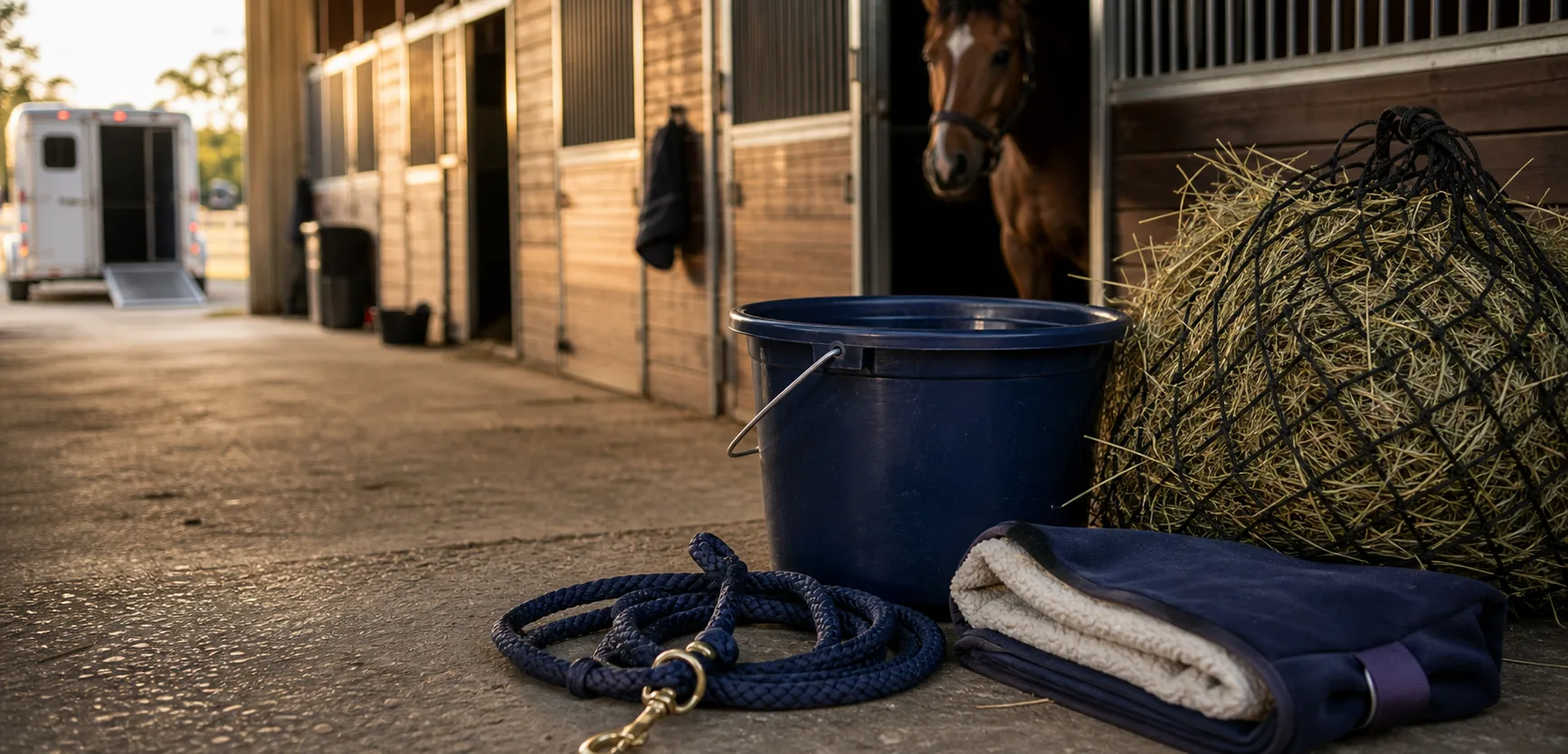
Long trips magnify small feeding mistakes. Do not change hay, grain, supplements, or medication routines right before the horse ships unless your veterinarian tells you to. Pack enough familiar feed for the planned trip plus a reasonable delay buffer.
- Hay type and amount
- Grain or concentrate schedule
- Supplements in labeled containers
- Medication name, dose, timing, and veterinarian contact
- Water preference notes if the horse is picky
- Any history of colic, dehydration, tying up, shipping fever, or stress behavior
Choose the right trailer setup
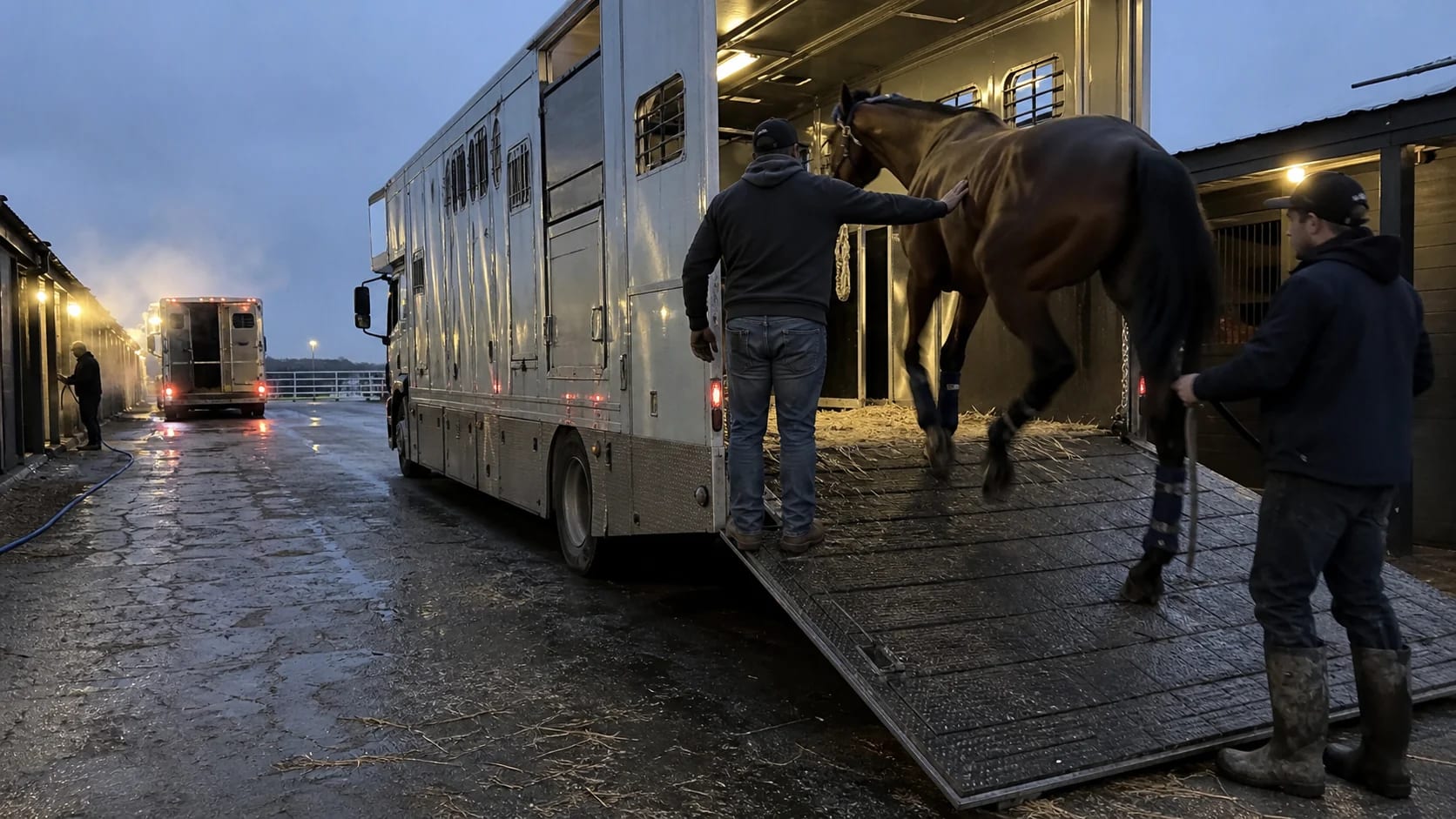
Trailer setup affects comfort, safety, and price. A horse that ships quietly in a standard stall may not need the same setup as a stallion, weanling, mare and foal, large warmblood, sale horse, or horse with a difficult loading history.
For some horses, door-to-door horse transport with fewer handoffs is the cleanest option. For others, shared transport with a transporter who runs that route every week may be the most practical fit. The important part is matching the setup to the horse, not forcing the horse into the cheapest open slot.
Plan for weather and seasonal corridors
Seasonal horse movement can concentrate demand and weather risk. Winter routes into Wellington, Ocala, and Aiken bring different planning issues than summer moves to Saratoga, Bridgehampton, Traverse City, or Lake Placid. Heat, storms, mountain roads, freezing conditions, and event arrival windows can all change the right pickup time.
Ask how the transporter handles weather delays. A serious plan should include communication, safe stopping options, and a decision process if the original schedule becomes unsafe.
Set update expectations before pickup
- Pickup confirmation
- Departure update
- Stop or layover check-ins
- Photos when appropriate and safe
- Delay or route-change updates
- Arrival window and delivery confirmation
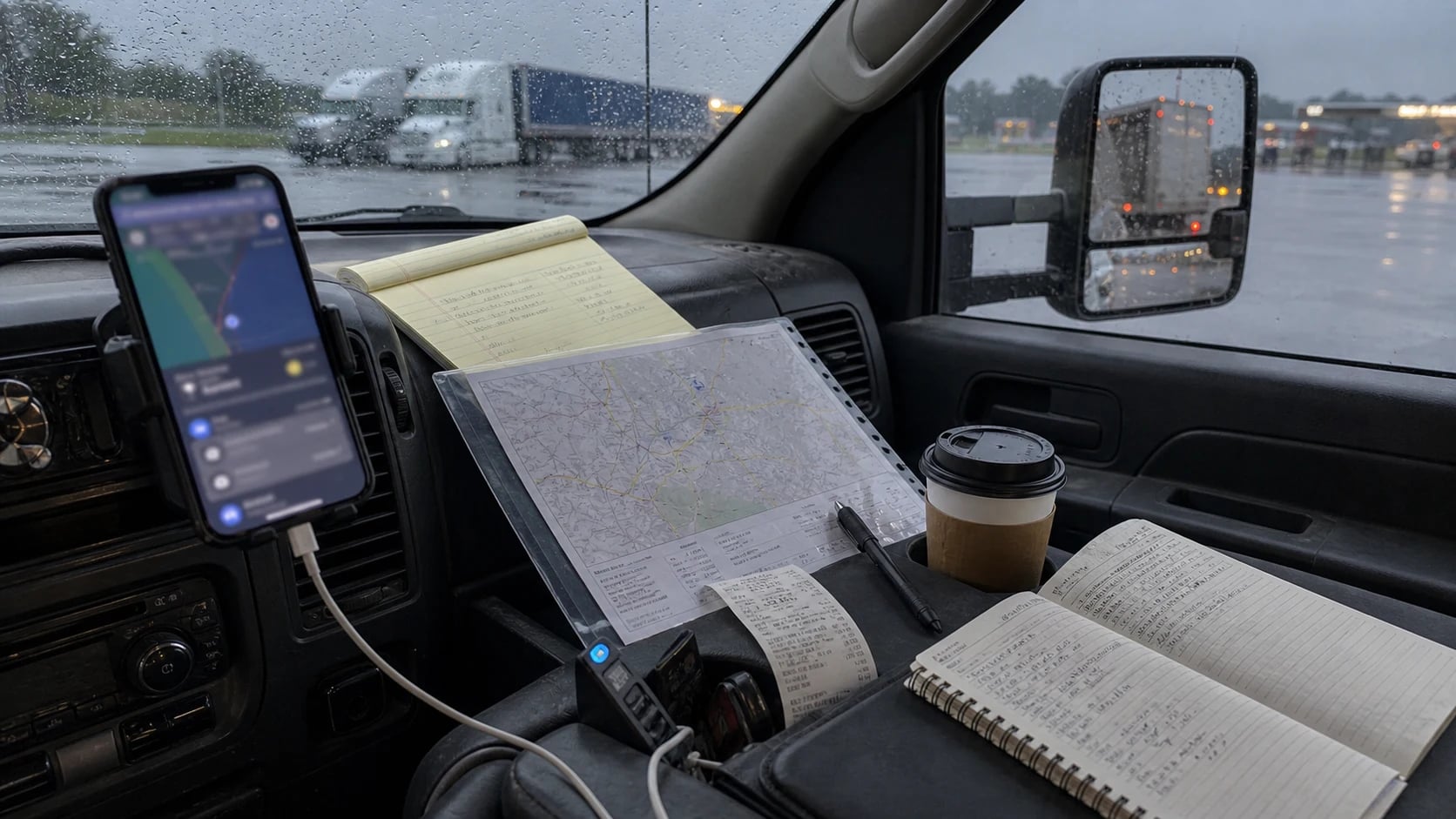
Updates are not just nice to have. They help trainers plan turnout, receiving stalls, feed, medications, and staffing. They also reduce the stress of not knowing whether the trailer is still on schedule.
Common long-distance mistakes
- Booking only by price without understanding stops or layovers.
- Not disclosing that the horse needs extra space, ships loose, or loads poorly.
- Packing feed without written instructions.
- Forgetting destination access, gate codes, or receiving barn hours.
- Assuming a transporter can safely keep the exact schedule through bad weather.
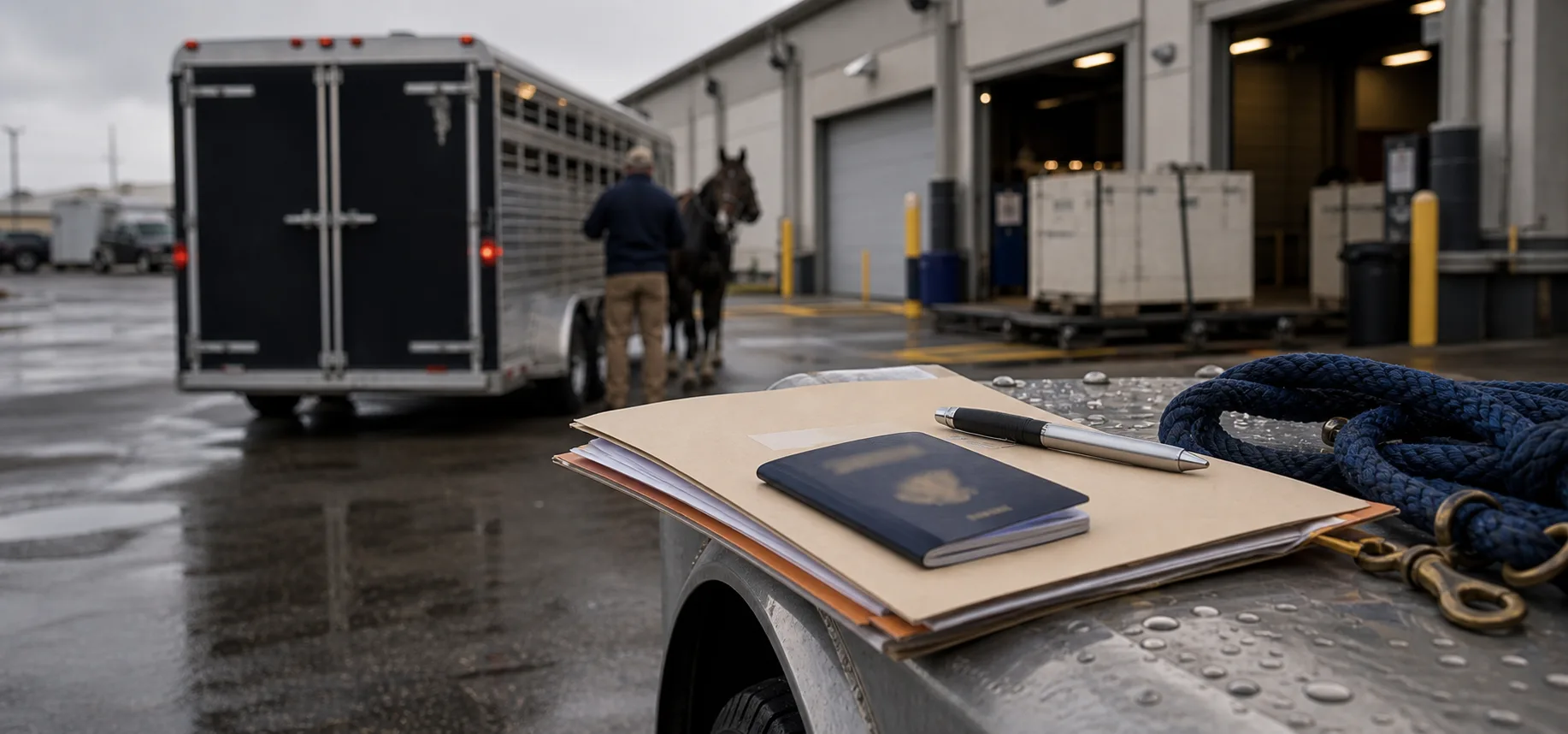
- Not confirming paperwork before the trip crosses state lines.
How Palomo helps
Palomo gives owners and trainers a structured way to request a trip, compare verified transporters, and keep route notes, documents, timing, and updates attached to the move. That is especially useful when a long-distance trip involves more than one barn contact or a strict event deadline.
The longer the haul, the more important it is to make the plan visible before pickup day.
Long-distance horse transport FAQ
Does every long trip need a layover?
No. It depends on distance, horse condition, route, trailer setup, weather, and driver schedule. Ask the transporter to explain the plan instead of assuming one rule fits every route.
Should I use private transport for a cross-country trip?
Private transport can be better for strict timing or sensitive horses, but a well-run shared route may work when the horse travels well and the transporter has a strong plan.
What should I send before pickup?
Send documents, contacts, access notes, feeding instructions, medication instructions, loading notes, and destination details before pickup so the driver is not collecting key information on the ramp.