Horse transport planning
Horse Transport Checklist: What to Prepare Before Pickup
A practical horse transport checklist for documents, feed, handling notes, timing, and barn handoff details before pickup day.
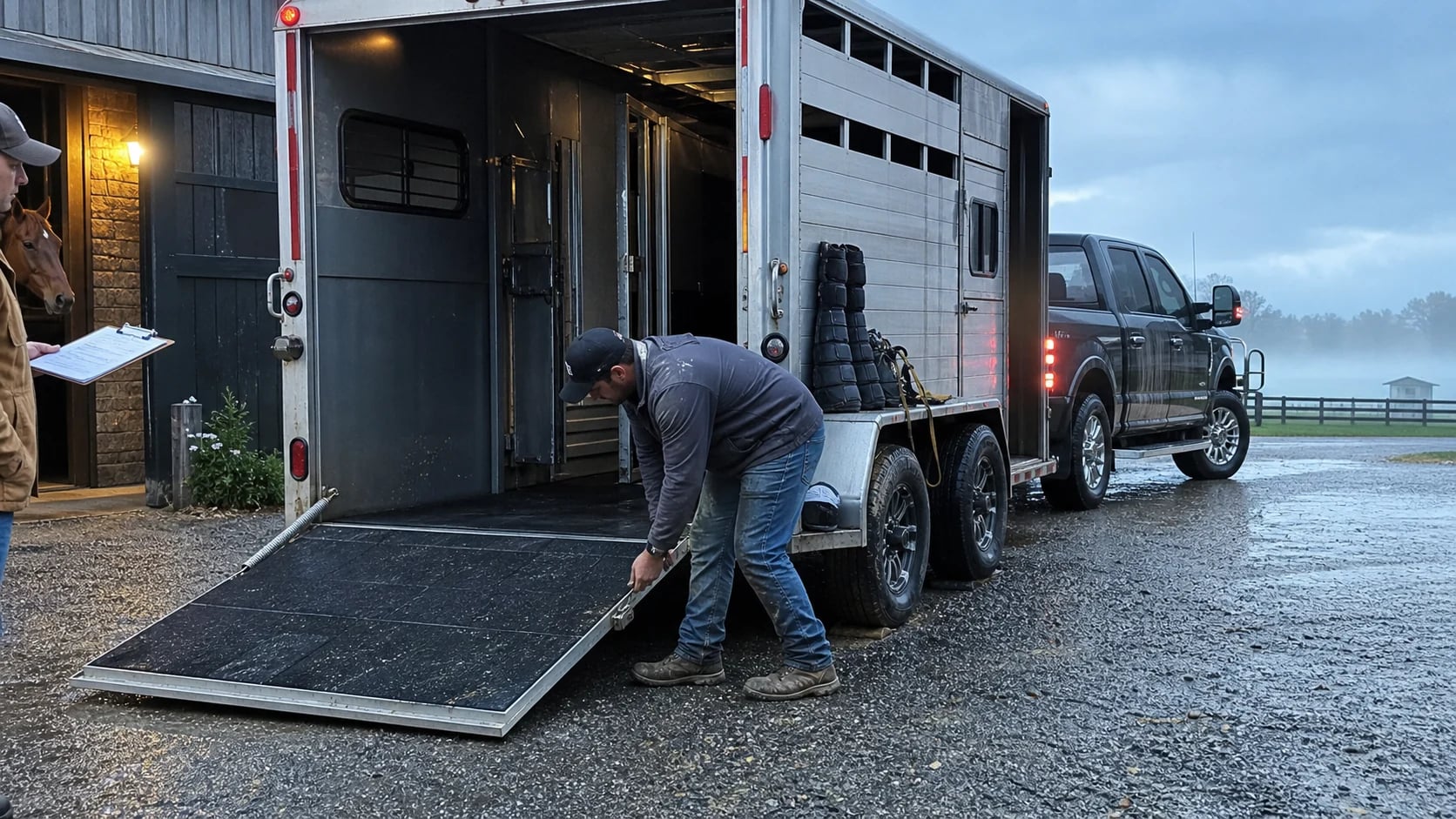
A good horse transport pickup is won before the trailer arrives. Have the route, documents, feed, handling notes, and emergency contacts ready in one place so the transporter can load calmly, confirm the plan, and leave on time.
Use this horse transport checklist when you request a trip, compare quotes, or prepare a barn handoff for a show, sale, clinic, layover, or seasonal move.
Table of contents
- Horse transport checklist: the short version
- Confirm the route and timing
- Get documents ready before pickup
- Pack feed, water, medications, and contact notes
- Prepare your horse for loading
- Label what travels with the horse
- Common pickup mistakes
- How Palomo helps
Horse transport checklist: the short version
If you only have 20 minutes before pickup, focus on the items that affect safety, legality, and communication. The transporter needs to know who is releasing the horse, where the horse is going, what paperwork travels with them, and what handling details could change the loading plan.
- Confirm pickup and delivery addresses, gate codes, barn contacts, and trailer access.
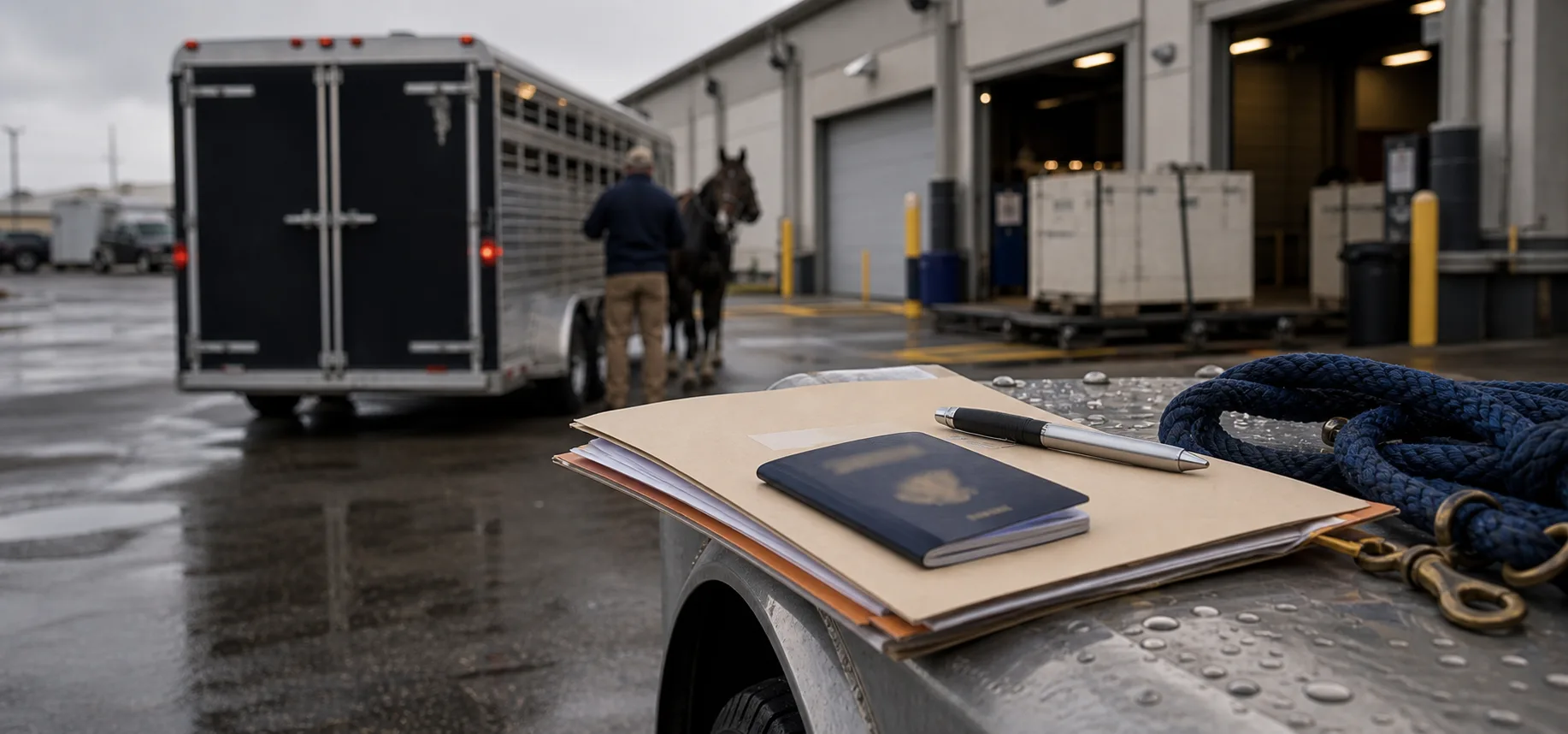
- Put Coggins, health certificate/CVI when required, registration, passport, event paperwork, and emergency contacts in one folder.
- Pack labeled feed, hay, supplements, medications, water instructions, and any layover notes.
- Write down loading quirks, stallion or mare/foal handling, injury concerns, and preferred equipment.
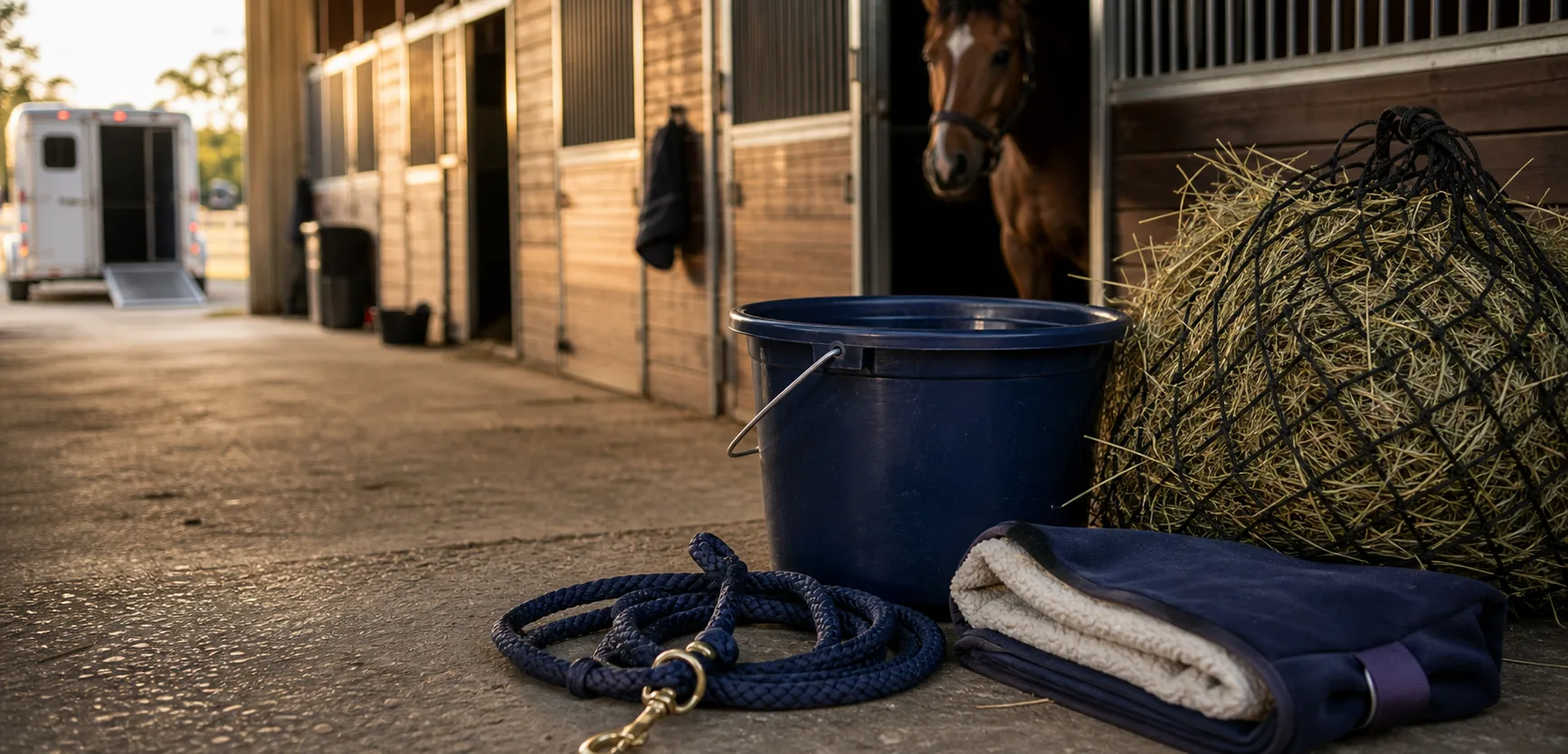
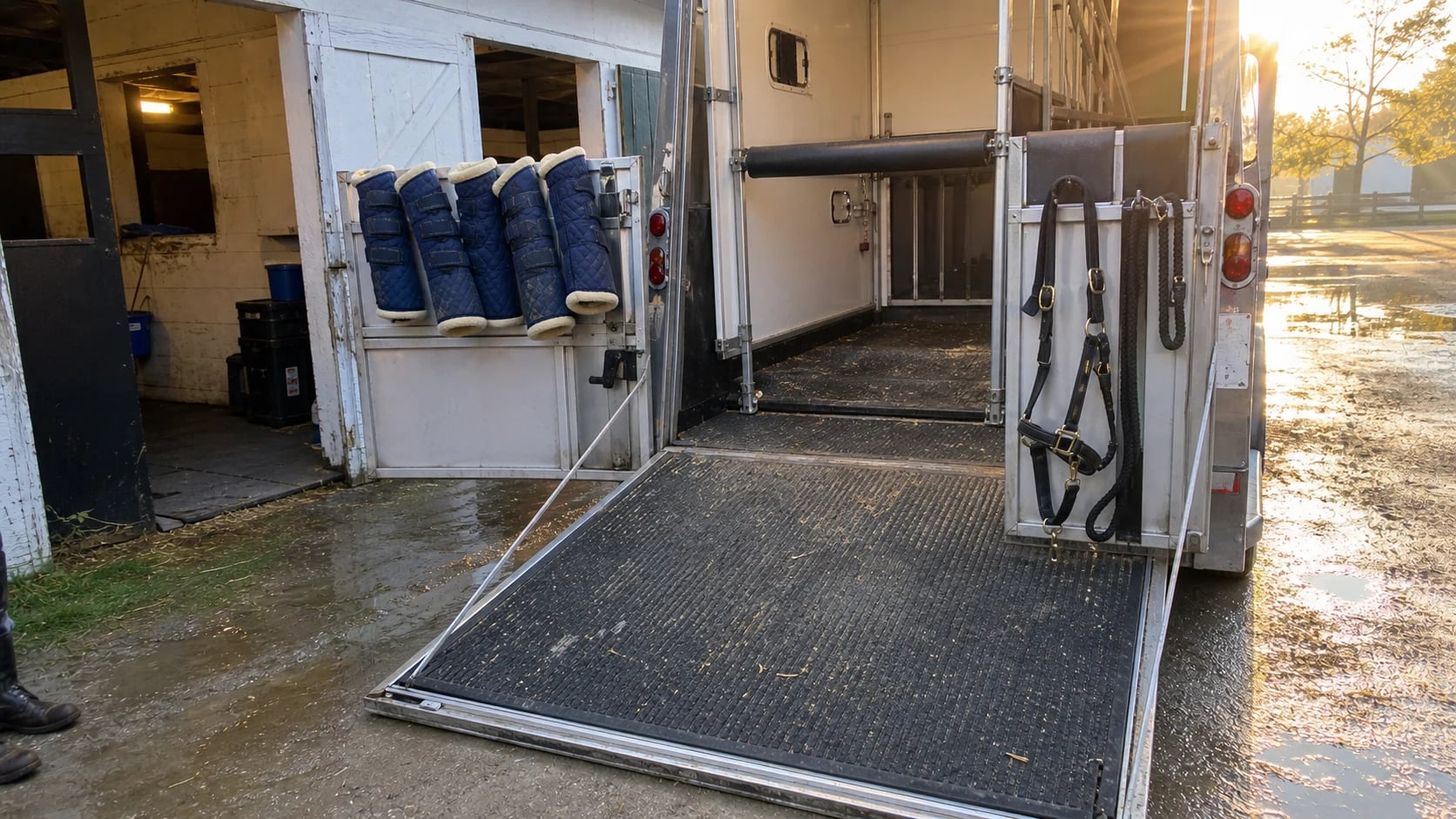
- Keep halter, lead, wraps or boots, sheet, and shipping gear clean, fitted, and easy to reach.
- Take clear photos of the horse before loading, including legs, body, and any existing marks.
Confirm the route and timing
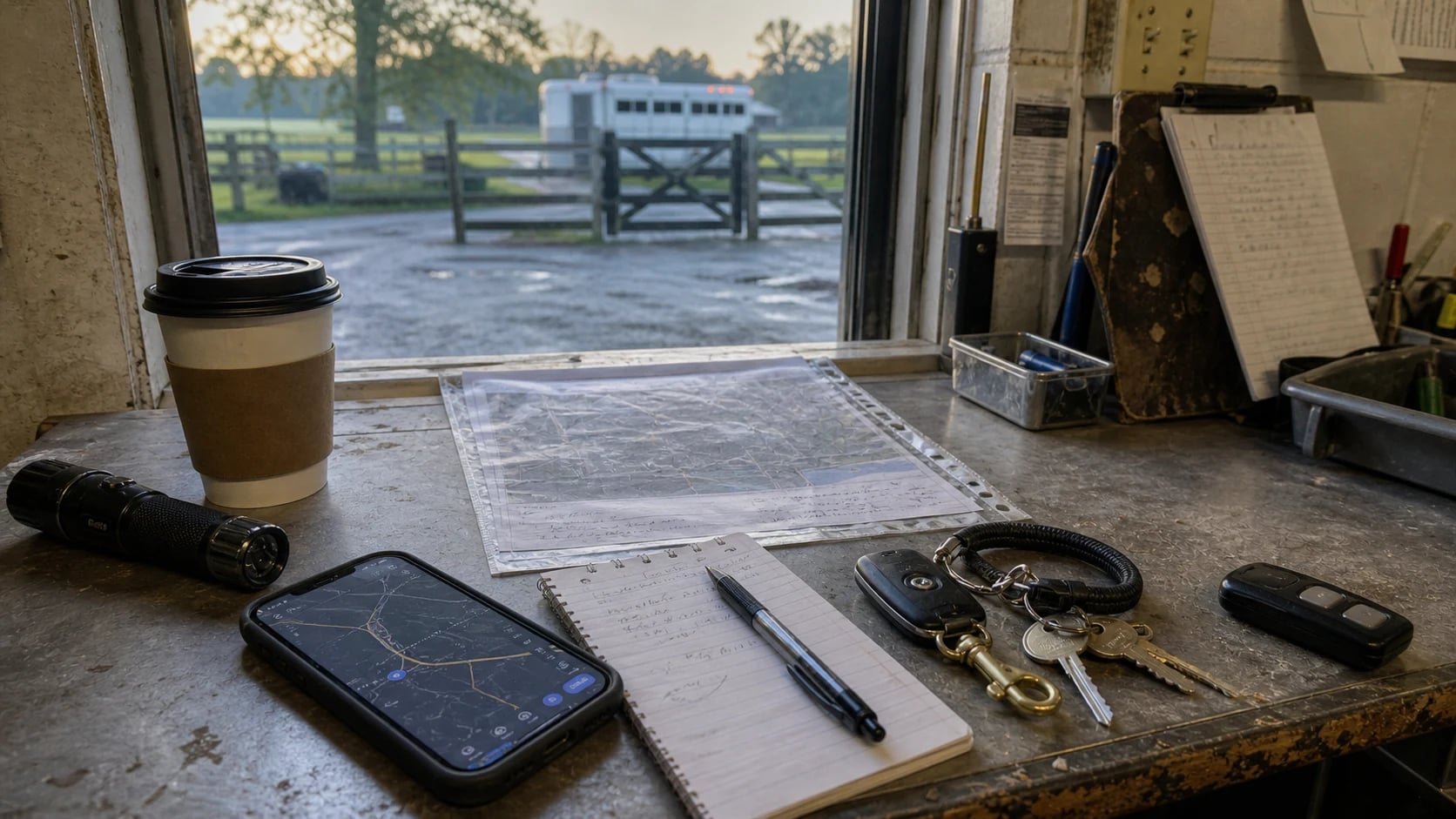
Before pickup day, make sure everyone is working from the same route plan. A small mistake in barn entrance, gate code, delivery contact, or arrival window can turn into a stressful delay once a loaded trailer is on the road.
For long-distance trips, ask about overnight stops, layover barns, weather holds, and how updates will be shared. For show routes, confirm whether the horse is going to a stabling office, back gate, trainer barn, quarantine area, or private farm. Event pages like the Kentucky Three-Day Event are useful because venue timing and traffic patterns can matter as much as mileage.
- Pickup person and phone number
- Delivery person and phone number
- Exact barn, stall, or venue destination
- Trailer access notes: low limbs, soft ground, narrow drive, turn-around space, locked gates
- Preferred update cadence and emergency contact if the owner or trainer is unavailable
Get documents ready before pickup
Paperwork requirements vary by state, event, sale company, and facility. Do not assume a clean Coggins alone is enough for every trip. Interstate moves commonly require a Certificate of Veterinary Inspection, and some venues or sale grounds have their own entry rules.
Keep originals or clear copies in a waterproof folder, and send digital copies to the transporter before pickup. If your horse is traveling internationally, start earlier and work from a dedicated plan such as international horse transport, because timing, quarantine, customs, and veterinary steps are more complex.
- Current Coggins test
- Certificate of Veterinary Inspection when required
- Breed registration, passport, or sale paperwork when relevant
- Event entry documents, stall assignment, or arrival instructions
- Owner, trainer, veterinarian, and receiving barn contacts
- Medication instructions with dosage, timing, and prescribing veterinarian contact
Pack feed, water, medications, and contact notes
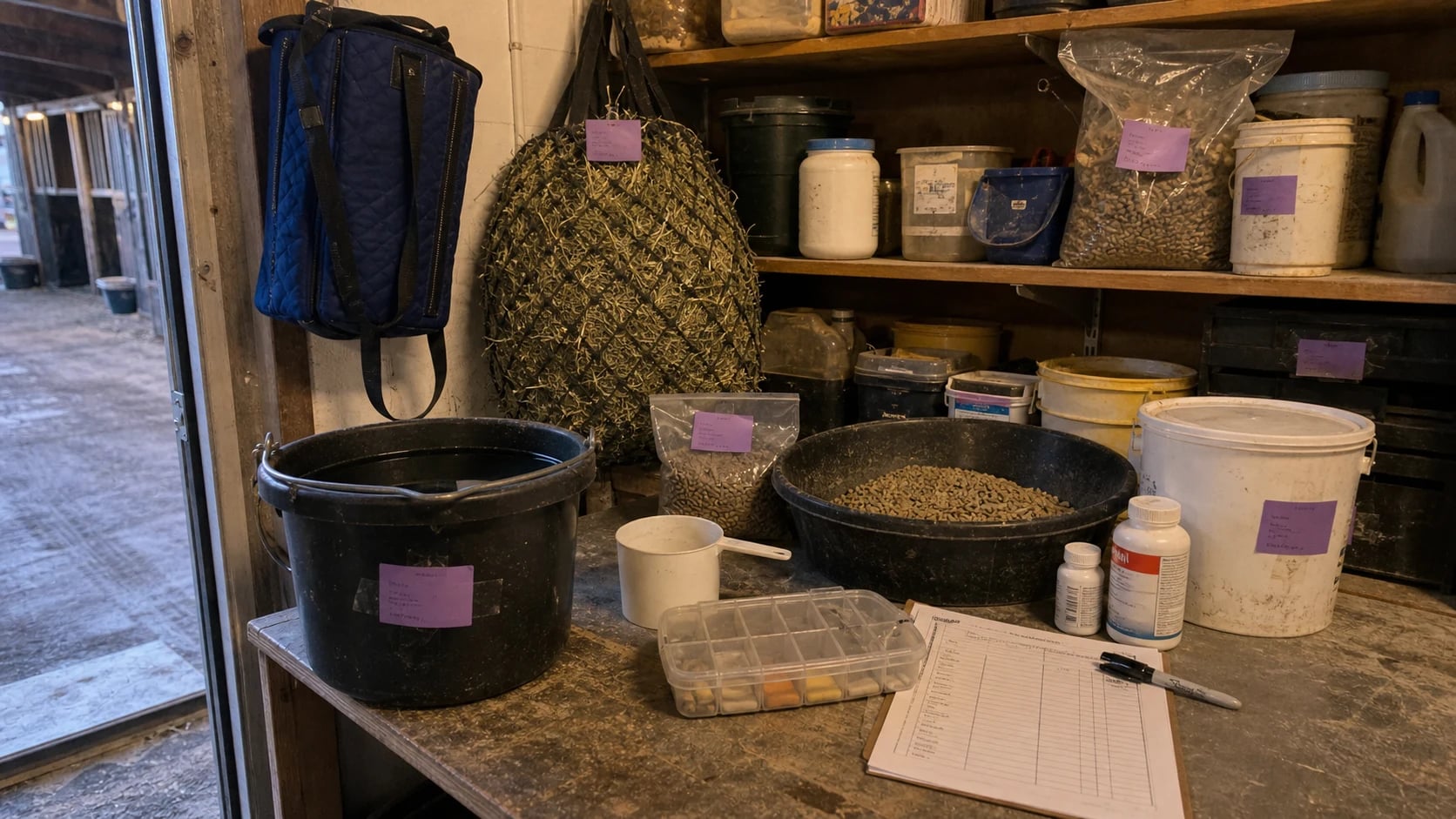
A horse that eats and drinks normally on the road is easier to manage and less likely to arrive tucked up, anxious, or off schedule. Pack what the horse already knows. Changing hay, grain, supplements, or bucket setup right before a trip creates avoidable risk.
- Enough hay and feed for the trip plus a buffer for delays
- Supplements and medications in labeled containers, not loose bags with no instructions
- Water preference notes if the horse is picky or traveling far
- Feeding schedule and any restrictions from the veterinarian
- Emergency contact order: owner, trainer, vet, receiving barn
If the horse has a medical concern, recent colic, lameness, stitches, fever history, or sedation question, coordinate with the veterinarian before pickup. A transporter can follow a plan, but should not be asked to make medical decisions on the ramp.
Prepare your horse for loading
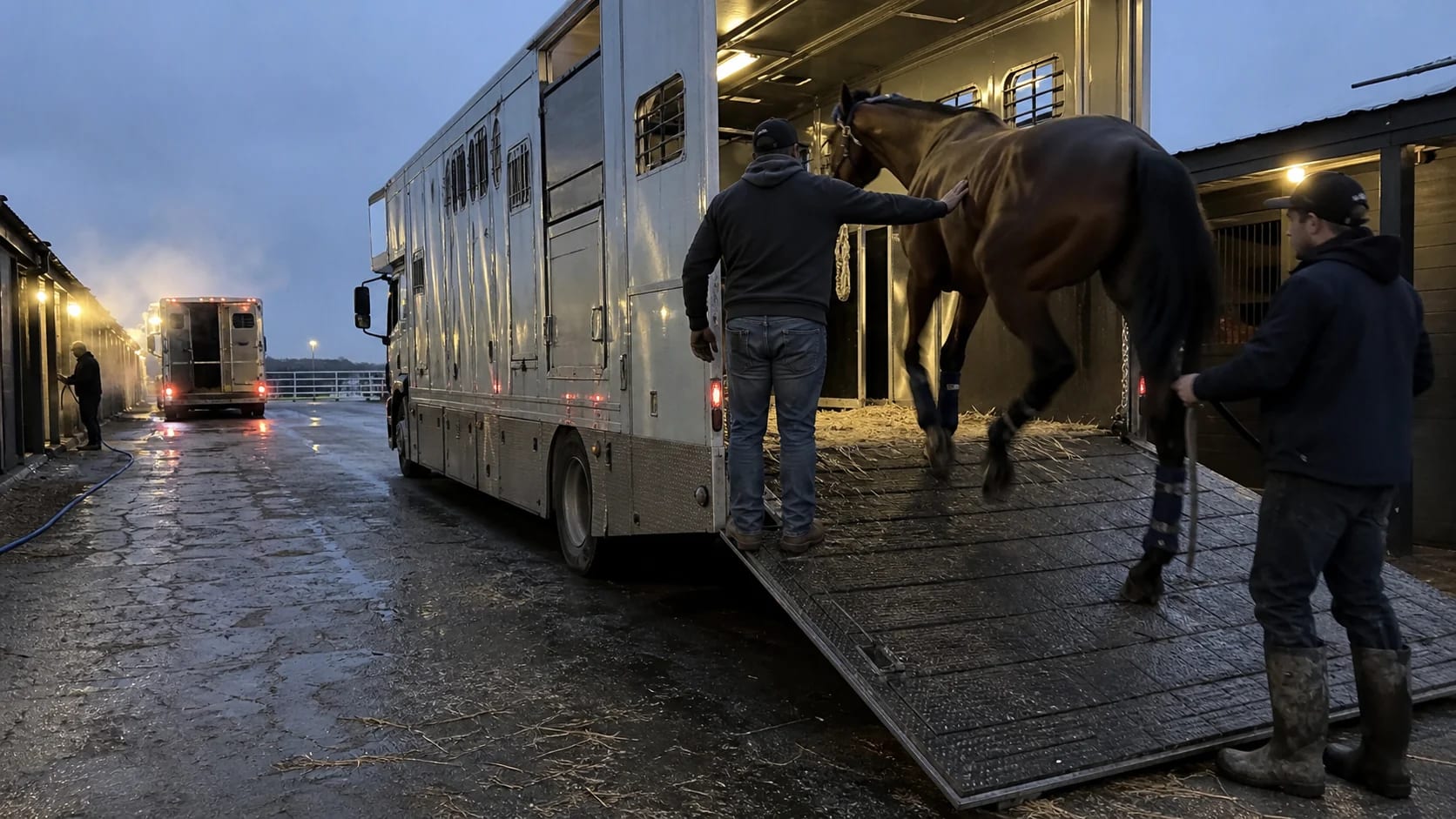
Do not make pickup morning the first loading lesson. If the horse is nervous, practices better with a specific handler, or needs a box stall instead of a standard stall, disclose that before quotes are finalized. The right equipment and schedule depend on honest handling notes.
For routine private barn moves, door-to-door horse transport is often the simplest fit because the handoff stays clean and the transporter can plan around the actual barn setup. For discipline-specific schedules, like a dressage horse moving between seasonal bases, pages such as dressage horse transport can help set expectations around routine and arrival condition.
- Groom enough to spot cuts, swelling, rubs, or heat before loading.
- Fit halter, lead, boots, wraps, sheet, or cooler before the transporter is waiting.
- Keep the horse in a quiet stall or small paddock near the pickup area.
- Avoid major feed, turnout, farrier, or medication changes right before the trip.
- Tell the transporter if the horse paws, pulls back, scrambles, ships loose, or dislikes ramps.
Label what travels with the horse
Unlabeled gear is one of the easiest ways to create confusion at delivery. Label trunks, buckets, hay bags, medication boxes, blankets, and anything that must arrive with the horse. Keep irreplaceable items with the owner or trainer unless the transporter has agreed to haul them.
Use a simple label format: horse name, owner or trainer name, destination barn, and phone number. If several horses are moving from the same barn, color-coded tape or tags can save time at both ends.
Common pickup mistakes
- Waiting until pickup morning to ask the vet for documents.
- Sending medication without written instructions.
- Forgetting gate codes, venue directions, or receiving barn contacts.
- Not disclosing that the horse is hard to load or needs special stall setup.
- Packing more gear than the transporter agreed to carry.
- Using vague pickup windows when the trailer schedule depends on multiple horses.
How Palomo helps
Palomo is built to reduce the uncertainty around horse transport. Instead of chasing scattered texts, owners and trainers can compare horse transport quotes, share route details, document handoff notes, and keep transport requirements attached to the trip.
That matters on busy corridors such as Lexington, Ocala, Wellington, Aiken, Tryon, Saratoga, and Bridgehampton, where timing, seasonal demand, show schedules, and trainer availability all affect the real plan.
The goal is not just finding a trailer. It is making sure the right people, documents, route notes, and updates stay together from pickup to delivery.
Horse transport checklist FAQ
How early should I prepare paperwork?
Start as soon as you know the trip is likely. For routine domestic transport, confirm Coggins and CVI timing with your veterinarian before booking. For international transport, sales, or major events, start much earlier because requirements can involve multiple parties.
Should I wrap or boot my horse for transport?
Use gear your horse already tolerates and that fits correctly. Poorly fitted shipping boots or wraps can create rubs or slipping. If you are unsure, ask your trainer or veterinarian before pickup rather than experimenting on the trailer.
What should I tell the transporter before quotes are final?
Share the horse size, temperament, loading history, stall preference, medical notes, pickup access, delivery access, timing constraints, and any paperwork requirements. More accurate details lead to better quotes and fewer surprises on pickup day.