Biosecurity
Horse Show Biosecurity Checklist for Travel Days
A practical horse show biosecurity checklist for buckets, documents, stabling, temperature checks, and travel-day decisions.
Horse show biosecurity starts before the trailer leaves. Clean buckets, health paperwork, temperature awareness, separate equipment, and a clear stabling plan all reduce the chance that one horse's travel day becomes a barn-wide problem.
This checklist is practical, not alarmist. Use it when moving into rated shows, winter circuits, sales grounds, training hubs, or any venue where many horses are sharing barns, wash racks, aisles, and water access.
Table of contents
- Horse show biosecurity checklist: the short version
- Before the horse leaves home
- Arrival and stabling setup
- Buckets, feed, tack, and shared equipment
- Temperature checks and health notes
- What to do if a horse seems off
- How Palomo helps
Horse show biosecurity checklist: the short version
Bring clean equipment, avoid sharing buckets, confirm health documents, monitor the horse, and know who makes decisions if the horse develops a fever, cough, nasal discharge, diarrhea, or unusual behavior. Event rules and state requirements can vary, so confirm the exact venue requirements before pickup.
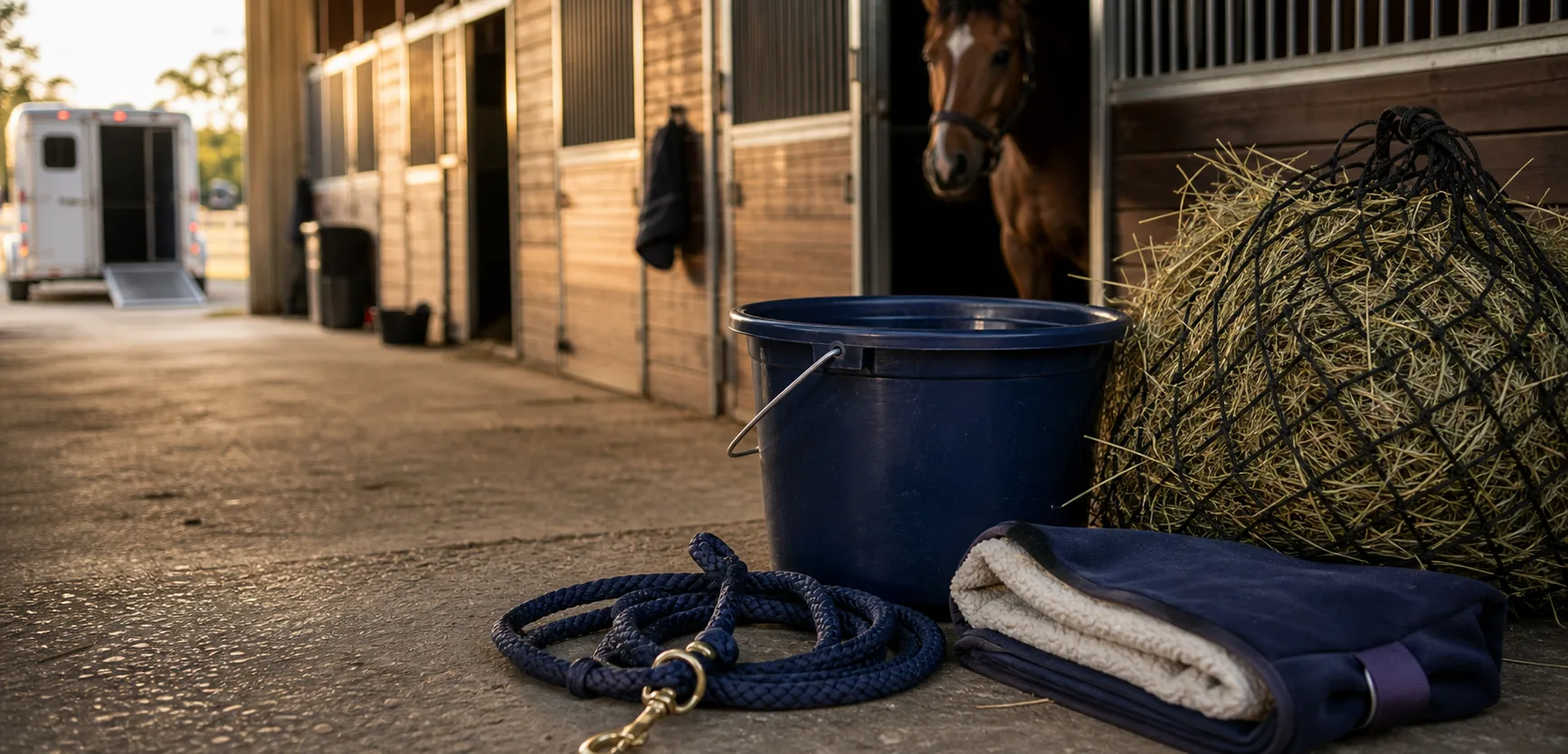
- Pack clean, labeled water and feed buckets.
- Do not share buckets, nose towels, feed scoops, or grooming tools between unfamiliar horses.
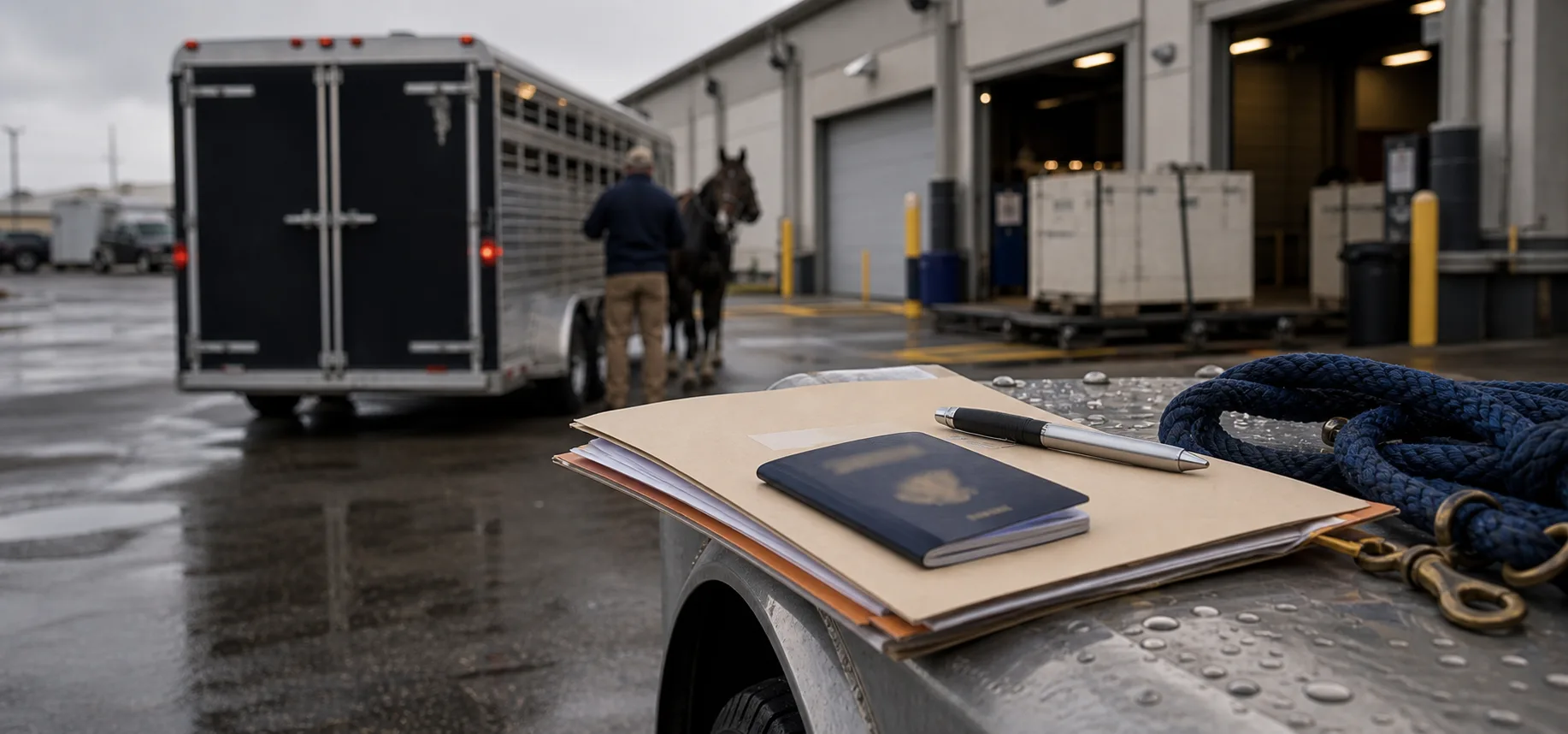
- Confirm Coggins, CVI or health certificate, vaccination records, and event documents.
- Know the horse's normal temperature before travel when possible.
- Write down the trainer, owner, veterinarian, and show office contacts.
- Ask the transporter how illness concerns are handled on route.
Before the horse leaves home
Biosecurity starts with the horse's normal health baseline. If the horse is dull, coughing, feverish, off feed, or recently exposed to a sick horse, talk to your veterinarian before shipping. Do not solve a health concern by moving it to a crowded showground.
For major venues such as Wellington, Ocala, Tryon, or Upper Marlboro, confirm any entry requirements early so paperwork does not become a trailer-lot problem.
Arrival and stabling setup
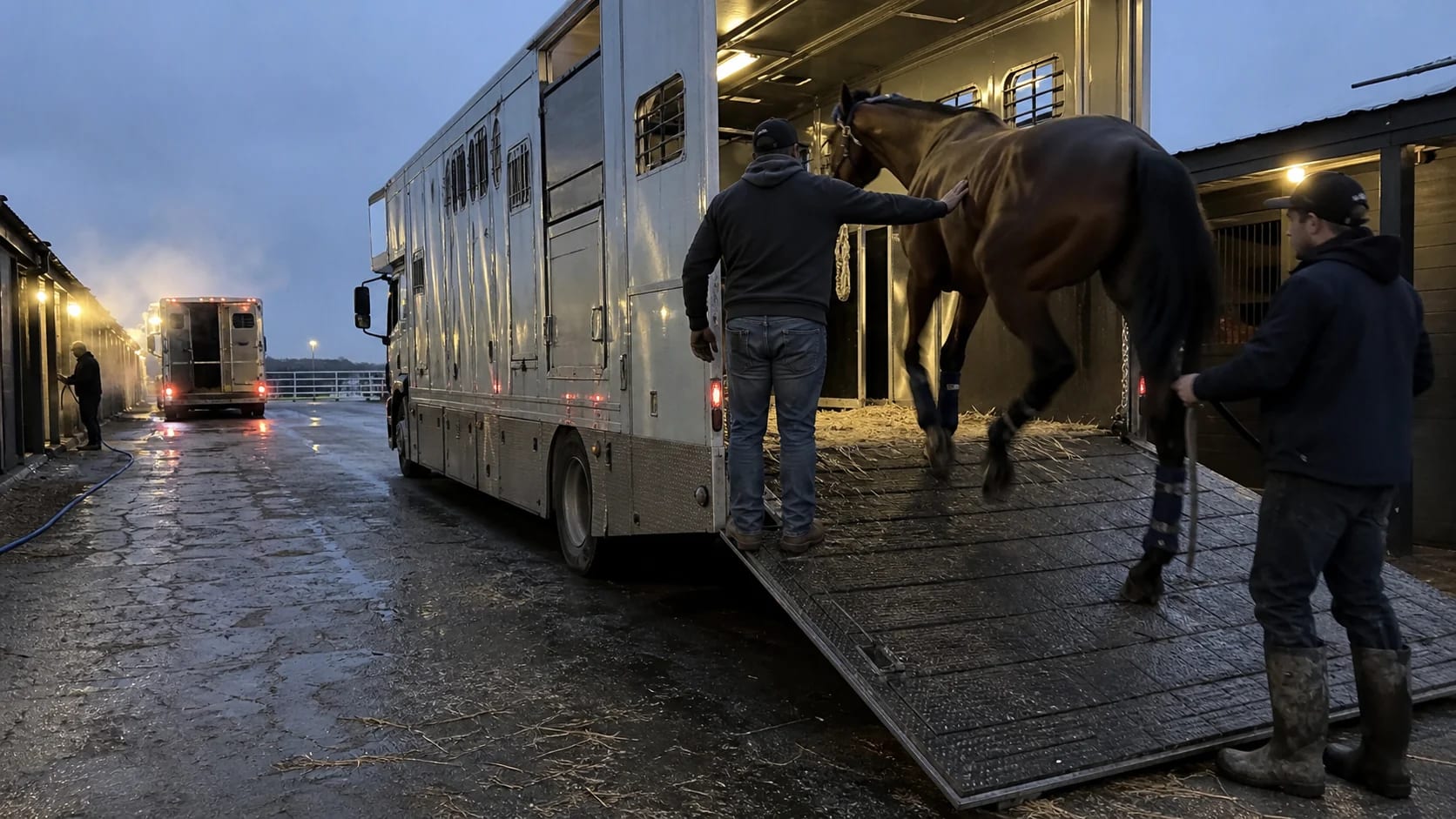
At arrival, the transporter needs the right entrance, receiving contact, barn aisle, stall number, and any health check process the venue requires. A trailer circling the grounds is not only inefficient. It can add stress and create unnecessary contact with other horses.
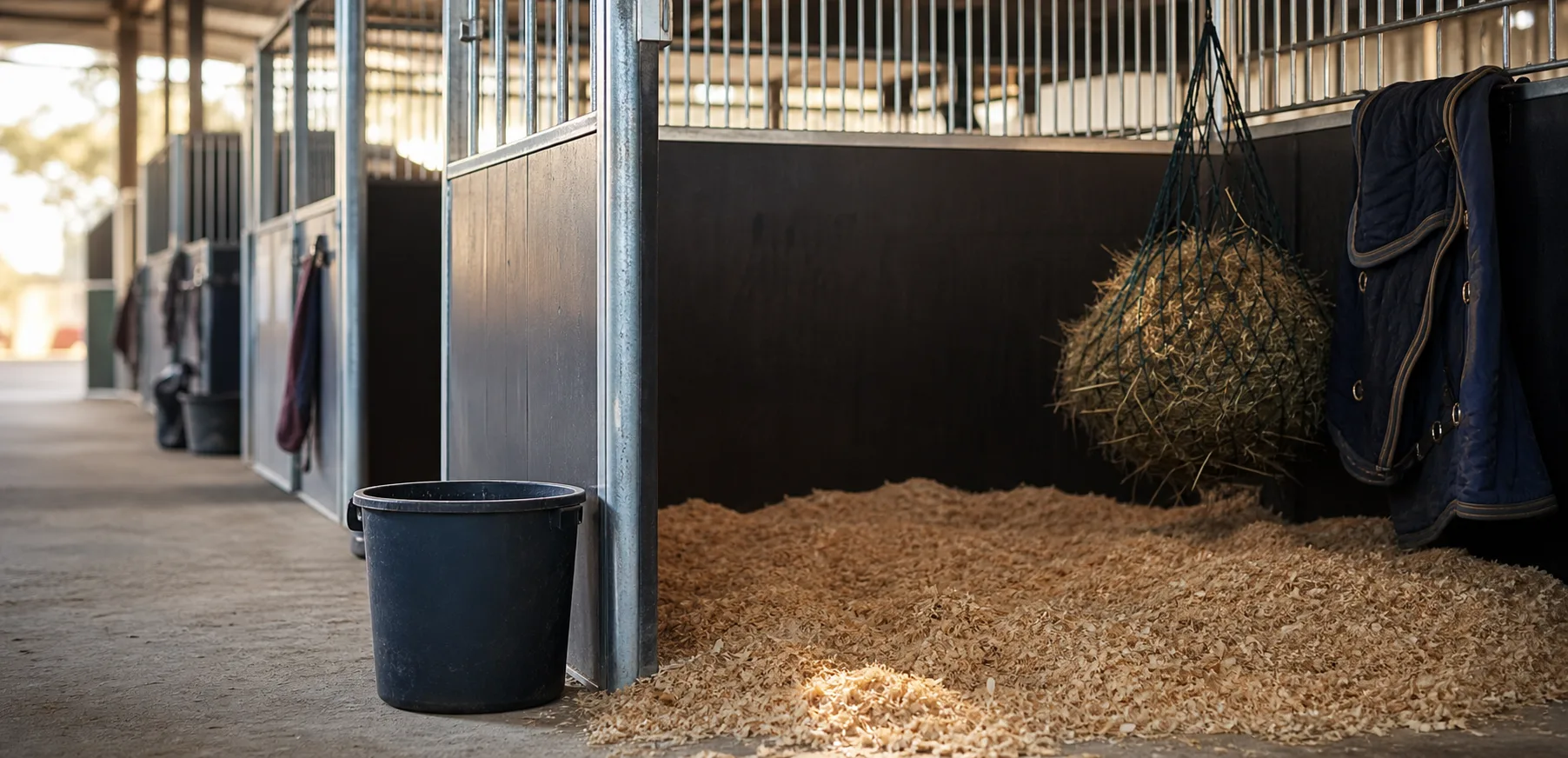
- Confirm the stall assignment before the trailer arrives when possible.
- Know where the horse should unload and who receives it.
- Keep the aisle clear before the horse steps off.
- Do not let unfamiliar horses touch noses in the trailer lot or barn aisle.
- Use the horse's own buckets and feed setup.
Buckets, feed, tack, and shared equipment
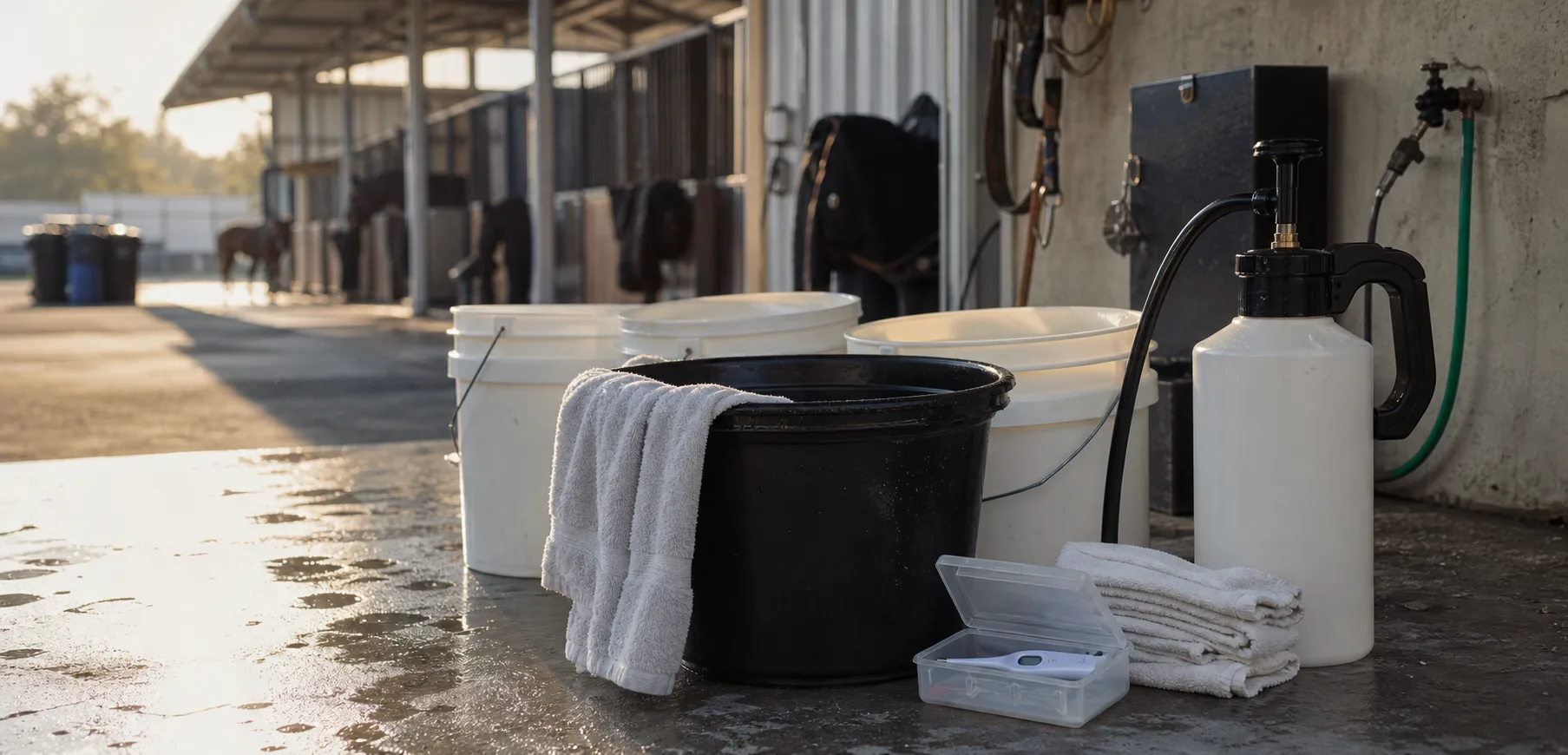
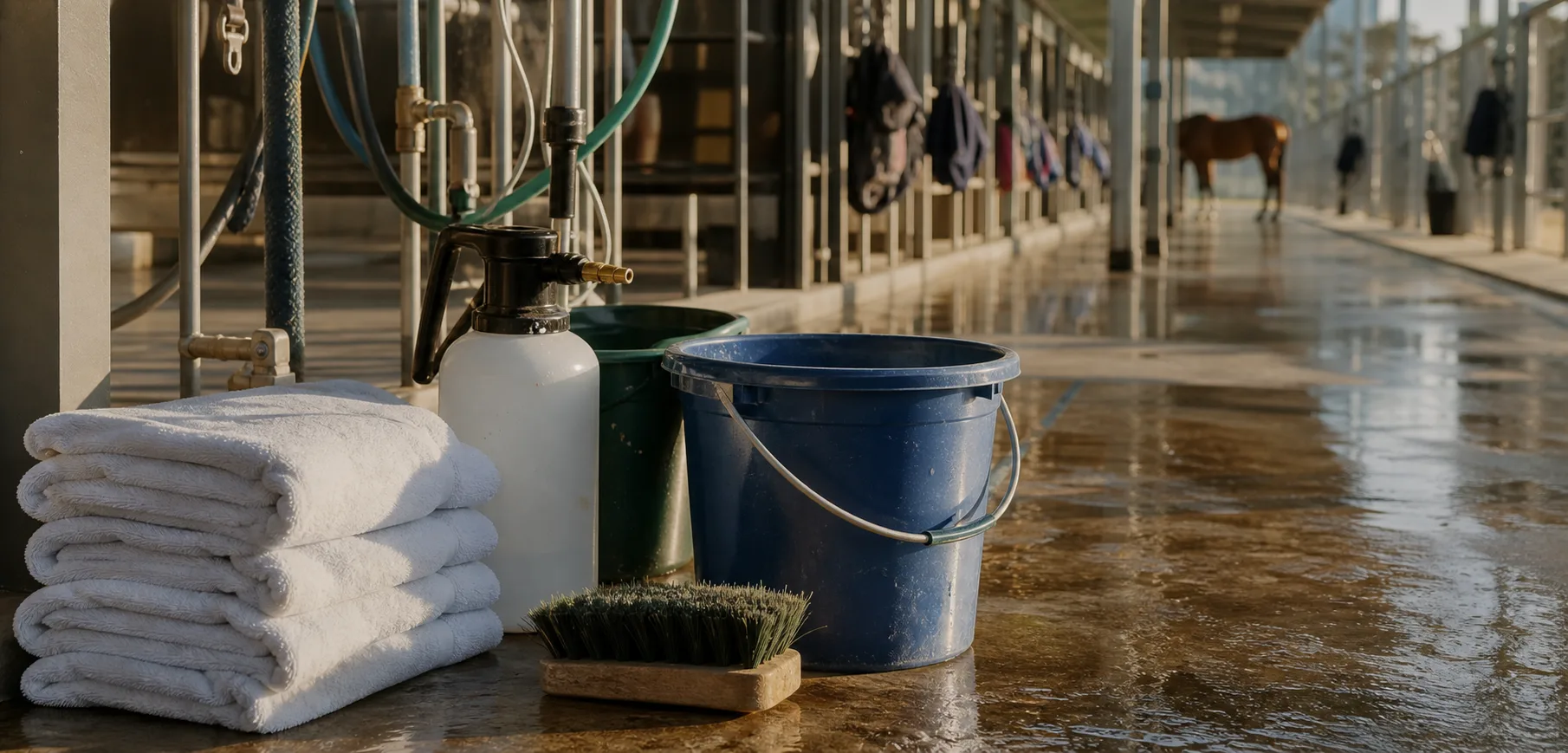
Shared equipment is convenient, but it is also where many simple mistakes happen. Label everything. Keep water buckets, feed buckets, towels, thermometers, and grooming tools separate from unfamiliar horses.
Temperature checks and health notes
Some barns and events use routine temperature checks during travel or after arrival. If you track temperature, write it down with the time and who checked it. A number without context is less useful than a simple log.
- Know who takes temperature if the horse seems off.
- Keep a working thermometer with the horse's equipment.
- Record cough, nasal discharge, diarrhea, appetite, water intake, and behavior changes.
- Call the veterinarian if there is a real concern rather than guessing in a group chat.
What to do if a horse seems off
Separate the horse from unnecessary contact, notify the trainer, owner, veterinarian, transporter, and show office as appropriate, and follow the venue's instructions. Avoid moving the horse again until the right person has assessed the situation.
How Palomo helps
Palomo keeps trip contacts, documents, venue instructions, and handoff notes attached to the booking. That helps owners, trainers, transporters, and receiving barns work from one plan instead of scattered text messages.
Biosecurity is easier when documents, contacts, stall details, and health notes are organized before the horse leaves home.
Horse show biosecurity FAQ
Should I bring my own buckets to a show?
Yes. Bring clean, labeled buckets and avoid sharing water or feed equipment with unfamiliar horses.
Can a transporter refuse to load a sick horse?
A responsible transporter may pause or refuse a trip if loading would be unsafe or inappropriate. Health concerns should be discussed with the veterinarian before pickup.