Trailer fit & welfare
Box Stall vs. Slant Load vs. Straight Load: Which Trailer Setup Is Best?
A practical comparison of box stall, slant load, and straight load trailer setups for horse transport.
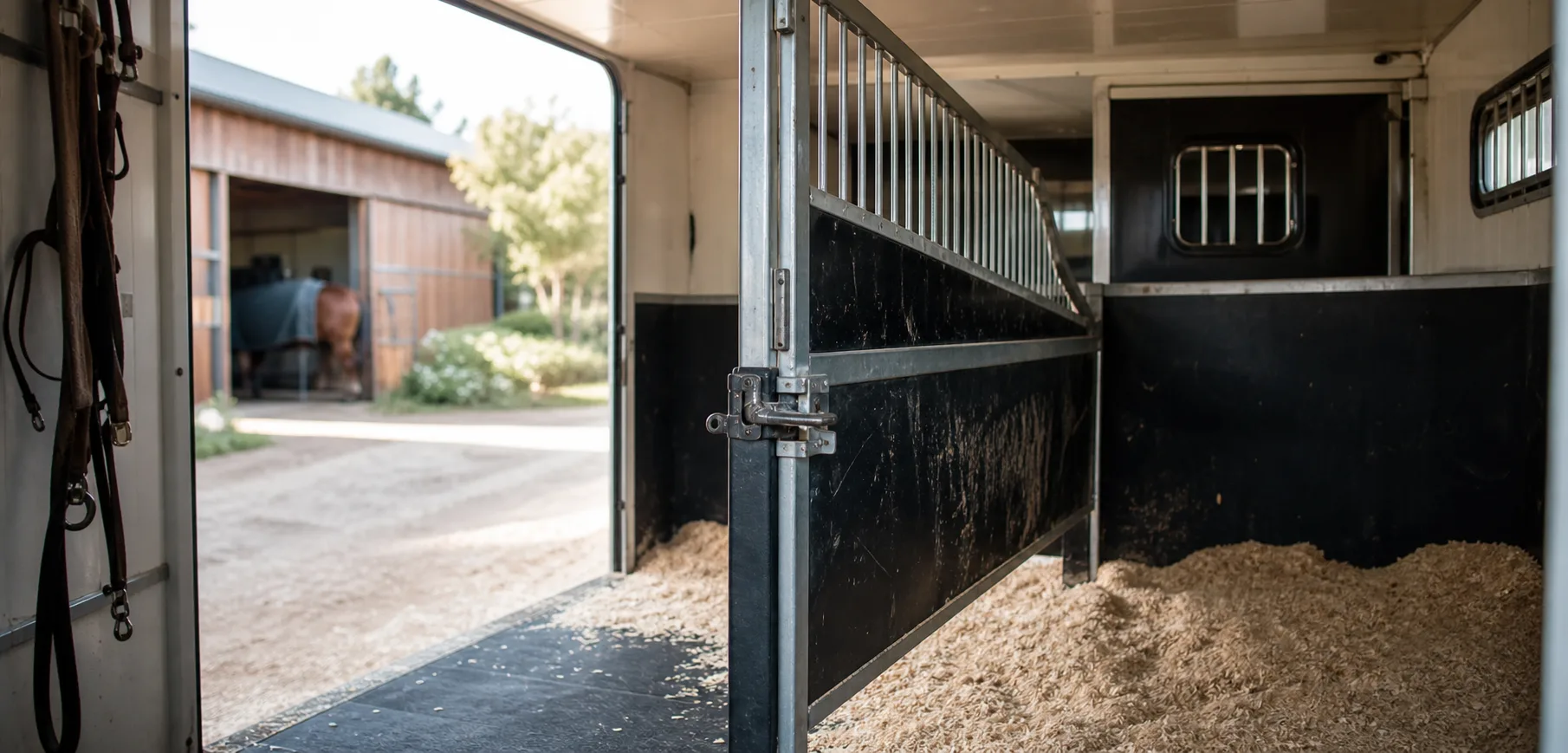
The best horse trailer setup is the one that fits the horse, the route, and the handling plan. A box stall can give a horse more room, a slant load can make efficient use of trailer space, and a straight load can suit horses that prefer facing forward. None of them is automatically right for every trip.
Use this guide before you request a trip or compare quotes. The more clearly you describe the horse's size, loading history, temperament, and trip length, the easier it is for a transporter to quote the right trailer setup instead of the cheapest open stall.
Table of contents
- Box stall vs. slant load vs. straight load: the short answer
- What a box stall is best for
- When a slant load makes sense
- When a straight load can be the right fit
- Trailer fit questions to ask before booking
- Common trailer setup mistakes
- How Palomo helps
Box stall vs. slant load vs. straight load: the short answer
A box stall is often best for horses that need more room, ship loose, travel with a mare and foal, or need a less restrictive setup. A slant load can work well for many experienced travelers and shared routes. A straight load may suit horses that load and balance better facing forward. The right choice depends on the horse and the route, not just the name of the trailer.
- Choose a box stall when the horse needs extra room, a looser setup, or fewer restrictions.
- Choose a slant load when the horse is a steady traveler and the route plan is clear.
- Choose a straight load when the horse ships comfortably forward-facing and the trailer fit is appropriate.
- Ask about ventilation, bedding, cameras, floor condition, stall width, and divider setup.
- Tell the transporter if the horse scrambles, sits back, kicks, paws, needs a ramp, or is difficult to unload.
What a box stall is best for
A box stall gives the horse more freedom to position its body during transport. That can be useful for large warmbloods, stallions, broodmares, foals, young horses, horses with special handling needs, and horses that do not settle well in a standard stall.
The tradeoff is capacity. A box stall uses more trailer space, so it usually costs more and may limit shared-load options. On a long-distance trip, that extra room can be worth it if the horse needs the setup, but it should be discussed before the quote is accepted.
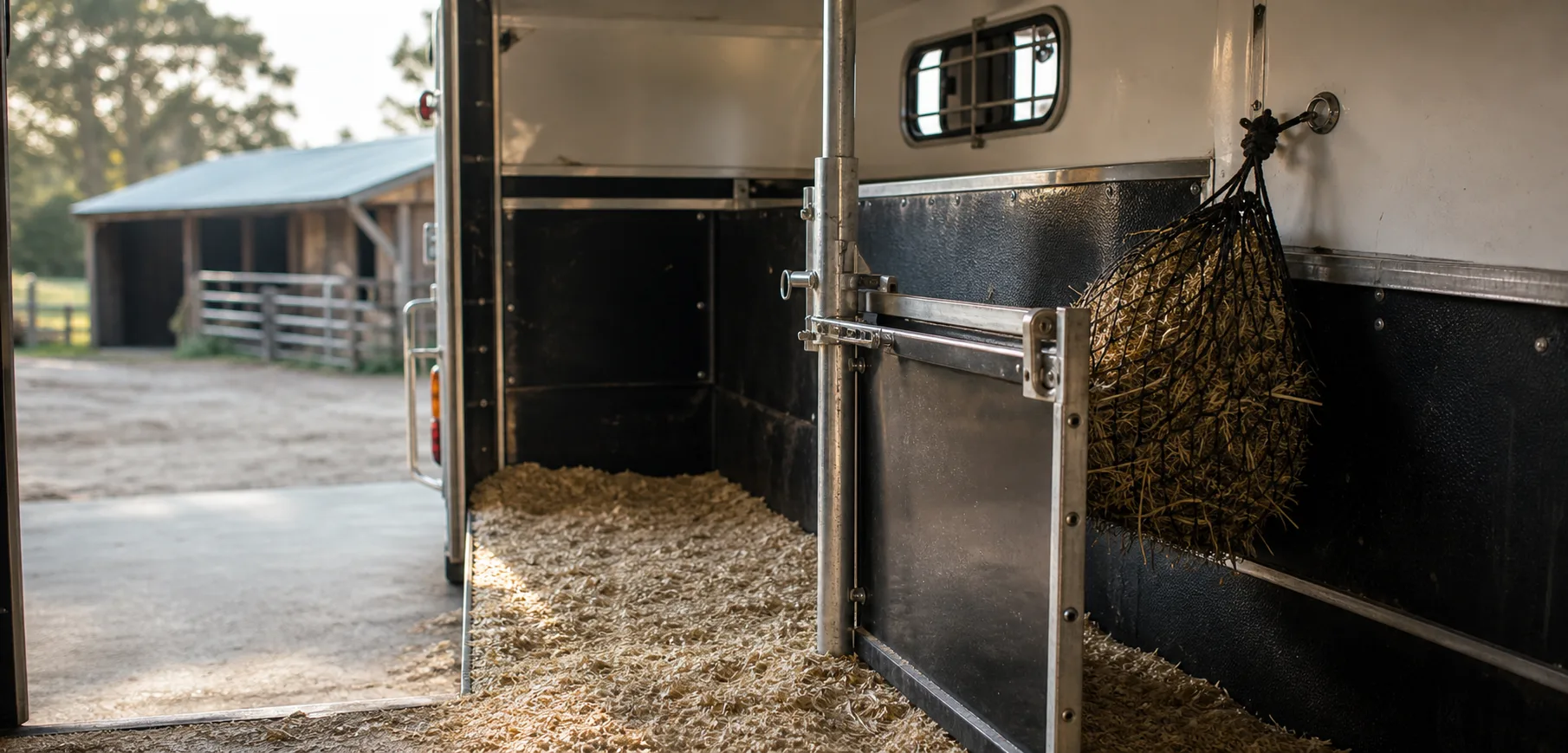
When a slant load makes sense
A slant load is common because it can move several horses efficiently while still giving each horse a defined space. For routine show moves, seasonal barn transfers, and shared corridors, a well-maintained slant-load trailer can be a practical fit.
The key is not only the stall angle. Ask how much room the horse will have, whether the divider setup suits the horse, how the trailer is bedded, and how long the horse is expected to be on the trailer. A slant setup that works for a quiet local haul may not be right for a nervous horse on a long multi-stop route.
When a straight load can be the right fit
Some horses load, stand, and unload more calmly in a straight-load trailer. This can be especially relevant for horses trained in that setup or horses that prefer the stability of facing forward. As with any trailer type, fit and condition matter more than the label.
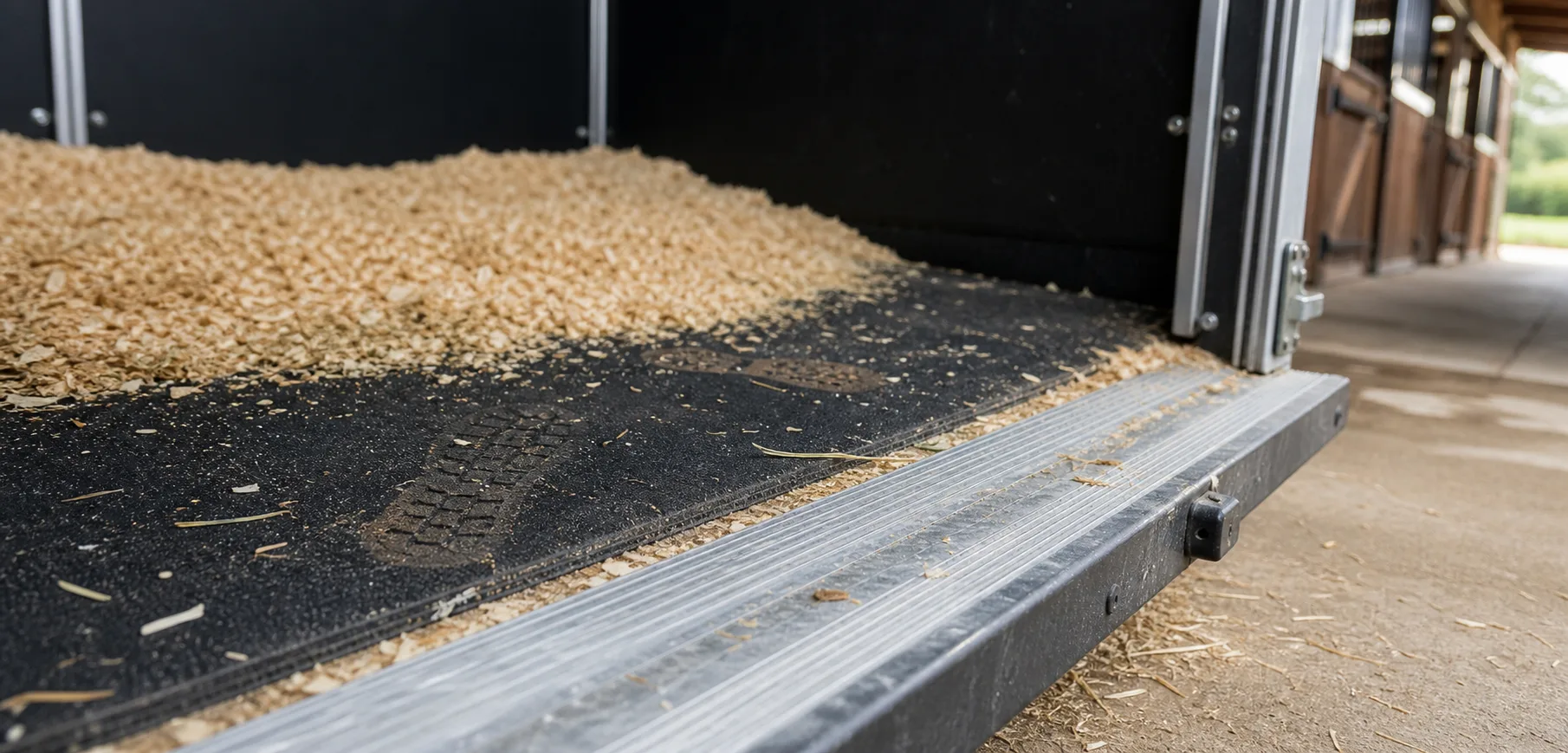
If the horse is tall, broad, long-backed, or anxious in tight spaces, ask for actual trailer details. Stall width, butt bar height, ramp style, airflow, bedding, and driver experience can all affect whether the straight-load option is appropriate.
Trailer fit questions to ask before booking
- What trailer type will be used for this trip?
- Will my horse have a box stall, standard stall, slant stall, or straight-load space?
- How wide and long is the stall space?
- Is the trailer ramp, step-up, or both?
- Are cameras, ventilation, fans, or onboard water available?
- How often will the horse be checked, watered, and fed?
- What happens if the horse does not load into the planned setup?
Common trailer setup mistakes
- Booking by price before confirming how the horse will stand in the trailer.
- Requesting a shared load for a horse that needs a box stall or quiet direct route.
- Forgetting to mention loading problems, scrambling, kicking, or anxiety.
- Adding trunks, hay, or gear that reduces available space after the quote is accepted.
- Assuming every large trailer is equally well suited for long-distance horse transport.
How Palomo helps
Palomo lets owners and trainers compare transporters with the trailer setup, route plan, verification, and horse notes attached to the request. That makes it easier to choose a transporter who can explain the fit instead of only offering a number.
The right trailer setup is the one the transporter can explain clearly for this horse, on this route, with this timing.
Trailer setup FAQ
Is a box stall safer than a slant load?
Not automatically. A box stall can be better for certain horses, but a steady horse in a well-maintained slant-load trailer with an experienced driver may travel very well. Fit the setup to the horse.
Should every long-distance horse use a box stall?
No. Some long-distance horses ship comfortably in a standard stall. Ask the transporter to explain the route, stop plan, stall setup, and why it fits your horse.